



Published March 2026
Things you should know about olive oil
Surprisingly, although it has become a staple in many European households, quite a lot of myths and misconceptions prevail when it comes to olive oil. Can I fry with it? Can I bake with it? What’s the difference between olive oil and extra virgin olive oil?
Miguel Abad, expert, helps us clarify some of the main points that you should be aware of when buying some of that liquid gold.
What is the quality of an olive oil based on?
There are two fundamental aspects to the quality of an oil:
- Volatiles, i.e. the aromas it has (of which fruitiness is the main one).
- Phenols, i.e. the polyphenol content (the precondition of which is a healthy fruit in perfect condition).
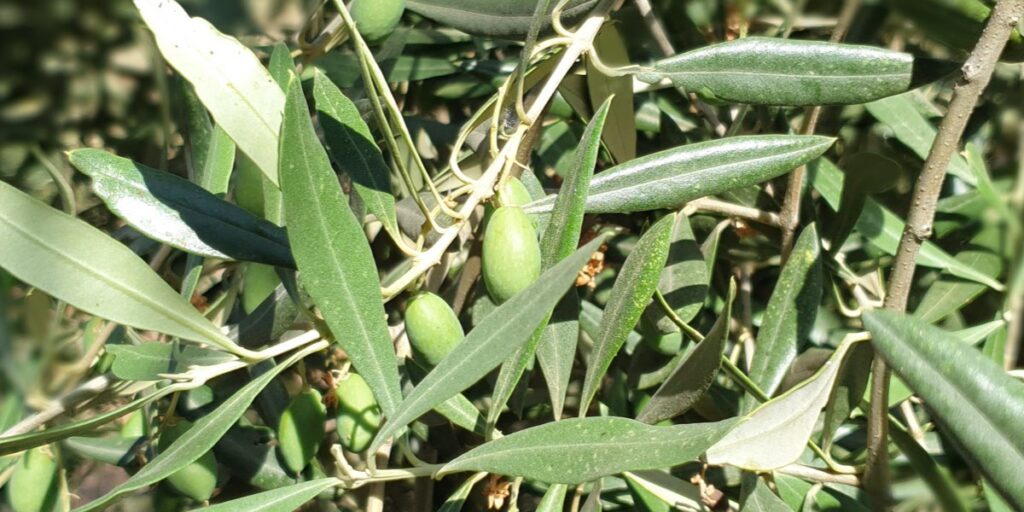
When the oil is being created in the olive (as the lipid biosynthesis, the lipogenesis, is already constituted) the ripening process begins. In this maturation process there is a quality formation curve (so to speak) and there is a peak at which the oil already has the highest fatty oil content and the highest physico-chemical and organoleptic quality. This point coincides with a maturity index and the formation of oil in the olive. From a certain point of maturity – this is measured by the colouring of the fruit – the quality starts to drop.
It is always advisable to buy oil of the year and never – if possible – to use oils from past seasons. The oil is a juice and should be bought fresh if possible, to avoid getting an oil that has already lost its qualities and becomes rancid faster.
What is the difference between “normal” olive oil, virgin olive oil and extra virgin olive oil?
The maturity index is one of the differences between virgin and extra virgin olive oil. But the main difference is the state of health of the fruit. If the fruit is affected by pests and diseases, the oil extracted from it cannot be classified as an extra virgin olive oil. Depending on the intensity of the defects, it will be considered virgin. This classification depends on the health of the fruit and the maturity index.
When the damage to the fruit is very severe, the resulting oil has major defects. These are organoleptic defects – in aroma – and there are also chemical defects – altering both the acidity and the peroxides. When this alteration is serious, the oil obtained from this olive cannot be bottled directly. This oil, which regulations prohibit from being bottled directly, is taken to a refinery, where its undesirable smell, colour and flavour are removed by chemical and physical processes. The chemical alteration (acidity, etc.) is neutralised with chemical products. The oil resulting from this refining process is simply called olive oil (neither virgin nor extra).
Once refined, this oil remains a neutral fat – all (poly)phenols and all flavourings have been destroyed. In other words: the two fractions that classify virgin oils have been destroyed. And, in order to be able to sell it to consumers, a small amount – between 5% and 10% – of virgin or extra virgin olive oil is added. On the label, where the ingredients are indicated, it says: virgin (or extra virgin) olive oil and refined olive oil. This oil is no longer olive juice, it only contains a percentage of 5-10% of olive juice, which can be virgin. Only virgin and extra virgin oils are considered olive juice – and they are bottled directly from the fruit.
Fun fact: The chemical composition of virgin or extra virgin olive oil in terms of fatty acids is the same percentage as the fat in mother’s milk. That means that our body is perfectly adapted to this type of fat and it can already be fed to six-month-old babies.
What makes for the defects in olive oil?
Pests that affect the fruit, malpractice in processing, poor harvesting, olives that are collected from the ground – all this causes defects. The weather and temperatures also affect quality and taste a lot.
If the tree has suffered hydric stress for example, the oils have a higher polyphenol content – they are more bitter and spicy and have less aroma. Water is important for quality control and stability, but low temperatures are also important, for example during harvesting. If the olive freezes, the volatiles disappear, the pleasant aromas disappear. The weather can thus have a a positive or negative effect, each year is different.
Is cold-pressed olive oil of superior quality?
Nowadays there are very few companies that extract oil “the old-fashioned way” using presses. It is an obsolete practice that resulted in oil with less aroma and less quality. These days, olive oil mills use centrifugation systems to extract the oil from the fruit. A centrifuge is used which separates the oil by weight difference. What used to be called cold pressing is now called cold extraction.
There is a regulation that establishes that up to 27 degrees centigrade, anything extracted below this temperature can be called cold extraction. For the production of top-of-the-range oils, the very best extra virgin olive oils, much lower temperatures are used – 27 degrees is already much higher (6 or 7 degrees) than usual for the elaboration of top quality oils. But this does not apply to all extra virgin oils. There are extra virgin olive oils that can be worked at 28, 29 degrees. But when an extra virgin oil is made at 28, 29 degrees it has a lower quality, as the intensity of the fruitiness, for example, is lower. At a certain temperature, the quality starts to decrease, but up until that point there is a significant difference between maximum quality and minimum quality within the extra virgin olive oil category.
What is the difference between conventionally and organically grown oil?
The difference between one and the other lies in the respect for the environment. From the point of view of intrinsic quality and taste, no difference has been scientifically demonstrated. But there is one significant fact that can give us a clue: in the last 10 years, many of the finalists or even award winners (such as this year’s Spanish Ministry of Agriculture prize, one of the most prestigious prizes in the world) have been organic oils. Apart from this, organic olive growing is also observed to have better tolerance to pests and diseases and better adaptation to climate change – to water stress for example. Trees that rely on chemicals develop far fewer natural defenses.
A popular myth: Is it possible to fry with olive oil?
Any burnt oil contains compounds that are unfit for consumption. However, olive oil withstands high temperatures well – extra virgin olive oil has a smoke point (= when it burns) of 215 degrees. However, the ideal temperature is 180 degrees and it is preferable not to overdo it. With virgin olive oil you can fry several times (without exceeding 210+ degrees) without risking the appearance of polar compounds. With sunflower oil you cannot fry so many times. In fact, Dr. Martínez-González, a world reference in nutritional health and author of the PREDIMED study, recommends the exclusive use of virgin or extra virgin olive oil for cooking (and in general). And yes, it can also be used to make cakes, and following the Mediterranean diet it is preferable to butter.
Among other things, virgin (extra) olive oil penetrates less into the food being fried (compared to seed oils). However, when frying, the polyphenol fraction and volatiles are degraded, which means that the oil loses a large part of its benefits.
How many olive varieties are there?
There are hundreds of varieties of olives. In the Valencian Community alone, for example, there are 54 autochthonous varieties, but some 74 varieties are cultivated. In Spain, where most of the world’s olive oil is produced, there are more than 250 varieties. The varieties vary according to the country of cultivation and the growing areas. Although the autochthonous varieties are completely different, there are popular varieties that are cultivated all over the world, which are the varieties with a high level of rusticity (which gives them a tolerance to certain types of soil, different types of climate, etc.). But in general the olive tree adapts to many types of soils and climates, and is therefore cultivated in several countries. The main varieties in Spain are Picual, Hojiblanca, Cornicabra and Arbequina, which occupy the largest surface area. In Italy, for example, the main varieties are others, such as Coratina, Moraiolo, Frantoio or Leccino and in Greece the most popular varieties are Kalamata and Koroneiki.
Which is the best variety?
There are some varieties which, in terms of polyphenol level and volatile content, are almost always at the top in competitions: Picual, Hojiblanca, Cornicabra, Coratina and Frantoio. What is valued in an oil is its complexity. The notes of each variety are very different, the Picual for example has very intense and complex notes that usually taste bitter and spicy due to the high polyphenol content. The softer Arbequina variety can also be very complex, depending on the processing system etc. but it is much less bitter, much less spicy, because the polyphenol content is much lower. The taste depends very much on the chemical composition. Normally, olive oils that have a high linoleic content and a high polyphenol content are intense oils that harmonise very well with intense foods and withstand oxidation and high temperatures very well. For milder foods, such as steamed fish, fresh cheeses, sauces, desserts or salads, a mild oil is more suitable. For the preparation of mayonnaise, for example, we recommend an Arbequina or a Sevillenca, varieties that have a high linoleic content and that give off the aroma of the extra virgin olive oil without altering the flavour too much.
How do I know which variety to buy?
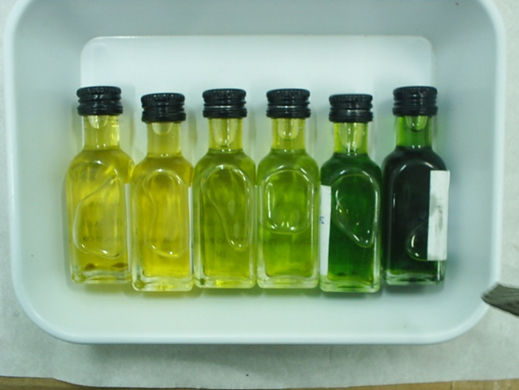
Extra virgin olive oil is like wine – you don’t stick with just one. We recommend tasting one oil from each of the three categories that are awarded – the three types of olive oil: bitter-green, sweet-green-fruity and ripe-fruity. In general, any oil that is classified as a pure extra virgin olive oil can be considered a good olive oil. Within extra virgin, we recommend you try varieties that are very distinct, to taste the differences – with Picual, Arbequina and Cornicabra and you would have three totally different varieties for example.
When tasting, keep in mind that bitterness and spiciness is a positive attribute because it indicates that the oil is rich in phenols, which is an indicator for its healthiness.
What’s the deal with unfiltered olive oil?
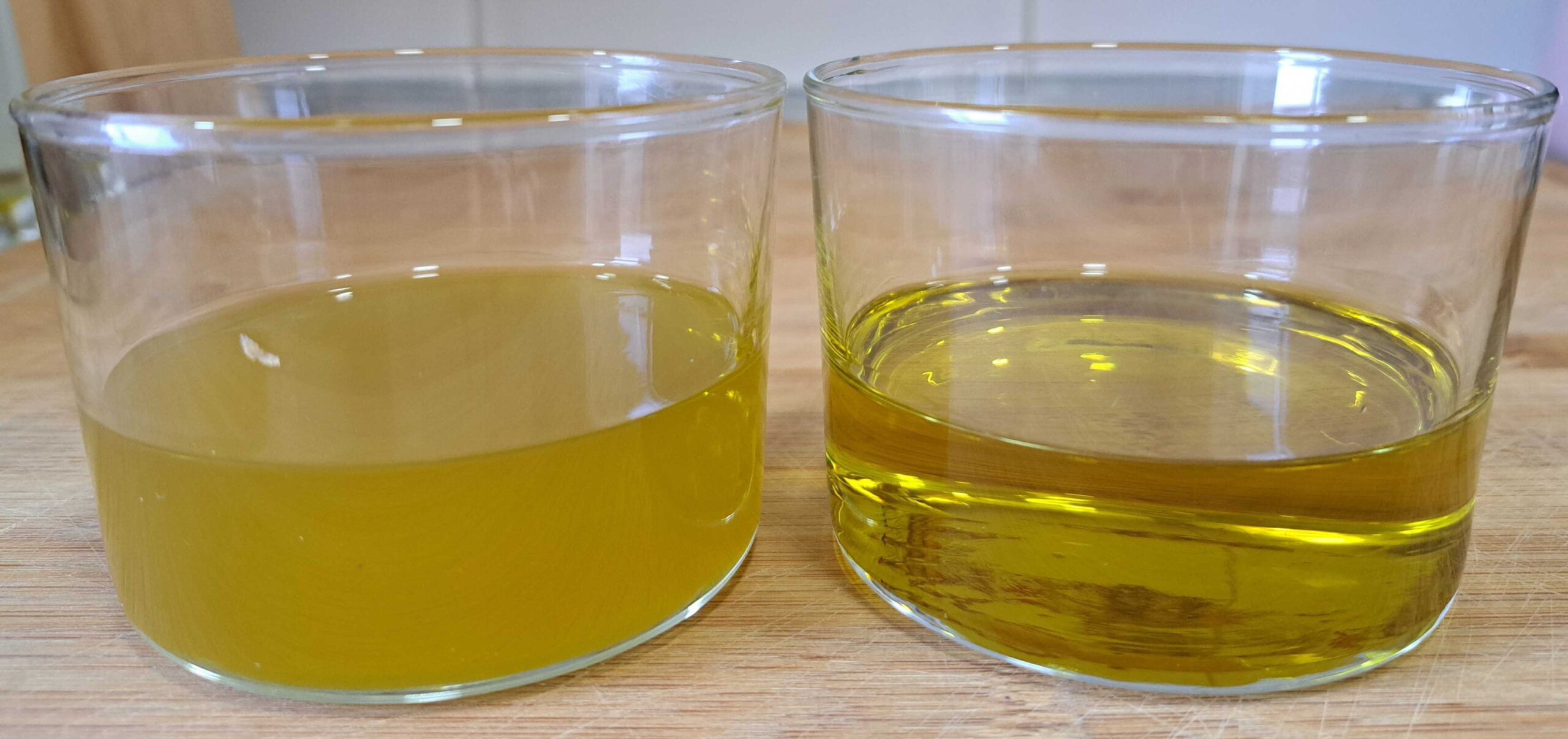
Unfiltered oil contains moisture and impurities. This moisture and these impurities ferment and alter the physico-chemical and organoleptic characteristics of the oil. Extra virgin oils must be filtered immediately. The shelf life of an unfiltered oil is much shorter, as the fermentation process starts after only one or two months. Fermentation alters the aroma, taste and chemical components of the oil, making it unfit for sale. It also contains water, which means that it is not pure olive juice.
Let us know if you are left with any questions!
Written by Emmeline Hess

Emmeline es experta en comunicación, vocación que ha estado ejerciendo durante más de 9 años en empresas con enfoque en la sostenibilidad.
Esta nueva podcaster es una gran aficionada a la comida, una preocupada por el cambio climático (aspirante a guerrera) y le gusta una buena discusión casi tanto como los perros.
Keep digging ...