
Published March 2026
A close call for the Agence bio in France
The Abolition of the ‘Agence Bio’ (national organic agency)
We started the year feeling energised and hopeful after the screenings of our documentary in Paris and Berlin. We got to discuss different ways to scale regenerative-organic agriculture with key stakeholders in the space. But the month followed with much less exciting news: the French Senate adopted an amendment suggesting the abolition of the Agence Bio, the national agency responsible for promoting and developing organic agriculture in France. The amendment has now been revoked, but it really got us thinking about the way governments prioritise organic agriculture and environmental issues in general. This news raised serious concerns among industry stakeholders and was—unsurprisingly—not well received by those of us who believe an organic and regenerative agricultural transition is essential for the future of our food system.
Established in 2001, the Agence Bio has played a key role in coordinating and promoting organic agriculture. Its responsibilities included informing the public about the benefits of organic farming, coordinating stakeholders within the sector, analysing economic data, and encouraging innovation through financial support. Over two decades, this organisation became a pillar of organic farming, supporting farmers in their transition to environmentally friendly practices while educating consumers.
The proposal to eliminate the Agence Bio was part of the 2025 draft budget law. According to the government, this measure aims to reduce public spending, with the annual €2.9 million subsidy deemed “non-essential”. The transfer of the Agence Bio’s functions to other entities, such as FranceAgriMer, was also presented as a solution to avoid administrative redundancies. Finally, the recent decline in sales of organic products appears to have influenced this decision, suggesting that support for organic farming is no longer considered as strategically important. When, really, shouldn’t it be the opposite? If you are failing to reach the goal, it makes more sense to put more effort into it, rather than dropping it altogether.
The consequences of this abolition would have been dramatic for the organic sector. In the short term, the absence of centralised coordination risks fragmenting initiatives and decreasing their impact. For farmers, this would send a negative signal, making investments in organic conversion seem less attractive. In the long term, this could have jeopardised France’s goal to increase the proportion of agricultural land under organic cultivation to 18% by 2027, undermining France’s commitments to ecological transition.
Setting up the Agence Bio in France felt like a pioneering initiative in Europe, where not many other countries have similar organisations that continue to actively support organic farming. In Germany, the “Ökologischer Landbau” programme supports both producers and consumers, while in Spain, each region manages its own initiatives through specific committees. In Italy, national campaigns place particular emphasis on educating consumers. Despite these efforts, few of these structures benefit from the national-level centralisation and coordination provided by the Agence Bio.
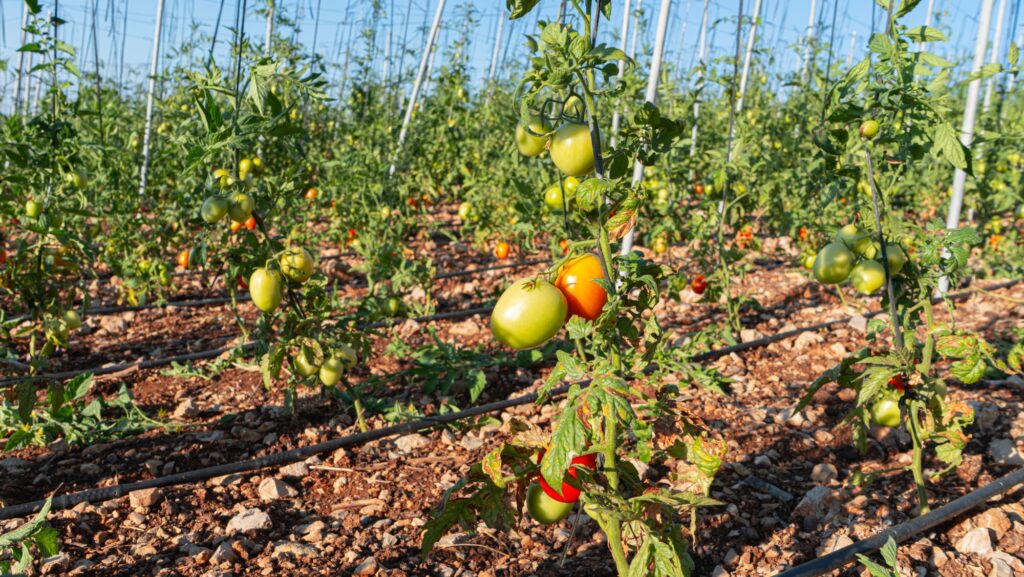
This decision could have weakened France’s position as a leader in organic agriculture in Europe. As of 2022, the country dedicated approximately 2.9 million hectares to organic farming, accounting for 17% of the EU’s total organic area—the highest among member states.
It also would have ultimately compromised the goals of the European Green Deal, which aims to achieve 25% of agricultural land under organic cultivation by 2030. Not to mention that such a step back could send a negative signal about France’s commitments to sustainable development.
In light of this situation, it becomes evident (once again) that collective effort and pressure from brands, organisations, NGO’s and the general public is crucial to keep our government in line. This brings me back to last week’s conversations in Paris, where we discussed how policies are often out of sync with grassroots needs, and they seem to follow more than lead. We talked about how we need to stop referring to consumers as “them”, considering we are all consumers, and how we need to unify the concepts of “consumer” and “citizen” to better understand the weight and decisive role “consuming” can have.
Luckily, this time around, those involved in organic farming pulled together to ensure that this abolition didn’t take place, and indeed it was quite quickly revoked. Although in moments like these, It seems that politicians have once again proven to us that they will always be a few steps behind, and the significant advancements we wish to see in the ecological transition must be driven by brands, consumers and farmers, we need everyone to keep making noise, and keep talking about these crucial topics, and of mobilising our MPs and governments to push our politics in the right direction.
Written by Emilia Aguirre
Emilia Aguirre is our Awareness & Advocacy specialist — which means she spends her days asking the uncomfortable questions about how our food is grown, priced, labeled, and sold. She hosts What The Field?!, a podcast packed with stories from the ground, hard-hitting research, and conversations with the people shaping the future of food (whether they like it or not).
Keep digging ...