




Getting Healthy in Toxic Times with Dr. Jenny Goodman
#3 | June 2026
Published June 2026
Getting Healthy in Toxic Times with Dr. Jenny Goodman
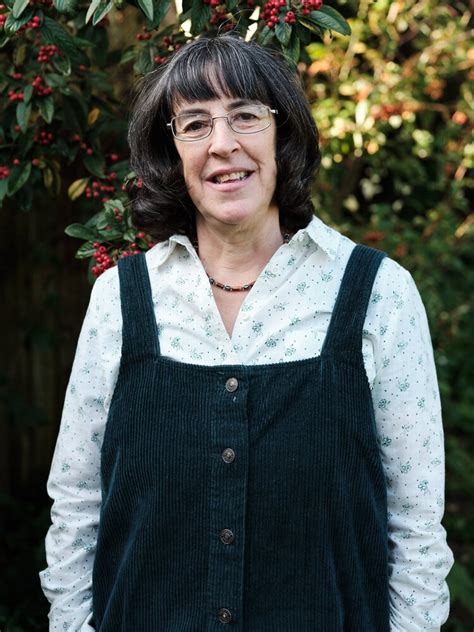
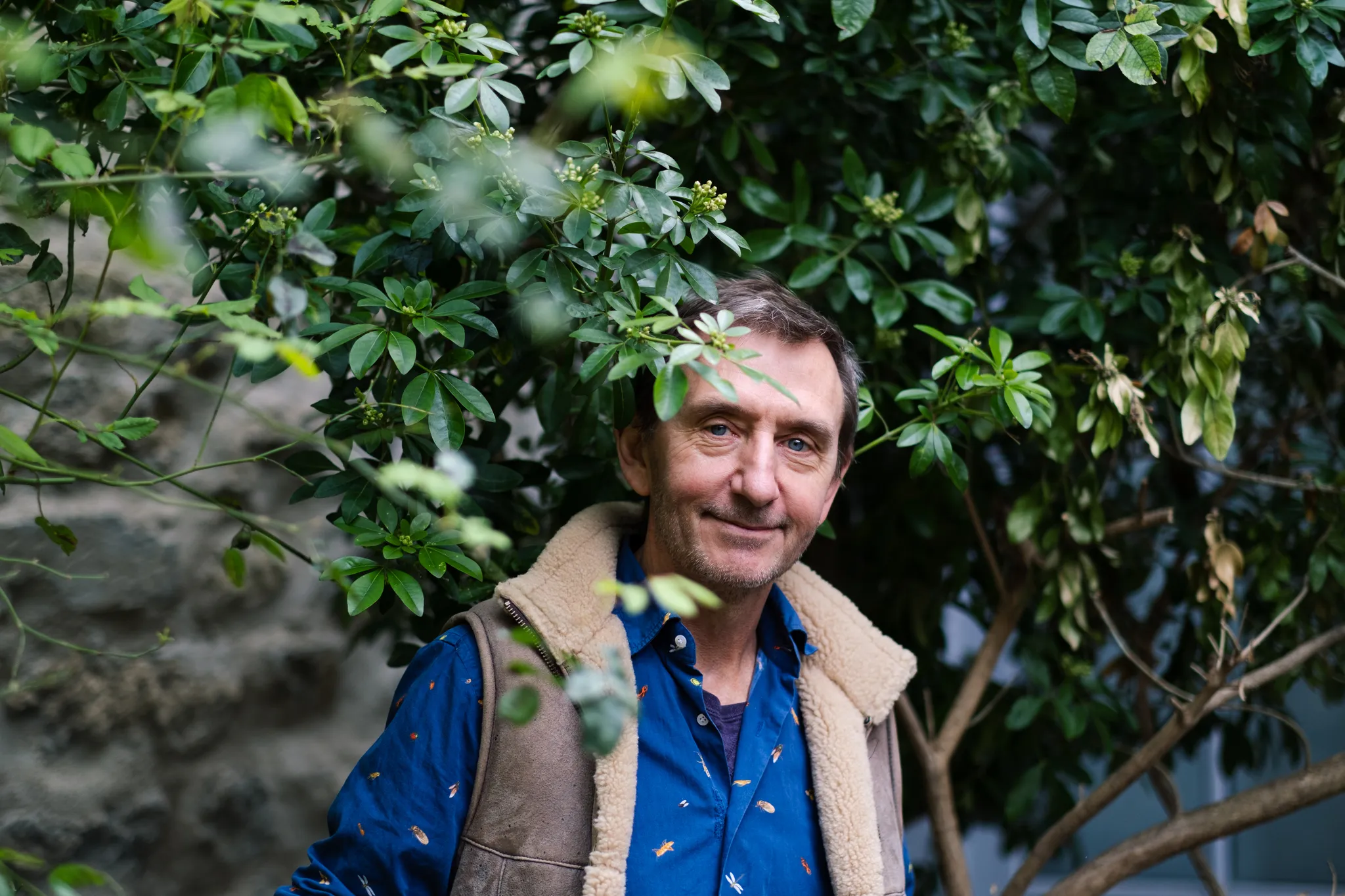
Dr. Jenny Goodman trained as a conventional medical doctor before spending decades building a practice in ecological medicine, a field that takes nutrition, environmental toxins, and root causes seriously in a way that mainstream medicine, she argues, simply does not. She is the author of Staying Alive in Toxic Times and Getting Healthy in Toxic Times. We spoke with her about pesticides, the gut microbiome, why governments won’t protect us, and what we can actually do about it.
You trained as a conventional doctor, went through all of that, and then walked away from it. What happened?
It was much sooner than most people expect. Probably within the first year or two of medical school, I knew something was wrong. I couldn’t put my finger on it, but the moment of real disillusionment came at the start of the third year, when we were finally meant to meet patients and learn the arts of healing. I thought: now I’ll understand what all that anatomy, physiology, and biochemistry was for.
Instead, the word “healing” was taboo on the wards. The word “cure” was taboo. What they talked about was managing symptoms — suppressing them with drugs, then adding more drugs to manage the side effects. Nobody went home well. Nobody went home healthy. The World Health Organization defines health as a state of complete mental, physical, and spiritual wellbeing. It’s not just that they never achieved that — they weren’t even aiming for it, and they would have been embarrassed if you mentioned it.
There was also no attempt to look at root causes. I would ask: why has this 40-year-old man had a heart attack? Why has this woman of 45 got liver cancer? And not only did they not have answers — the question itself was taboo.
Did you find anything within conventional medicine that worked for you?
Emergency medicine. I liked it because I didn’t disagree with what was happening. Conventional medicine is brilliant at emergencies — you break a bone, you have a heart attack, in that moment, that’s what you need. I felt I was doing the right thing. But I didn’t want to do it forever.
What eventually changed everything was discovering the British Society for Ecological Medicine in the late nineties, about 17 years after I’d qualified. These were doctors doing the kind of medicine I had imagined I was going to learn as a 19-year-old. They were getting to root causes, making people better, and not making them worse.
So what actually is ecological medicine?
It has two halves. The first is nutrition — identifying what good substances are missing from our bodies, understanding why they’re missing, and putting them back. The second is environmental medicine — identifying which industrial toxins have entered our bodies and teaching people how to avoid them going forward. And those two halves are deeply connected, because a lot of why we’re nutritionally depleted comes back to farming.
The reason it’s called “ecological” is twofold. First, we see the whole body as one joined-up ecosystem. In conventional medicine, if you go to your GP and say you have joint pain, a rash, and trouble breathing, they’ll send you to three separate specialists who have no way of connecting with each other. The body is a whole. We look at what is causing inflammation to manifest across all those different systems.
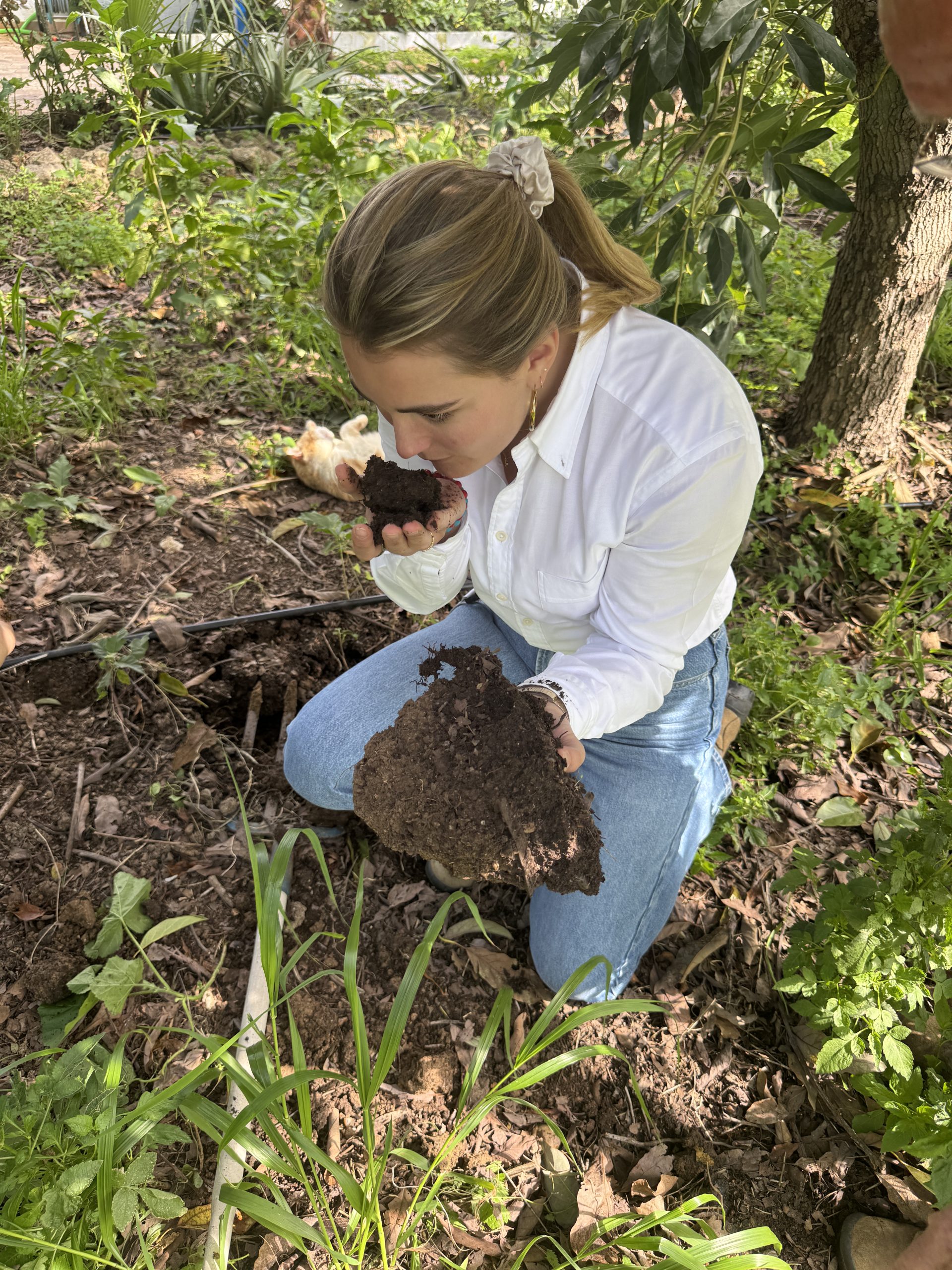
But it’s also ecological in a broader sense: the human body is not just an ecosystem, it is part of the ecosystem of planet Earth. This isn’t vague, new-age language. It’s basic biology, physics, and chemistry. Whatever we put into the air, we inhale. Whatever we put into the water, we drink. Whatever we put into the soil is taken up by the plants, ends up on the plate, and gets into our bodies — including our gut microbiome. There is no separation. We cannot poison the planet without poisoning ourselves.
You’ve said that farmers hold the keys to public health solutions. Why?
Because the connection is direct. If farmers are growing food in nutrient-depleted soil using synthetic fertilizers that don’t contain the minerals we need — no magnesium, no iodine, no chromium, no zinc, none of the things I find people desperately deficient in after 26 years of practice — then the food on the plate is nutritionally depleted too. And if they’re using pesticides, those pesticides kill the good bacteria in the soil, which are responsible for getting nitrogen and minerals into plant roots. You don’t just get poisoned crops. You get nutritionally empty ones.
Everywhere I go, farmers are desperate to convert to organic and regenerative. There is no ideological problem. There’s an economic problem in making the transition. But once they’ve made it, they save money — they’re no longer spending on synthetic pesticides and fertilizers. The issue is that governments need to subsidize the transition to small-scale, human-scale, organic, regenerative family farming, instead of subsidizing agribusiness.
Our research found that around 84% of Europeans have at least two or three different pesticides in their system at any given time. What is that actually doing inside the body?
I should start with detox, because we do have ways of clearing these things — but let me explain the mechanisms first, because they’re worth understanding.
Most insecticides and pesticides are cholinesterase inhibitors. To understand why that matters, you need to know how nerve transmission works. When an electrical impulse travels through your nervous system, at every synapse — every gap between nerve cells — it briefly becomes a chemical signal. The neurotransmitter responsible for that chemical crossing is acetylcholine. Once it has done its job, it has to be destroyed, otherwise the system gets stuck in the “on” mode and becomes paralyzed. The enzyme that destroys it is called acetylcholinesterase.
What pesticides do is destroy that enzyme. The system can’t reset. It gets stuck. And that is one of the major mechanisms behind neurological deterioration — Parkinson’s, multiple sclerosis, motor neuron disease, and Alzheimer’s.
And this isn’t a fringe hypothesis. When I started writing my second book, I thought: I hope I can find half a dozen studies connecting pesticides to these diseases. I was overwhelmed. There are tens of thousands of studies, in peer-reviewed scientific and medical journals, showing strong links between pesticides and Parkinson’s, MS, ALS, and most forms of cancer.
Where do these chemicals come from, in terms of their original chemistry?
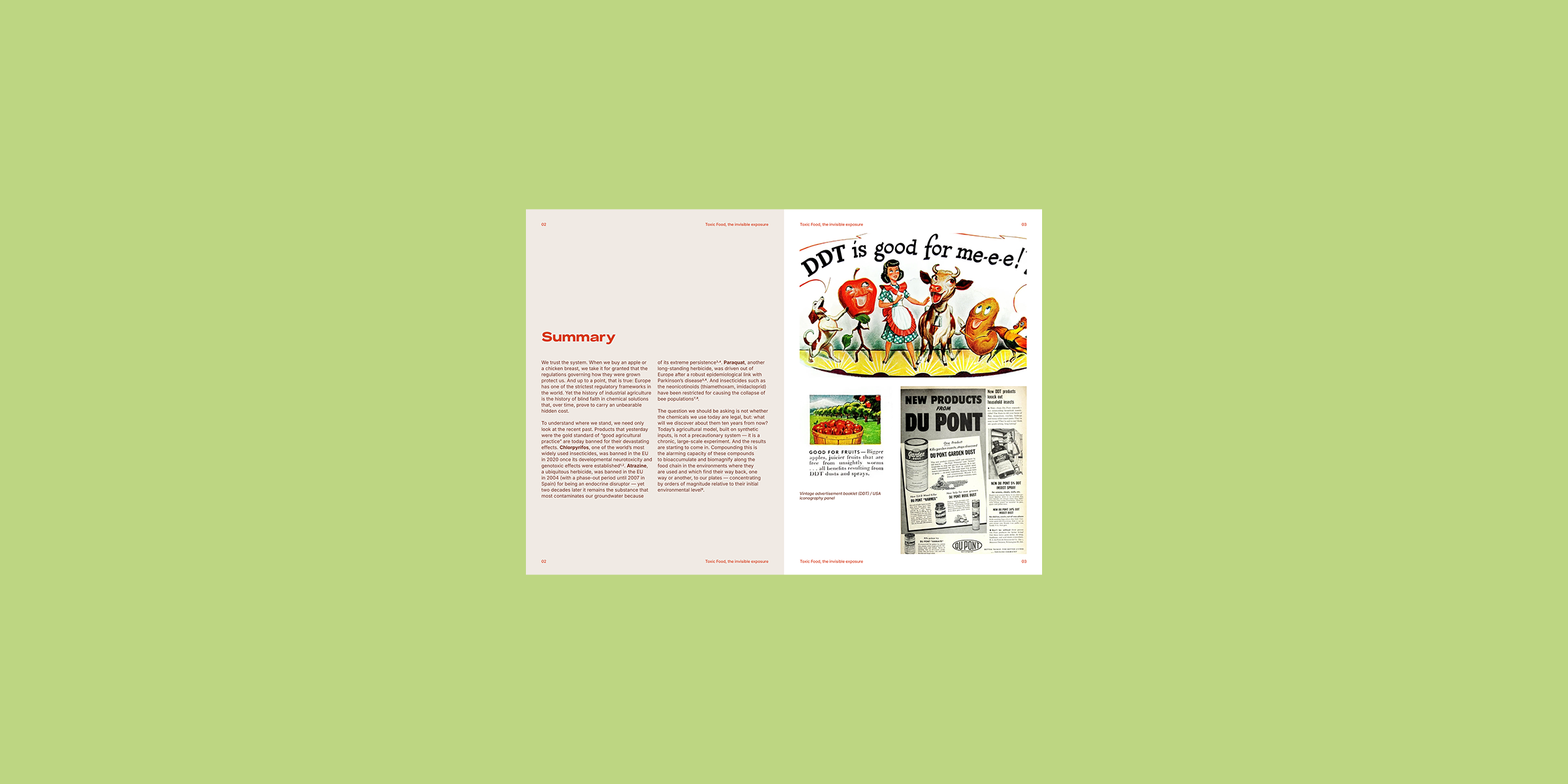
Their chemistry is based on nerve gases used in the World Wars — particularly the Second World War. Come 1945, the manufacturers couldn’t sell those products anymore. So they converted them, first into insecticides, then herbicides, fungicides, and so on. It is essentially the same chemistry, slightly modified, that was used to kill human beings. These are biological weapons. And of course they kill wildlife, disrupt soil bacteria, harm mammals, and harm us.
You also mentioned endocrine disruption as a third major impact area.
Yes. Some pesticide molecules structurally resemble estrogen. They sit on estrogen receptors in the body and trigger estrogenic effects. Many heavy metals — aluminum, nickel, mercury, cadmium — appear to do something similar.
The results are already visible in wildlife: feminization of male fish in rivers, dramatic drops in fertility across mammals, birds, reptiles, and fish. And in humans: sperm counts across the Western world have been falling for decades. There’s a classic Danish study comparing sperm counts in organic versus non-organic farmers. The organic farmers had excellent sperm counts and healthy children. The non-organic farmers had worryingly low ones.
In my practice, so-called “unexplained” infertility was one of the most common things I saw. When you get the nutrition right and identify and detox the heavy metals and pesticides, couples can often conceive within a year. And the damage doesn’t stop with one generation. These chemicals can be adducted — literally stuck onto DNA, from both egg and sperm — and passed on. We’re talking about multi-generational damage.
Glyphosate comes up constantly in this conversation. Is it really as dangerous as people say?
The World Health Organization classifies glyphosate as a carcinogen. Monsanto Bayer’s defence has been that the metabolic pathway glyphosate interferes with in plants doesn’t exist in mammalian cells. That’s technically true. But it does exist in the bacteria in our gut. And the microbiome isn’t an optional add-on — it’s as vital as the liver or the kidneys. Glyphosate poisons it, and therefore we get sick.
There’s also something deeply troubling about its molecular structure. Glyphosate is structurally very similar to glycine, an essential amino acid that forms part of our connective tissue — tendons, ligaments, collagen. It’s biologically plausible that in people with insufficient protein intake, the body could substitute glyphosate for glycine in collagen molecules, which would compromise their structural strength. Nobody has funded that research. Who would?
In the meantime: if you’re not making your own bread from organic flour, your children are eating glyphosate every day.
What can people actually do?
First: eat organic. When people switch, I consistently see their health transform. After a few months, they stop needing supplements because they’re finally getting the nourishment from food, as we always used to.
On affordability — the criticism is valid, but the framing is misleading. Mass-produced cheap food is effectively subsidized because the environmental damage it causes isn’t factored into its price. If we charged the real cost, organic food would win the comparison easily. There are also practical adjustments: if you eat chicken three times a week, switch to organic and eat it once a week. One organic chicken costs less than three battery ones. And think of it as health insurance. Getting cancer is extraordinarily expensive — in lost income, in treatment, in suffering.
Second: filter your water. In many parts of Europe, unfiltered tap water contains residues of pesticides, fertilizers, hormones from HRT and contraceptives, antibiotics, heavy metals, and chlorine. A good water filter removes most of this.
Third: avoid pesticide contact outside of food. Pet flea treatments are a major and underestimated source — most of them are insecticides, regardless of the trade name. Ask your vet directly. Local authority grass verge spraying is another exposure route, especially for young children. Campaigns to stop unnecessary spraying have gained real ground in recent years.
For detox, there are seven approaches I outline in my books: high-dose vitamin C; organic vegetable juicing; Epsom salts baths; short saunas — critically, five minutes only, and wipe the sweat off continuously rather than letting the body reabsorb it; specific supplements like phosphatidylcholine (found in egg yolk) and glutathione; colonic hydrotherapy for some people; and sprouting seeds on your windowsill. Tiny two-centimetre broccoli sprouts contain up to 50 times the nutrient density of a mature broccoli head.
Why hasn’t any of this been acted on at a government or industry level?
In one word: capitalism. These products are highly profitable, and the companies that make them have the resources to counter independent research with their own. The pattern is the same with every pesticide: it’s introduced, then banned 10 years later when the evidence becomes undeniable. The companies say they’ll go back to the drawing board and make a safer version. Then that one gets banned too.
As for governments — they are not neutral parties. Ministers hold shares in these companies the same way they hold shares in pharmaceutical companies. The regulatory authorities that are supposed to control this industry are staffed by people who have worked for that industry. It’s the revolving door. Accepting this was genuinely disillusioning for me, but the evidence is plain.
The only people who are going to protect us are ourselves. Through food choices, through campaigning, through teaching the next generation — including that the level of illness we’re seeing, in children as well as adults, is not normal, not natural, and not necessary.
Written by Emilia Aguirre
Emilia Aguirre is our Awareness & Advocacy specialist — which means she spends her days asking the uncomfortable questions about how our food is grown, priced, labeled, and sold. She hosts What The Field?!, a podcast packed with stories from the ground, hard-hitting research, and conversations with the people shaping the future of food (whether they like it or not).
Comments
Keep digging ...


by Joan Lindley on June 2026
Excellent content thanks.