
Published October 2026
Excursion to the European Tropical Fruit Region
Before joining the CrowdFarming marketing team, I was unaware of the existence of tropical fruits in Europe. And yet the region of Málaga (Spain) is home to many farms devoted to their cultivation – I was lucky enough to be immersed in this world for two days.
So here I am on the train to Malaga with Juliette Simonin, one of the co-founders of CrowdFarming, to meet tropical fruit producers. I was really delighted to be able to enjoy this experience and learn more.
As soon as we arrived, Vidal from the Farmer Hunting team (the team that supports the producers) came to pick us up to be our guide throughout the stay. It must be said that he knows this region like the back of his hand! To start off in style, he had reserved a table for us by the sea in the El molino restaurant, so we could recharge our batteries: what better way to revitalise ourselves than being by a body of clear blue water.
After this excellent meal we took the road back to Finca Los Pepones, mango and avocado producers! First stop: the rainwater reservoir that allows María, the producer, to irrigate these fields. I had never seen this concept before! Maria explained to us that she collects rainwater in this reservoir in winter and spring. Thanks to a pipe system, she can irrigate her fields of mango and avocado trees throughout the summer in an ecological way. It’s truly remarkable work!
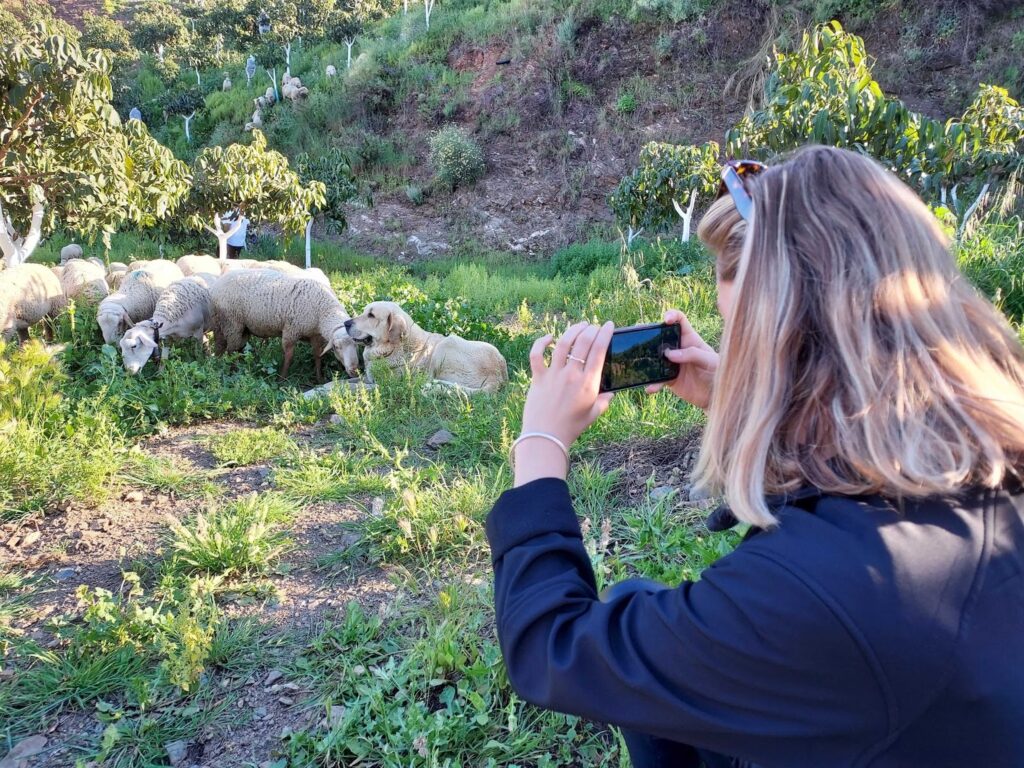
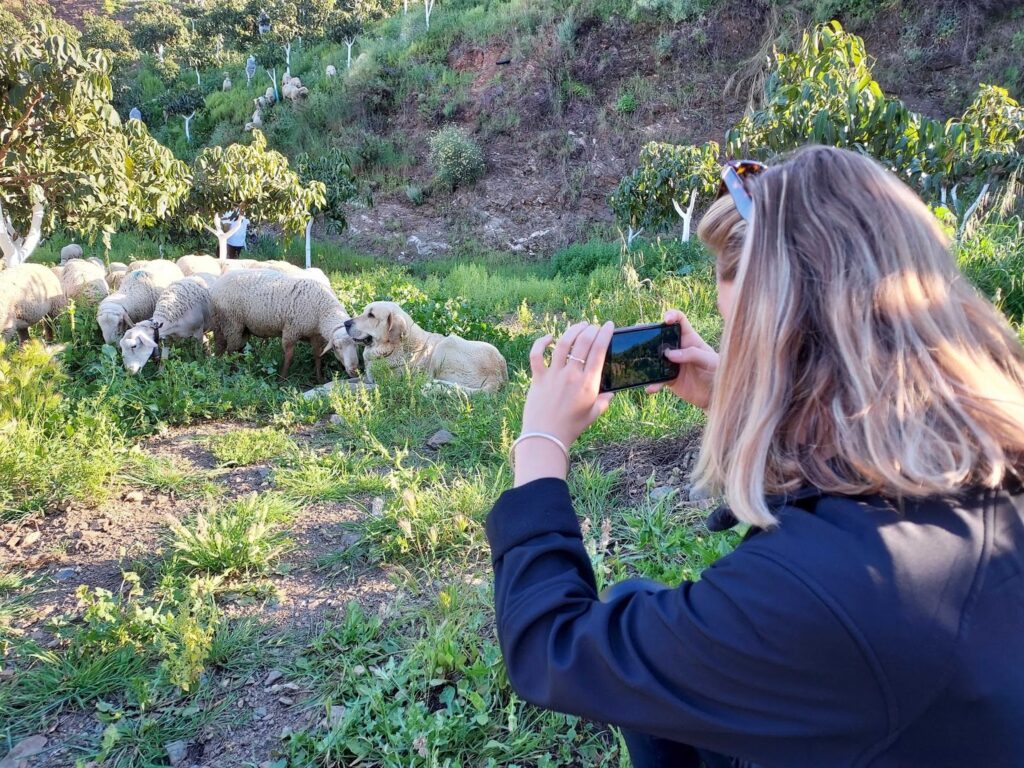
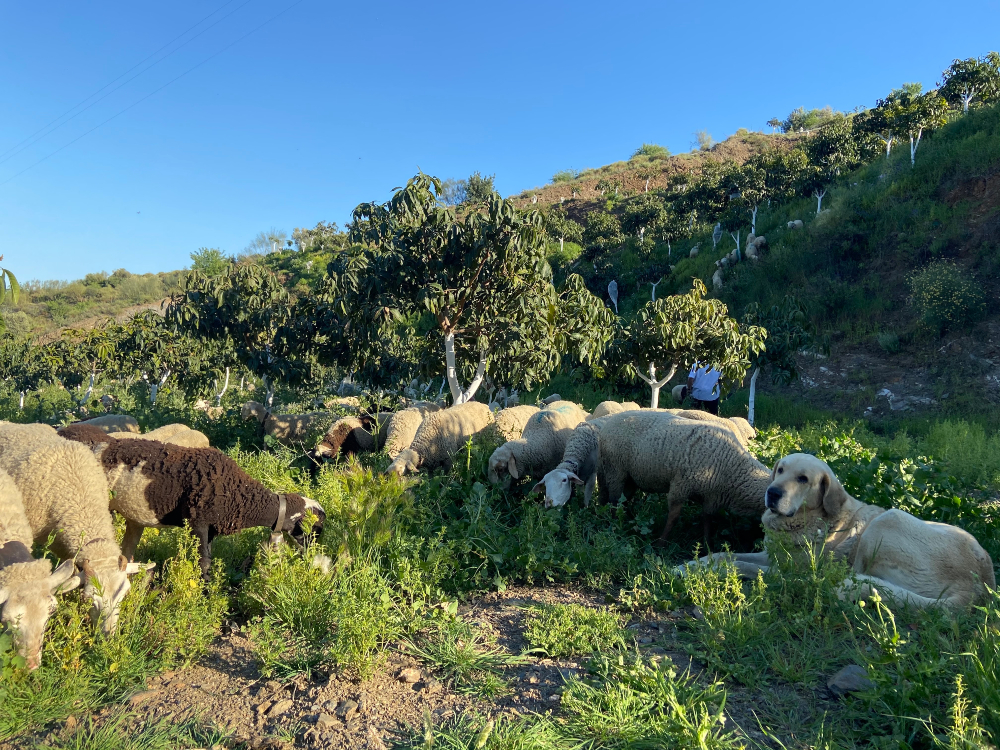
In the meantime, we had visitors! María’s neighbour’s sheep came to the mango fields to graze on the weeds. This is an ancestral and environmentally friendly method that benefits everyone: the sheep are well fed and the soil thrives thanks to the natural fertiliser. I had no idea this virtuous system existed but, in any case, it seems to make the mango trees and the sheep very happy!
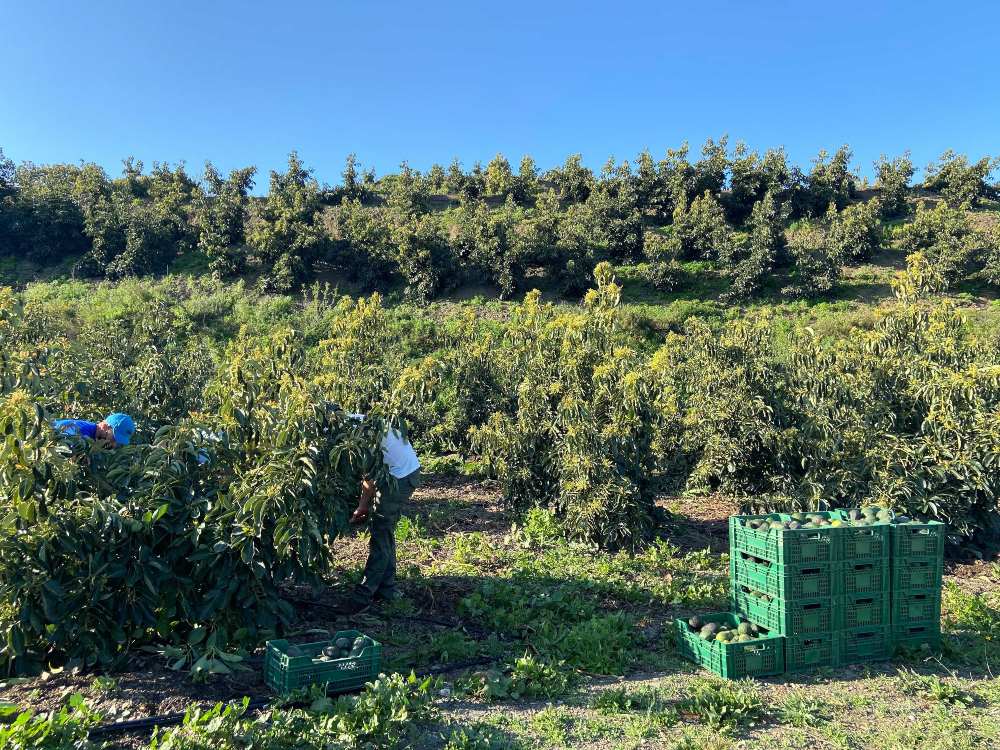
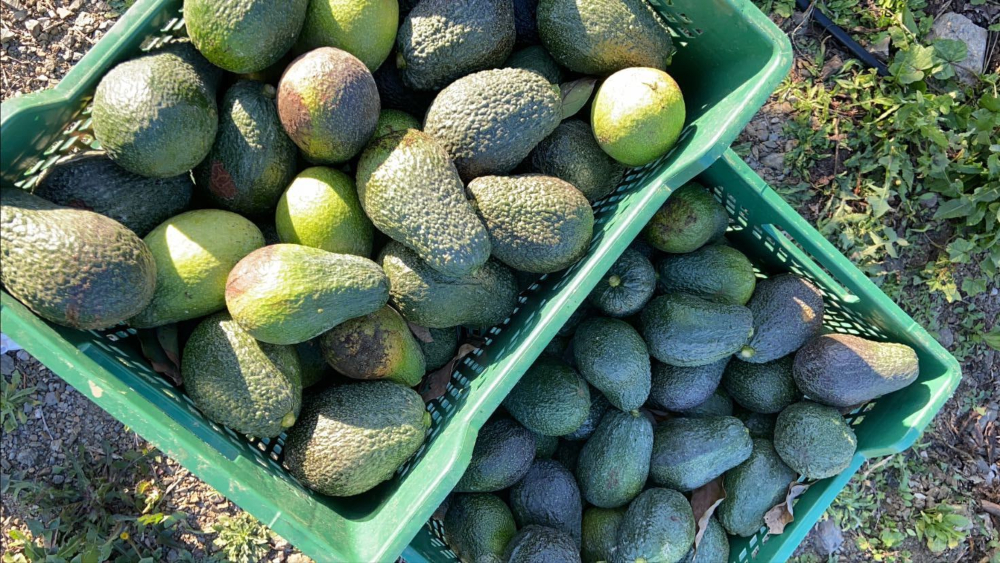
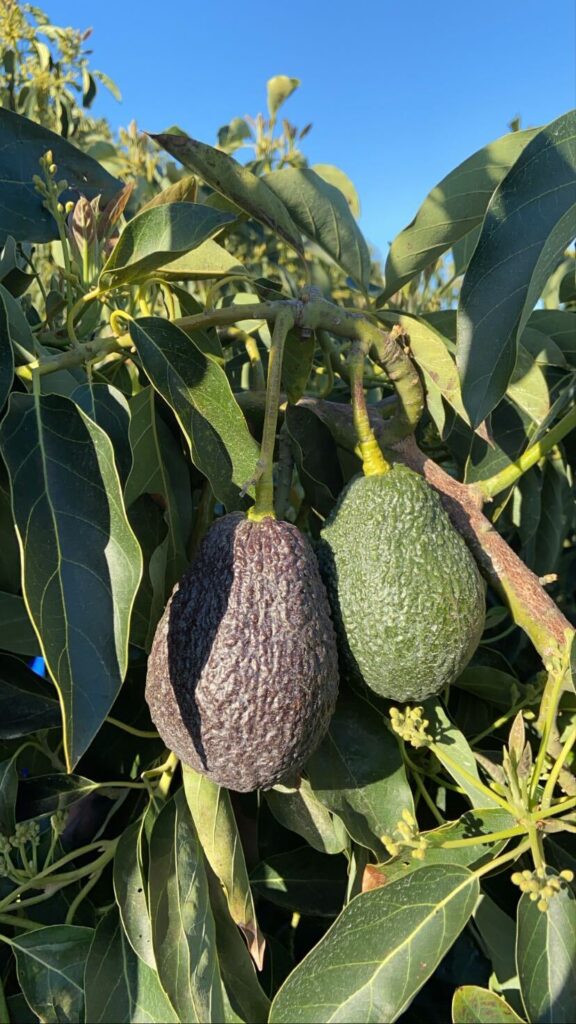
Once the visit was over, we returned to the hotel to rest up for the second day, which was going to be very intense. After getting up at 7am, we had our breakfast on the go before heading out to the second farm in Los Pepones. Once we arrived, we got to know the employees, who were already harvesting the avocados. Maria and Vidal took the opportunity to explain to me the difference between the varieties of avocado in more detail, as well as why this region is favourable for growing them. It’s even more appealing when passionate people tell you all about it in great detail!
Then, Maria took us to the field next door to see the CrowdFarmers signs hanging on each mango tree. It was so emotional! There were people from all over Europe and we tried to guess their countries by reading the names they had given to their trees. I can’t wait to adopt my mango tree this season to see my name written on one of them!
After this exciting moment, we went to the warehouse where the boxes of avocados are prepared to be shipped to the CrowdFarmers’ homes in the coming days. I was able to meet Paco, another producer of organic avocados and mangoes, who is part of the CrowdFarming family. I discovered him, like Maria, through the CrowdFarming website, because in the Marketing department we work a lot with these producers to write articles for the blog and for social media and adverts, but it’s such a joy to put a name to a face!
Paco and Maria then explained the shipping process to us:
First, they sort the avocados and cut the stem on each one, then place them in the crates. They weigh them so that each order makes 4kg, then they stick the shipping labels on the boxes and place them on the pallet, ready to ship to the four corners of Europe! It’s really impressive to see the hard work behind each order and the love that the producers and employees put into each package.
Before leaving, Paco gave us all a nice box of avocados with a letter, which made us really happy! We all left to eat together for the last time and Vidal brought us back to the station to return to Madrid filled with memories.
Written by Manon Delpech

Keep digging ...