Published March 2026
Main mango varieties cultivated in Europe
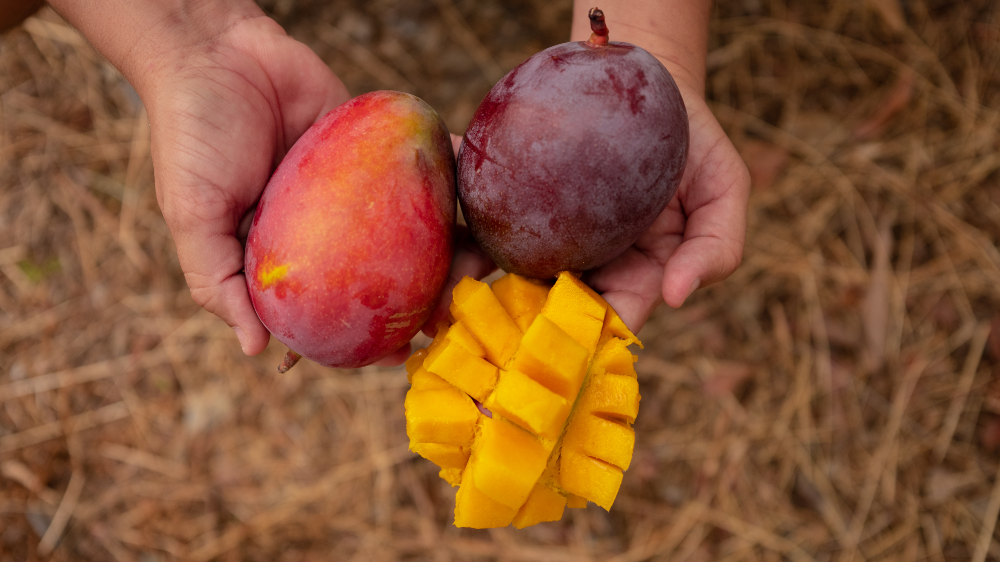
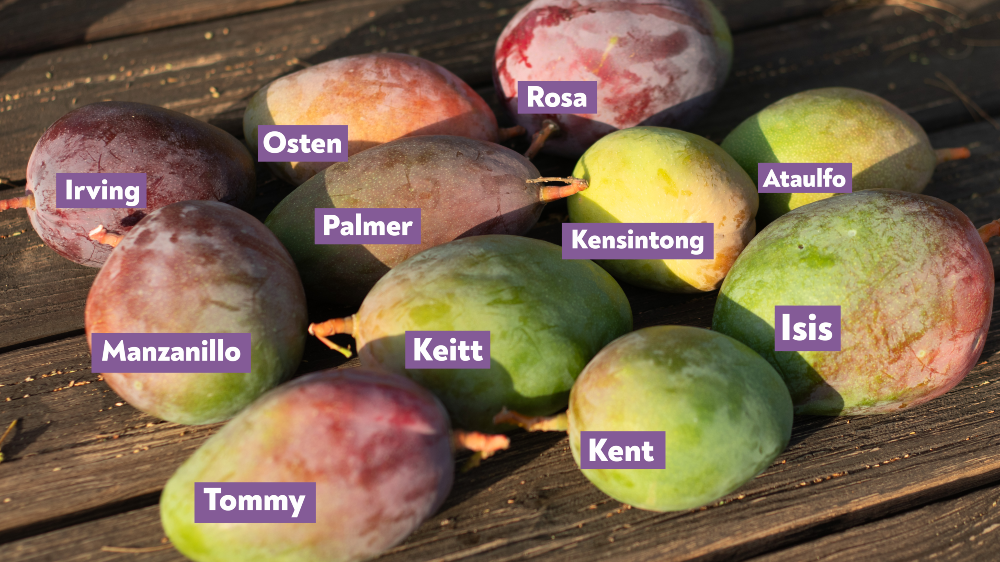
Mango is a fruit native to Southeast Asia. There are dozens of varieties cultivated in tropical and subtropical areas all over the world. Some varieties are very similar, but you can tell them apart by their shape, size, colour, taste or amount of fibres. The external colour of the mango does not indicate maturity. Some of the varieties may be green and ready to eat, others are orange, purple or yellow.
Mango is a climacteric fruit that is harvested when it reaches a level of BRIX degrees appropriate to each variety (around 8º BRIX). It is harvested hard and once harvested, it continues to evolve until it reaches the point of consumption, when it reaches between 15-20º BRIX. The BRIX degrees measure the grams of sugars in every 100g of product and indicate if the fruit is ripe.
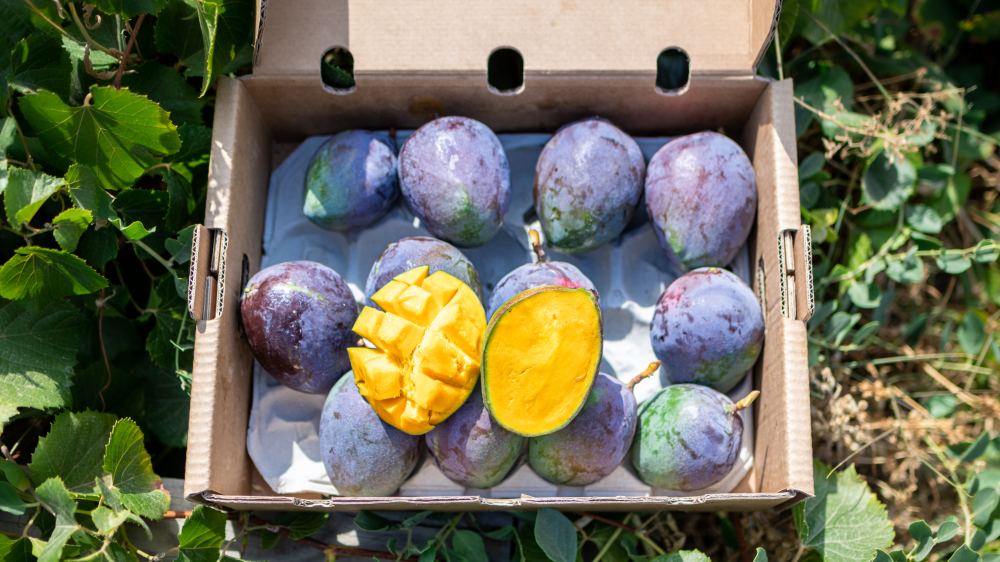
Mango cultivation in continental Europe is concentrated in the south of the Iberian Peninsula. It is a very resistant crop that has adapted very well to the mountainous areas near the sea where temperatures do not fall below 0ºC in winter. The main variety cultivated in Europe is osteen, but we can also find others such as keitt, palmer or tommy atkins. In some farms other less commercial varieties are grown, which those who are lucky enough to try them enjoy different flavours and aromas. There is no one variety better or worse than another, each one has its own peculiarity. What is your favourite variety of mango?
Osteen mango
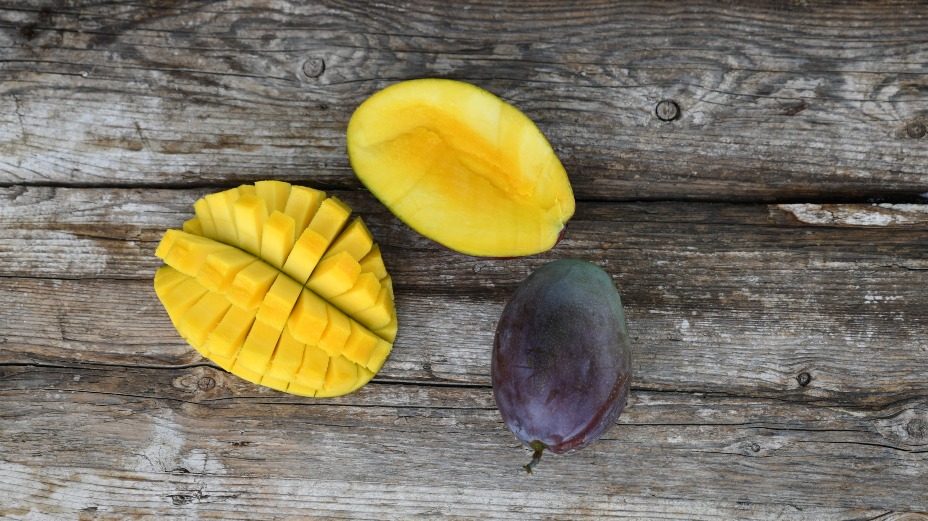
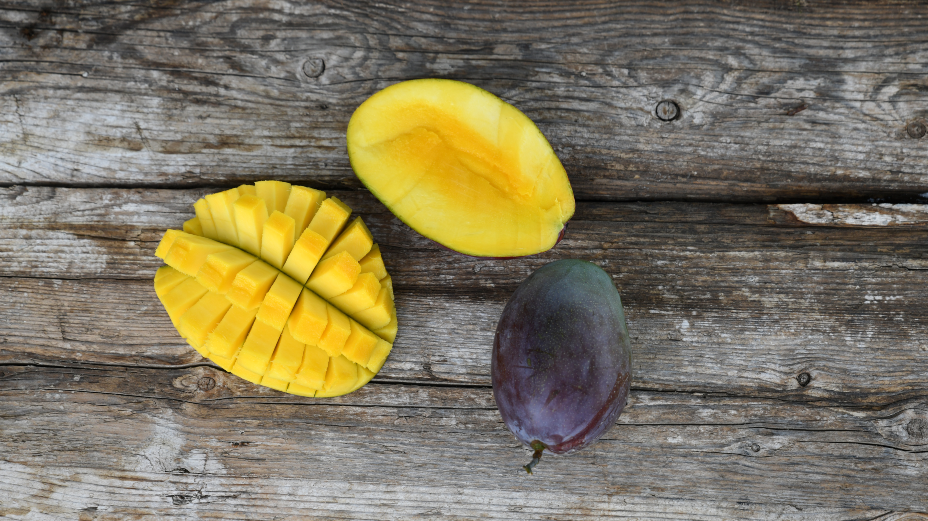
It can be considered an “autochthonous variety” of the south of Spain as it is the only production area in the world. It has an average size of between 300 and 700 g, an ovoid shape and a very characteristic purple-greenish colour. Its flesh is mustard-coloured, has a sweet taste with a touch of acid and is of excellent quality due to the low presence of fibres. This variety is one of the first to ripen, normally from September to October.
Keitt mango
It is one of the mangos with the largest average size, with weights between 450g and 1000g, it is similar to the osteen variety, you can differentiate it by its rounder shape and its greener skin. Its flesh is more yellowish in colour and has very low fibrousness. Its flavour is slightly more acidic and its sugar content is slightly lower. It is ready to be harvested around October and November.
Mango palmer
Easier to recognise, it is smaller in size, has a characteristic elongated shape and a marked dark red colour. The average weight is between 300 and 600 g. The flesh is yellow, has very fine fibres and is less acidic. As a rule, you can expect it to ripen in October.
Irwin mango
This mango, originally from Florida, stands out for its distinctive red-yellow colour and its elongated ovoid shape. Its average size varies between 200g and 500g. When tasting its pale yellow, fibre-free flesh, the flavour is sweet, reminiscent of peach and vanilla. It is a variety that usually ripens from September to October.
Tommy Atkins mango
It has an orange skin, decorated with some red areas. Its shape is oval and its average size varies between 350g and 700g. Its flesh, of a vibrant yellow tone, has some fibres but is compensated by a sweet and subtle flavour. It ripens mainly in August and September.
Mango manzanillo nuñez
This mango has a round shape and green and reddish tones. Its medium-large size, between 400g and 800g, hides a golden yellow pulp, with a sweet flavour and a minimum presence of fibres. It can be harvested between August and September.
Haden mango
The haden shines with an orange-yellow skin. Ranging in size from 250g to 600g, its oval-rounded shape protects a fibre-free pulp, intensely sweet in flavour with a sour tinge. Harvesting season is in August and September.
Kent mango
The kent proudly displays its tough, reddish-yellow skin. Its oval shape and medium size, ranging from 400g to 800g, protect a sweet flavoured flesh with a hint of sourness. The fibres are almost imperceptible, which guarantees a smooth texture in the mouth. It usually ripens between October and November.
Kensintong mango
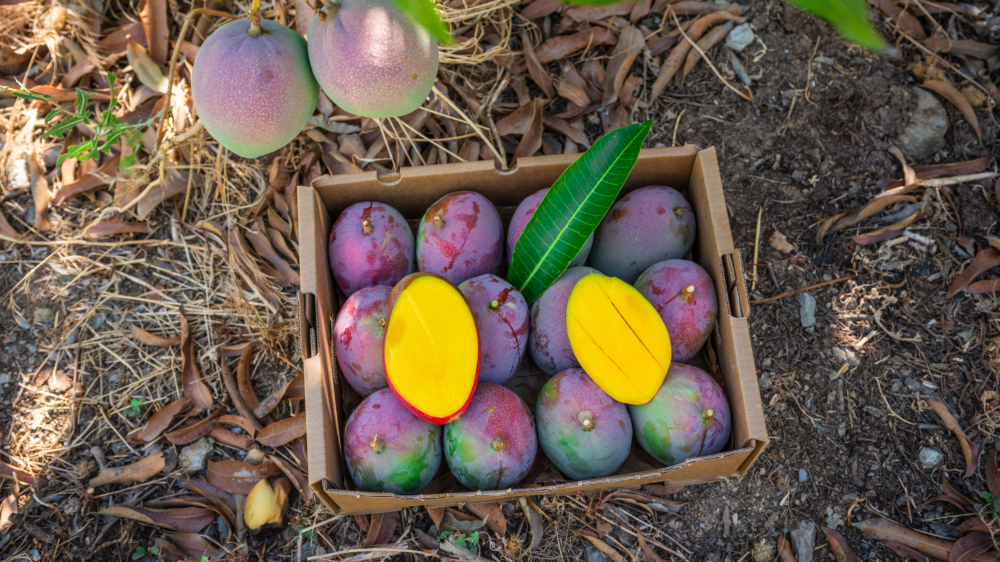
Originating from regions in Australia, the kensintong is surprising with its light green skin and pinkish-yellow shades when ripe. It is slightly ovoid in shape and weighs between 350g and 700g. Its creamy yellow flesh has a mild and sweet taste, with almost no fibres. This variety is at its optimum ripeness between July and August.
Pink mango
Native to South American regions, the pink mango has a skin that, as its name suggests, has a pinkish hue when ripe, with hints of yellow. Its shape is rounded and its average size varies between 300g and 650g. When cut, it reveals a bright yellow flesh, with a flavour that balances sweet and sour, and almost no fibres, ensuring a smooth eating experience. It usually ripens between July and August.
Mango sensation
Its skin has a very characteristic purple-orange tone. Smaller in size, around 200g to 500g, its oval-rounded shape harbours a sweet, light yellow flesh, and its low presence of fibres makes it perfect to enjoy at any time. It is ready to harvest in October.
Ataulfo mango
Also known as “honey” or “champagne”, the ataulfo originates from Mexico. Its skin is smooth, with an intense yellow tone when ripe. It has a more elongated and slightly curved shape, with a size between 150g and 350g. The flesh is a deep golden colour, with a sweet taste and practically no fibres, which makes it very appreciated in confectionery. This mango is ready to be enjoyed between August and September.
The Tropiterranean movement brings together European mango growers who cultivate sustainably and ecologically, sheltered from the cold Central European winters on the mild shores of the Mediterranean Sea. These farmers offer us with their work locally produced exotic flavours that would otherwise have to be imported at great environmental cost from far away. If you like mangoes, go ahead and try each variety and discover your favourite! Support European farmers by adopting a tropical tree.
Written by Vidal Cobos

Vidal es biólogo y "cazador de agricultores" en CrowdFarming, lo que implica actuar como consultor de agricultores y analizar granjas y productos, entre otras cosas. Es el iniciador del movimiento Tropiterranean y tiene una gran pasión por la agricultura. Su sueño es convertirse algún día en agricultor tropical.
Keep digging ...