

Published March 2026
The different types of olive oil
The United Nations Conference for the negotiation of the current International Agreement on Olive Oil and Table Olives was held in Geneva from 5 to 9 October 2015.
One of the objectives of this conference was to define the physico-chemical and organoleptic qualities of olive oils that would make it possible to differentiate and name each of these oils distinctly.
At CrowdFarming, we appreciate this type of agreement, although we would like it to be more widely disseminated within society and we would appreciate these regulations to be easily accessible to the consumer.
The agreements reached at this Conference came into force on June 3rd 2019.
Keywords
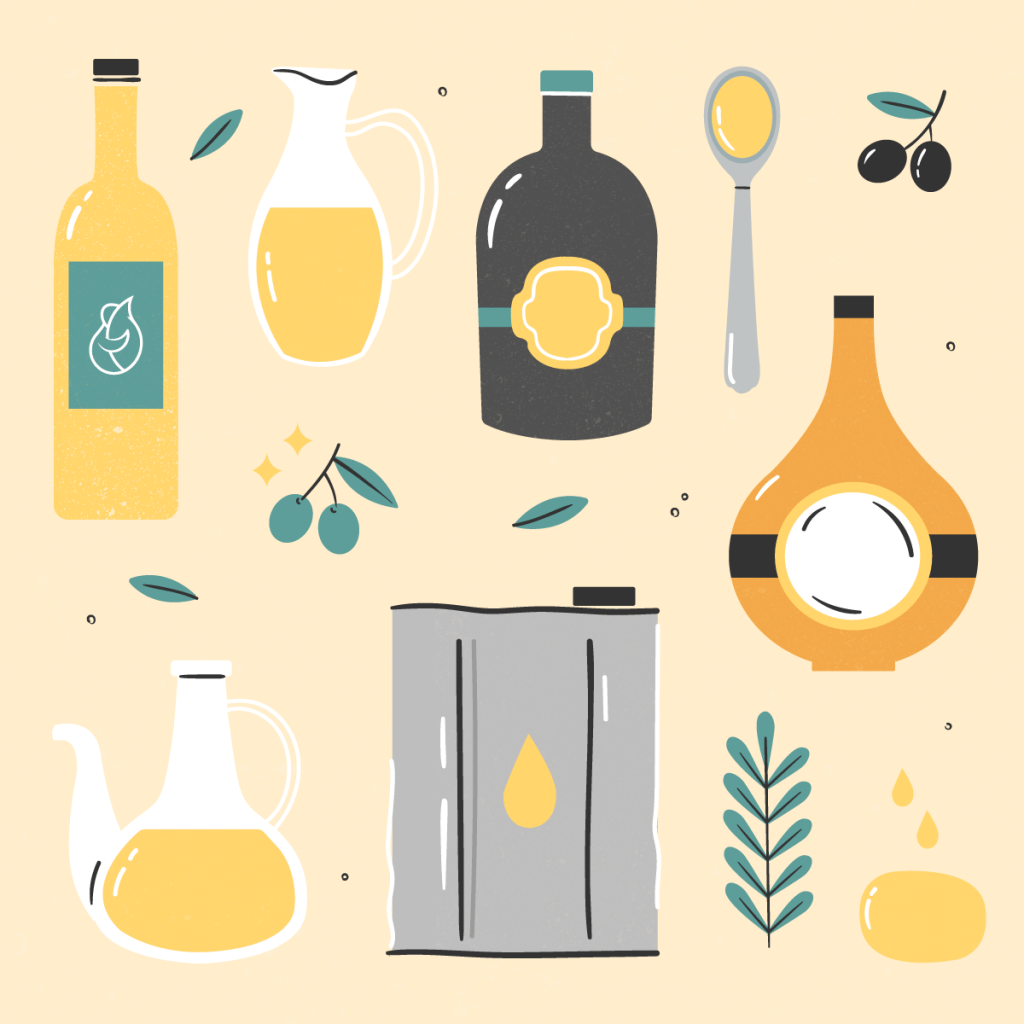
Olive oil: oil obtained only from the fruit of the olive tree. According to European Union legislation, the different categories of olive oil are as follows:
• “extra virgin olive oil.”
• “virgin olive oil.”
• “lampante virgin olive oil.”
• “refined olive oil” and
• “olive oil.” (made up of refined olive oils and virgin olive oils)
Olive pomace oil: oil obtained by treating olive pomace with solvents or other physical processes.
According to European legislation, the different categories of olive-pomace oil are as follows:
• “raw olive-pomace oil.”
• “refined olive-pomace oil” and…
• “olive-pomace oil.”
Geographical indication: is a symbol used on products having a specific geographical origin and qualities or reputation due to that origin.
What is the difference between oils?
Virgin olive oil is an olive juice extracted by mechanical means, by pressing or centrifugation.
There are two qualities:
• Extra Virgin: it is the juice with the highest organoleptic quality. Its free acidity, expressed as oleic acid, is a maximum of 0,8 grams per 100 grams and its other characteristics, in terms of purity and quality, correspond to those laid down in these regulations.
• Virgin: its free acidity, expressed as oleic acid, is not more than 2 grams per 100 grams and its other characteristics correspond to those laid down for this category in the same Regulation as above. In other words, this olive oil has slight shortcomings in aroma and taste.
Only virgin and extra virgin juices are directly bottled, the others are by-products of lesser quality in terms of taste and purity. It’s like comparing an orange juice with a fanta. Within a virgin or extra virgin oil no heat, steam or any chemical product is ever applied for its extraction, otherwise it would cease to be called virgin or extra virgin.
In order to extract the virgin oil from the olives, they are completely crushed, including the stones. It is precisely for this reason that aromas, flavours or polyphenols, tocopherols, oleocanthal, oleuropein, chlorophylls, hydroxytyrosol, etc. may be present. These are the minority components that make virgin, and especially extra virgin a healthy fat.
Then there is lampante virgin oil, which has significant flaws both in terms of aromas and chemical decomposition. What is done to make it a commercial product? It is transported by tanker truck to a refinery and then undergoes a rectification process. The free fatty acids are neutralized with the help of chemicals, bleached with activated clay, deodorized by steam or washing and selectively filtered at low temperatures (winterization). In this way, many natural minority components, antioxidants, aromas and flavours are also destroyed. Once refined, it is called refined olive oil.
Finally, a percentage of virgin olive oil is added to this refined olive oil to give it aroma and flavour and it is bottled to be marketed under the name of Olive Oil, without further ado.
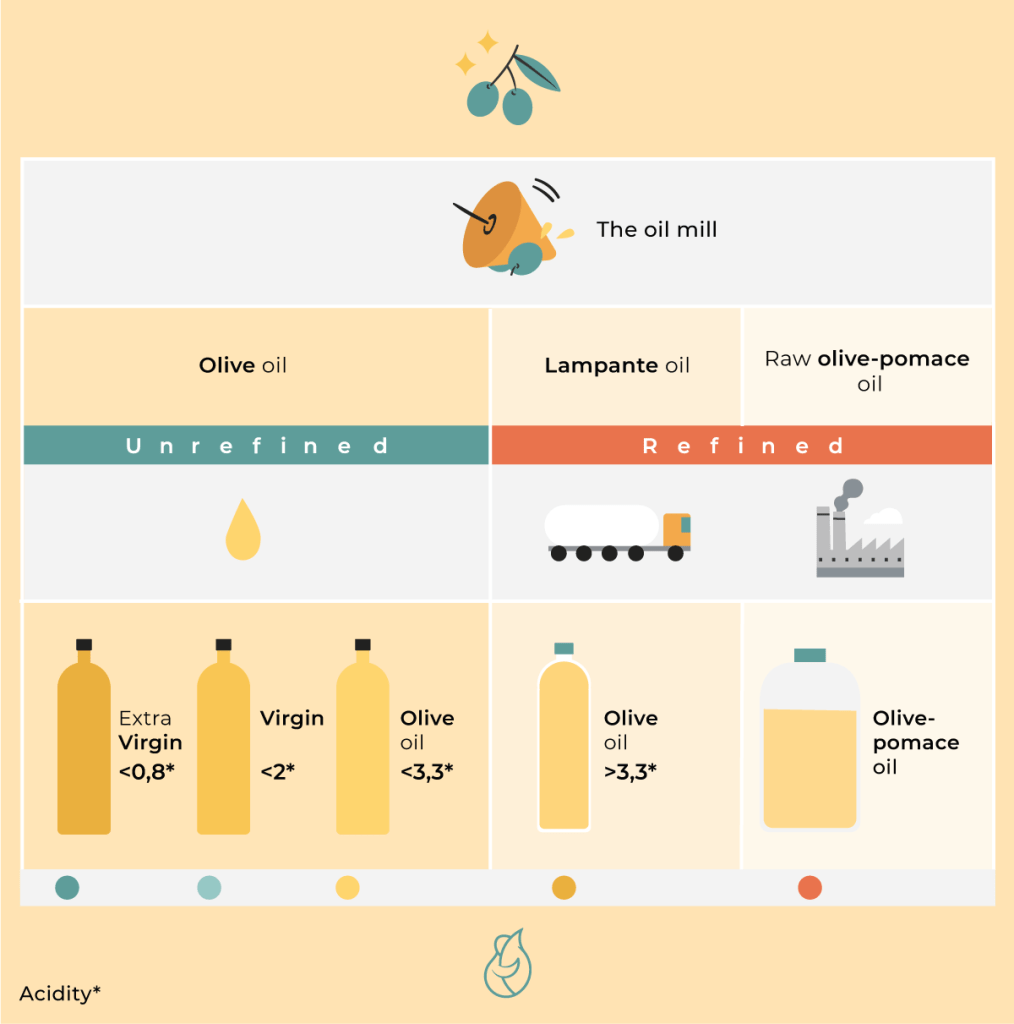
Together with direct sale, this norm allows producers of Extra Virgin Olive Oil to differenciate their products and to strive for quality instead of quantity.
How is olive pomace oil obtained?
Once the pulp and stone have been extracted from the olive, they are taken to a waste manager and from this waste (by-product), through drying and subsequent extraction with solvents, the remaining oil is extracted and refined again, this product being known as olive-pomace oil.
Important links:
Written by Gonzalo Úrculo

Gonzalo es un "farmeneur". Como cofundador de CrowdFarming y agricultor, divide su tiempo entre la oficina y el campo. Además de la agricultura, disfruta leyendo y escribiendo sobre productos digitales y logística y discutiendo sobre su impacto en la cadena de suministro de alimentos.
Keep digging ...