



Published March 2026
A Journey to the Origins of Mango Through its Flavours
The Mango, one of the most anticipated tropical fruits, has arrived earlier than expected this year. In Spain, mangoes are usually harvested between September and November, but this year the season is not only starting earlier but also ending earlier, in October. “This season has been anything but ordinary. Due to high temperatures and early ripening, we started harvesting a month and a half earlier than usual; we’ve never picked Osteen mangoes in mid-August before!” shares María from Finca Los Pepones.
Today, we bring you three recipes to make the most of our mangoes that are already ripe for harvesting, so you can enjoy them at any time of the day while they are in season, through flavours that take us back to the origins of this fruit. The mango, originally from South Asia, began to be cultivated on a large scale in a small strip of the southern European coastline in the late 20th century. This is where our Tropiterranean mangoes come from – mangoes cultivated in Southern Europe, in lands bathed by the Mediterranean —, which should be distinguished from mangoes imported from more distant territories.
Before we begin, you just have to decide which variety of mango you will use for each of these recipes! As we saw in a recent post, European mangoes offer a wide range of varieties – up to more than 10. The most adopted variety in CrowdFarming is Osteen (200 – 400 grams) or Keitt (400 – 700 grams), both delicious. For these recipes, we used these varieties from Refijo farm (approximately 450 grams each mango), cultivated by our producer, Paco Marin.
Mango Lassi (or Mango Smoothie)

Ingredients (for 2 glasses)
- 1 mango
- 1 yogurt
- 3 empty yogurt containers of milk (add more milk for a smoother texture)
- 1 teaspoon of honey
- Optional: One cardamom seed
- Peel and cut the mango into large pieces.
- In a blender, add the mango pieces and the rest of the ingredients.
- Optionally, if you want a more authentic-style smoothie – a mango lassi, add the cardamom when blending.
- Blend until smooth and creamy.
- Serve chilled.
Mango Curry
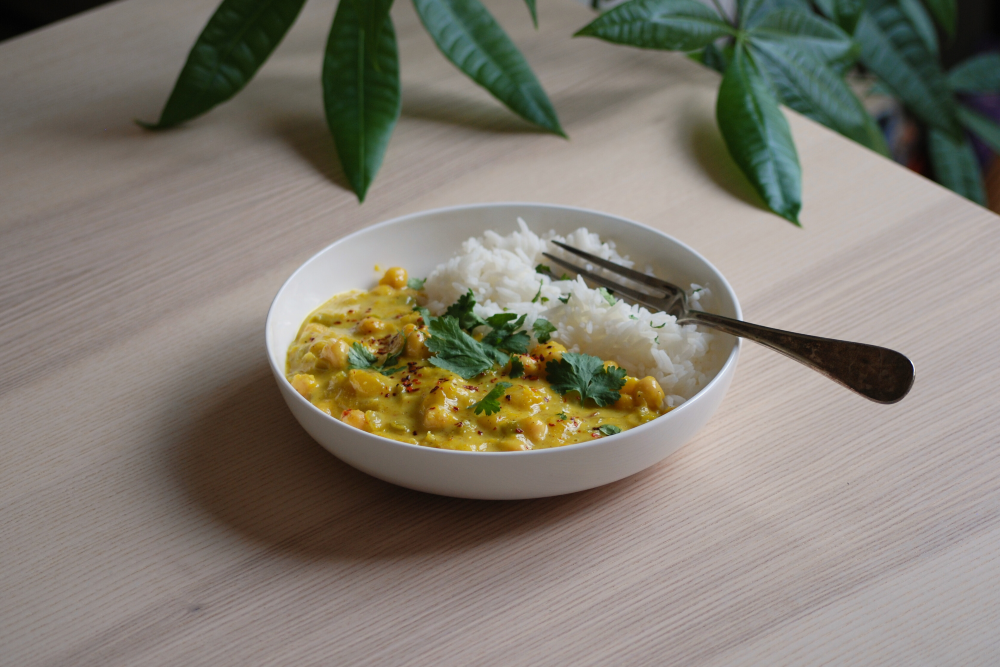
Ingredients (for 4 servings)
- 2 mangos
- 2 medium onions
- 2 long green peppers
- 4 cloves of garlic
- A small piece of ginger
- 1 jar of precooked chickpeas (400 g)
- 1 can of coconut milk
- 1 teaspoon of curry
- 1/2 teaspoon of turmeric
- 1 teaspoon of garam masala
- Some cumin seeds
- Extra virgin olive oil
- Salt and pepper
To serve
- 240 g of white rice
- Coriander leaves
- Peel the onions, garlic cloves, and ginger. Finely chop the onions, ginger, and green peppers, then set aside.
- Peel and cut the mangos into large pieces.
- In a Dutch oven or large pot over medium heat, add a generous drizzle of olive oil.
- Add the onions, green peppers, ginger, and whole garlic cloves and cook for a few minutes.
- Add the spices to the mixture, season with salt and pepper, and sauté for an additional 2 minutes.
- Add the mango pieces and cook for 5 minutes until you have a jam-like texture. Then, add the coconut milk and the drained chickpeas. Simmer for another 5 minutes.
- Serve with rice and some coriander leaves.
Mango Carpaccio
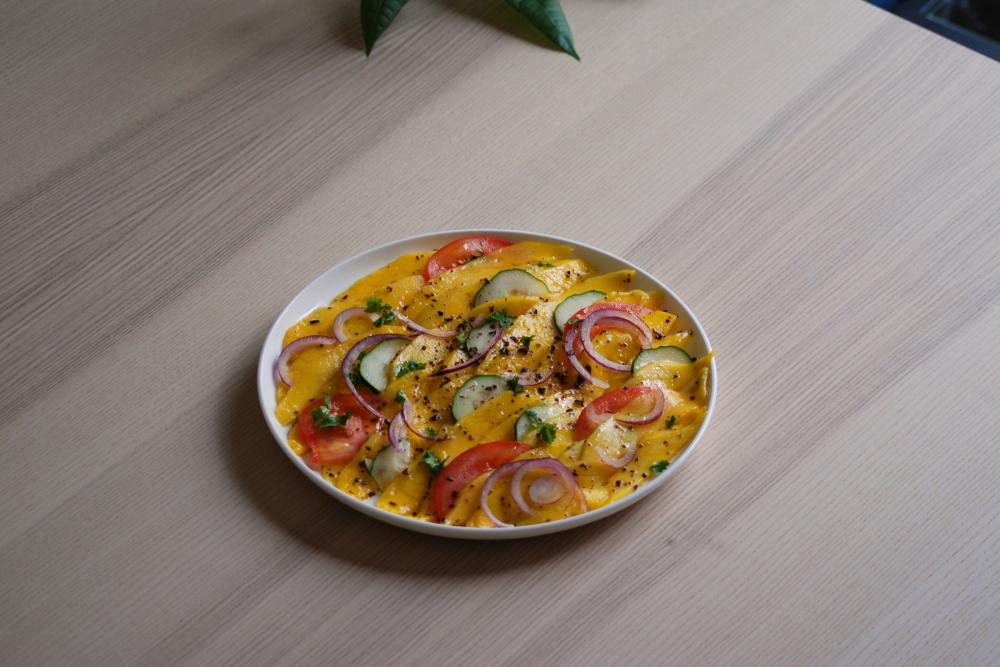
Ingredients (for 4 servings)
- 2 mangos
- 1 yellow lemon
- 1 red onion
- 2 tomatoes
- 1 cucumber
- 1 teaspoon of sumac
- Extra virgin olive oil
- Salt and pepper
- Peel and finely cut the mangos, the onion, and the cucumber, then finely cut the tomato.
- In a bowl, add the mangos, sumac, lemon juice, and a drizzle of olive oil. Season with salt and pepper.
- On a plate, arrange the mangos and then the rest of the ingredients.
- Finish assembling the dish by adding a drizzle of olive oil, lemon juice, sumac, salt, and pepper.
Written by Capucine Girardey

Capucine is all about sustainable supply chains and seasonal cooking. From a young age, the joy of cooking and a love for the environment merged into a lifelong passion. Embracing seasonal produce, Capucine creates delightful dishes and aims to inspire others. Join her in the journey to a more sustainable agri-food system, one meal at a time!
Keep digging ...