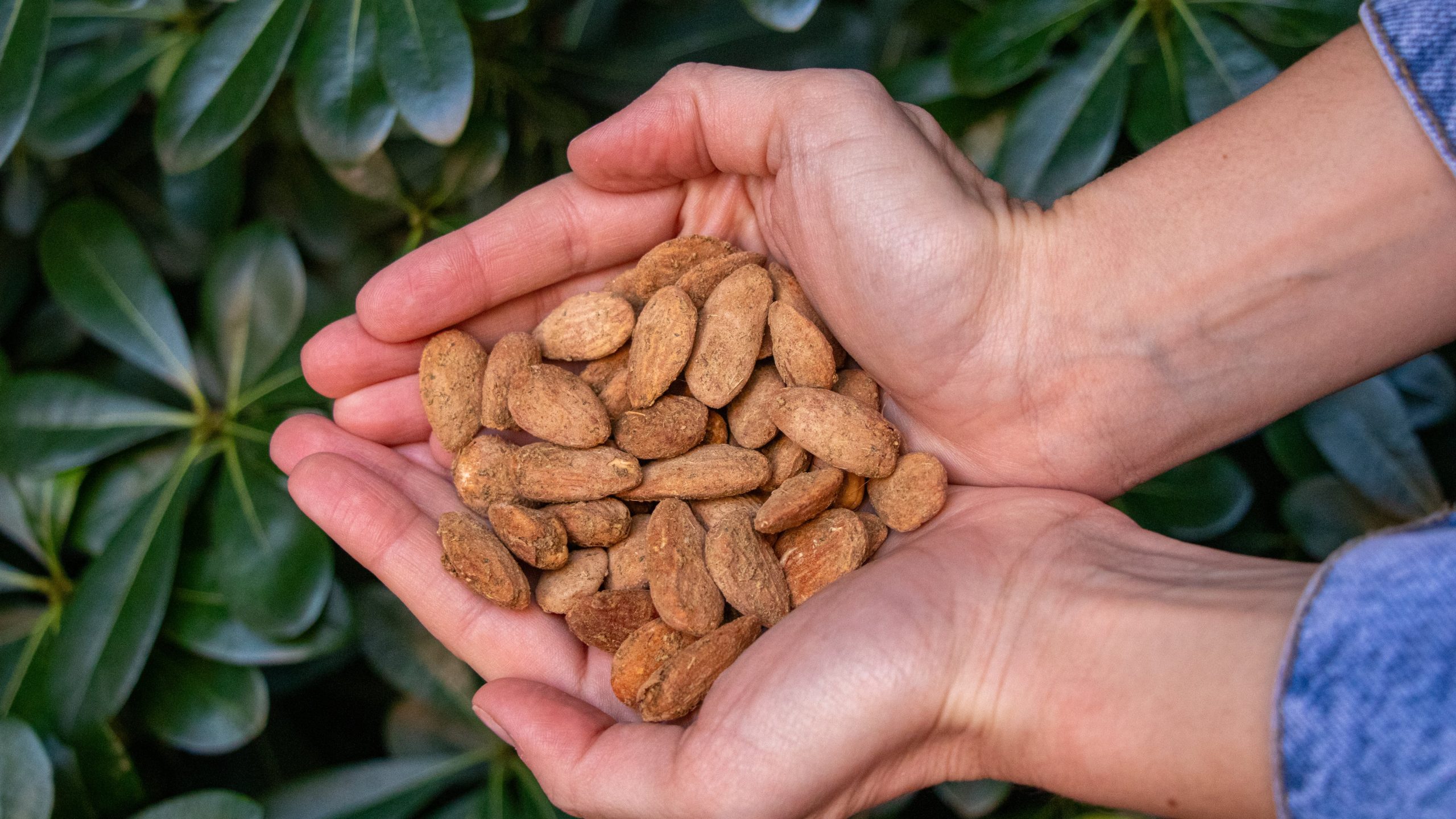
Almonds are a seasonal staple across Europe and have a rich culinary history, influencing many world-famous recipes we enjoy today. Almonds have been cultivated for thousands of years, originating in the Middle East and Central Asia and travelling to the Mediterranean, where the sunny and arid climate provided the perfect conditions for growth.Since its cultivation began in the Mediterranean, almonds have been a cornerstone of food culture across Europe. From Tarta de Santiago, the famous Galician cake that welcomes pilgrims on the Camino de Santiago, to Gebrannte Mandeln enjoyed in Christmas markets across Germany, every country has its own unique tie to almonds.In Southern Europe, almonds are typically harvested from August to late September, depending on the variety and local climate. During this period, the hulls split naturally, signalling that the almonds have reached optimal maturity.Now that the trees have just been harvested, it’s the perfect time to explore some of Europe’s most famous almond recipes, with 4 traditional almond recipes from Spain, Germany, France, and Italy. Tarta de Santiago- Spain A traditional cake from Galicia made with almonds, sugar, and eggs. Recognised by the emblematic cross of Saint James stamped in powdered sugar, this cake dates back to the 16th century and has become a symbol of hospitality for pilgrims on the Camino de Santiago. Ingredients for 8-10: 250g whole almonds (can be with skin- grind finely before using) 250g caster sugar 4 large eggs Zest of ½ lemon Zest of ½ orange 3/4 tsp ground cinnamon Butter for greasing the tin Icing sugar for dusting Preparation: Preheat the oven to 180°C. Grease a 23cm round cake tin with butter.Grind the almonds in a food processor or blender until you get a fine, even meal. A slightly coarse texture gives the cake its signature crumb.Whisk the eggs and sugar together until pale and fluffy.Add the ground almonds, lemon zest, orange zest, and ground cinnamon. Mix until well combined.Pour the batter into the prepared tin and smooth the top.Bake for 30–40 minutes, or until a skewer inserted into the centre comes out clean.Cool in the tin for 10 minutes, then transfer to a wire rack to cool completely.Dust the top with icing sugar before serving.*Decoration Tip: To create the traditional Cross of Saint James design, place a stencil of the cross on the cooled cake before dusting with icing sugar. Gebrannte Mandeln- Germany A familiar scent in any German Christmas market, these cinnamon-roasted almonds are crisp, sweet, and simple to make at home.Ingredients for 2-3: 200g whole almonds (with skin) 180g granulated sugar 100ml water 1½ tsp ground cinnamon 1 tsp vanilla extract Preparation: Line a baking tray with parchment paper or a silicone mat.In a large, heavy-bottomed pan, mix the sugar, water, cinnamon, and vanilla extract.Place the pan over medium-high heat and stir until the sugar dissolves and the mixture begins to boil.Stir in the almonds and continue to cook, stirring constantly, until the water evaporates and the sugar crystallises around the almonds.Once the sugar has crystallised, reduce the heat to medium and keep stirring until the sugar melts and coats the almonds in a shiny caramel.Transfer the almonds to the prepared baking tray, spreading them out in a single layer. Allow them to cool completely. Tarte Amandine- France A French classic with a buttery crust and creamy frangipane (almond cream) filling. This rich and elegant tart makes for the perfect dessert to serve at your next gathering. Ingredients for 8-10:For the crust: 100 g unsalted butter, room temp 50g powdered sugar 1 large egg, room temp 40g almond flour 200g all-purpose/plain flour 1 pinch salt For the frangipane filling: 115g unsalted butter, very soft 65g caster sugar 2 large eggs 1 tsp vanilla extract ¼ tsp almond extract 120g almond flour ¼ tsp kosher salt 50g sliced almonds Icing sugar, for dusting Preparation: Crust: Place soft butter and sifted powdered sugar in a large bowl. Beat on medium speed for 2–3 minutes until smooth and creamy.Add the egg and almond flour, mixing until fully combined. The mixture will be thick and uneven.Sift in the plain flour and salt, mixing slowly until a rough dough forms. Press the crumbs together, they should combine into a smooth dough.Place dough between two sheets of parchment and flatten into a thick disk. Roll to ~4 mm thick. Transfer to a large baking sheet and chill for 1–24 hours until firm.Remove parchment, place dough over a 24 cm tart tin. Press gently into corners. Patch any cracks with fingertips and trim excess dough. Chill for at least 3 hours or overnight.Preheat oven to 160 °C. Dock the pastry with a fork and place in the freezer for ~15 minutes while preheating.Bake for 16–18 minutes, until the bottom feels dry. Cool completely on a wire rack.Frangipane filling & assembly: Preheat the oven now to 180°C. Line a baking sheet with parchment paper and set aside.In a medium microwave-safe bowl, melt the butter in a microwave and let cool slightly.Whisk in the sugar until incorporated, then add the eggs one at a time, mixing well after each addition.Stir in the vanilla and almond extracts.Add the almond flour and salt, mixing until smooth and creamy.Pour the frangipane filling into the cooled tart crust, spreading it evenly. Sprinkle the sliced almonds over the top, if using.Place the tart on the prepared baking sheet and bake for 30–35 minutes, or until the filling is set and golden brown.Allow the tart to cool in the pan for 10 minutes before transferring to a wire rack to cool completely. Once cooled, dust with icing sugar before serving. Pizzicotti-Italy These almond cookies originating from Sicily get their name, pizzicotti, meaning “little pinches” from the shape they take when you pinch the top of each rounded ball. These cookies are simple and delicious, with a fragrant aroma and flavour from ground almonds and almond extract. Ingredients for 8-10: 250g whole almonds (with skin – see step 1) 70g egg whites (from approximately 2 eggs) Lemon zest from 1 lemon 200g caster sugar ½ tsp almond extract Powdered sugar for topping Preparation: If using whole almonds with skin, blanch them briefly in boiling water for 1–2 minutes. Drain and gently rub them in a clean towel to remove the skins. Let them dry completely. Put the blanched whole almonds and granulated sugar in a food processor. Blitz until they turn into a fine flour. Add the egg whites, lemon zest and almond extract. Process until you get a smooth, compact dough. Transfer the dough to a bowl and form balls of about 30g each. You should get ~18.Roll each ball in icing sugar until fully coated. Place the sugared balls on a baking tray lined with parchment paper. Pinch the top of each ball using your thumb, index and middle finger to give it the “pizzicotti” shape. Chill in the fridge for at least 5 hours, or ideally overnight. Preheat your oven to 180 °C just before baking. Bake for about 12 minutes, or until lightly golden. Let them cool completely before serving.