
Looking for more? 

We’re just an email away.

CrowdFarming

min

Published October 2026

From Win-Win to Win-Win-Winner

The Win-Win strategy is the most widely used business formula today to convince us to sell or to secure the signing of a contract. It suggests that in a Win-Win scenario both parties are beneficiaries. However, often, the first to use this expression in a negotiation is the one who decides what the other participant must win. A salesperson with this over-used expression will always try to describe in much more detail what the other party gains, rather than his/her own part.


It is not clear at what point this formula began to be used so often, but one thing is certain, it is beginning to become obsolete. The Win-Win does not consider that a third party may also benefit from an agreement or purchase between two parties.

Many of today’s interesting projects have not only the consumer in mind but also society and the environment. I believe this criterion has become an almost mandatory condition for a project to become successful, and this gives me an optimistic view of the future. It is gratifying to see how today the success of a project is currently judged not only by its profitability but also by the impact it generates globally, such as employment or on the carbon footprint.


In a healthy society, consumers must have the right to inform themselves about how, where and by whom the production of what they buy was made. This allows consumers to add a positive impact to their purchase, initially motivated by necessity. 


For the impact to be profound and sustainable over time it should not be the result of a marketing campaign. It must be part of the company’s (or project’s) DNA and be visible in all areas of its activity. This does not mean that a company cannot “promote itself” (always with humility) and communicate with its customers the positive impact generated by their activity. Sharing data and explaining how it was obtained is proof of transparency that enriches our society.
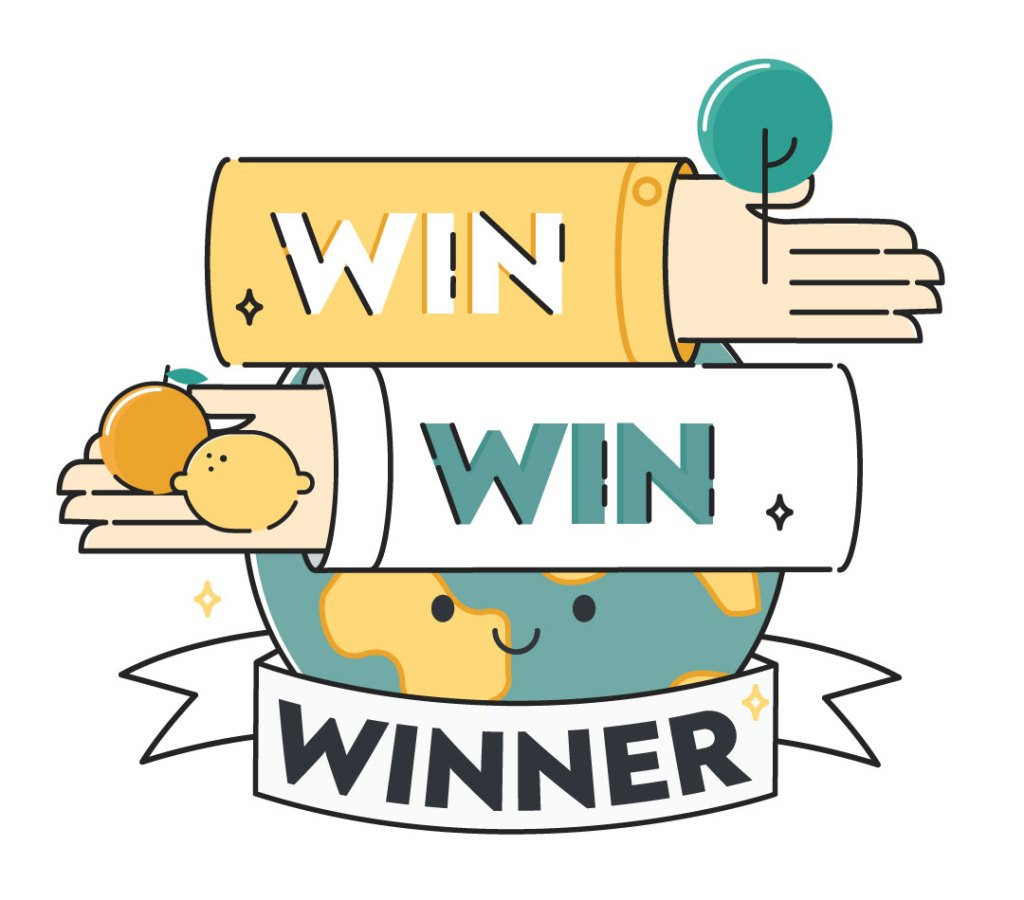
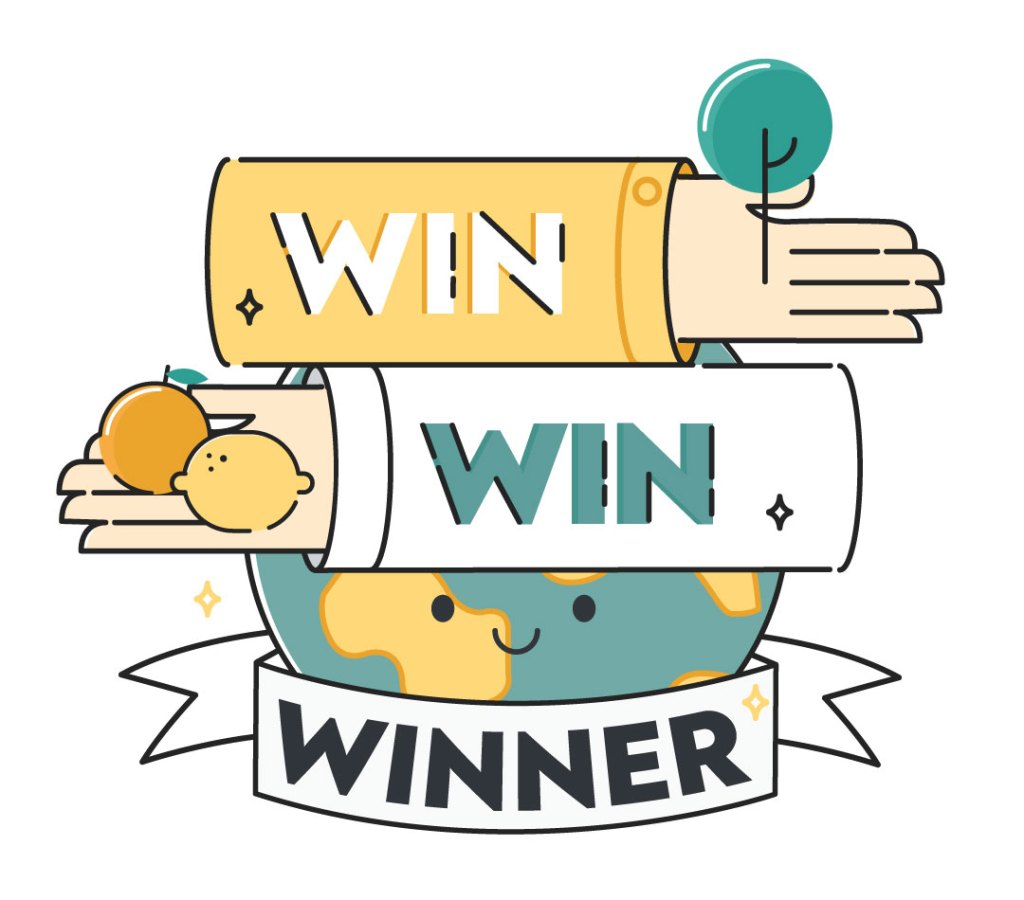
Illustration of CrowdFarming's Win-Win-Winner concept

Here is a list of some companies or projects which from the outside have a very internalized impact:

Too Good To Go: this app fights food waste at the destination. Food stores offer their surplus at a lower price through this app.

Auara: a social enterprise that sells water to finance projects that provide access to drinking water for those who need it most. They have also just released a new organic beverage product with fair trade ingredients that looks very good.

Proyecto Los Aires: two young biologists who are dedicated to olive cultivation and who live not only by selling oil but also by training consumers. Consumer education.

Written by Gonzalo Úrculo

Gonzalo Úrculo

Gonzalo es un "farmeneur". Como cofundador de CrowdFarming y agricultor, divide su tiempo entre la oficina y el campo. Además de la agricultura, disfruta leyendo y escribiendo sobre productos digitales y logística y discutiendo sobre su impacto en la cadena de suministro de alimentos.

Share this content:

Keep digging ...

CrowdFarming

3 min

Thoughts on the first half of 2026

Written by Gonzalo Úrculo, farmer, CEO and co-founder of CrowdFarming. Note: I wrote this text as an internal document to align the people who work at CrowdFarming every day. For a couple of years now, I have also shared it with our community of farmers, customers, and suppliers.At the end of the article, you will find a glossary explaining the meaning of technical terms or internal jargon marked with an asterisk (*) throughout the text. Has sustainability gone out of fashion?I haven’t read company statements on sustainability on LinkedIn or in the press for a while. It’s as if sustainability managers have now transformed into AI gurus. It very much looks like the sustainability that was done for outward appearances has lost momentum in the corporate world. And this, in my opinion, is positive because it reduces noise and allows actions to speak for themselves. Corporate sustainability is a competitive advantage when it is part of a company’s culture. Well-applied sustainability achieves positive and sustained effects over time on business metrics. During this first half of the year, we have managed to reach these business metrics, not through a one-off effort but through constant drive in the same direction: 2,969 farmers selling their harvests at a fair price. Soil analysis conducted on 47 new farms to measure the impact of regenerative practices, and designing an agronomic programme together with the farmers to increase their soil’s natural fertility in the long term. With these 47, there are now 100 farms within our regenerative organic farming programme. €1,794,784.43 in sales of fruits and vegetables in conversion to organic. Receiving a fair, predictable, and stable price is especially key when a farmer is in the delicate phase of conversion to organic because their trees usually experience a drop in productivity. 25% increase in sales of All Is Good* (our brand of processed products) compared to last year. And furthermore, we are starting to see the results of our efforts at an economic level. For the first time in 5 years, we have finished the first half of the year with positive EBITDA*, and growing at double digits. Betting on the direct production and sale of organic products is profitable. To achieve this positive EBITDA*, we have all had to make sacrifices and prioritise spending items well.An example of this is that we have not renewed our B Corp* seal. It was a difficult decision because this seal has positive aspects. Renewing the seal cost €16,000 this year and, thinking clearly, although it’s cool to have a company audit the sustainability of your operations, we saw that we weren’t getting the most out of it and that this money (a scarce resource in our startup) could be dedicated to more farmer training and to raising the salaries of some profiles in our team. We do not rule out getting recertified in a couple of years. Successes to celebrate from the first half of the yearSuccesses must be celebrated. Especially those you pursue, but also those you achieve almost by accident. I have found that when you surround yourself with good people, the mission that unites you is pure, motivating, and ambitious; along the way, good things happen that you didn’t even count on. We do not have a goal to reach a certain percentage of young farmers selling through{Brand} CrowdFarming but we were very excited to see that, naturally, we have achieved a metric that is well above average.

Read