Published October 2026
Farmer Survey 2023
As we do every year, it’s time to conduct our farmer survey, to better understand their experience of CrowdFarming, what they value most about our service and where we can do better. Although we maintain close contact with farmers through our team of agronomists, it’s essential to stop and reflect on our relationship over the past year.
Our annual survey serves as a direct window into the farmers’ perspectives, offering insights into their realities in the world of direct sales. It covers various aspects, from the significance of being part of CrowdFarming to the challenges they face in the direct-sales model. The fact that more than 60% of CrowdFarming producers have participated in the survey, shows us that it is also important to them to give us their version of things in order to continue growing together.
We are the farmers’ gateway to direct selling online, although we are not yet their main sales channel.
We are pioneers of direct online sales, nearly 50% of the producers we surveyed didn’t have a direct online sales channel before joining CrowdFarming, reinforcing our role in connecting producers with consumers across Europe. While some of our producers rely solely on CrowdFarming as their sales channel (about 10% sell 75-100% of their production through us), a significant portion combines it with other sales channels.
A large majority (70%) of our producers allocate up to 25% of their production through our platform, while the rest is distributed through various outlets, including supermarkets, distributors, and wholesalers, with in-person direct sales at local farmers’ markets following closely behind. Given that most of our producers started this journey with us less than three years ago, it is only natural for their initial focus to revolve around diversifying their sales channels, rather than putting all their eggs in one basket.
We hope to witness an increase in the percentage of sales directed through CrowdFarming in the coming years as confidence in this channel continues to grow, as is already the case with some of our more experienced producers.
The last year has been characterised by rising input costs and many farmers see CrowdFarming as an additional and more stable source of income.
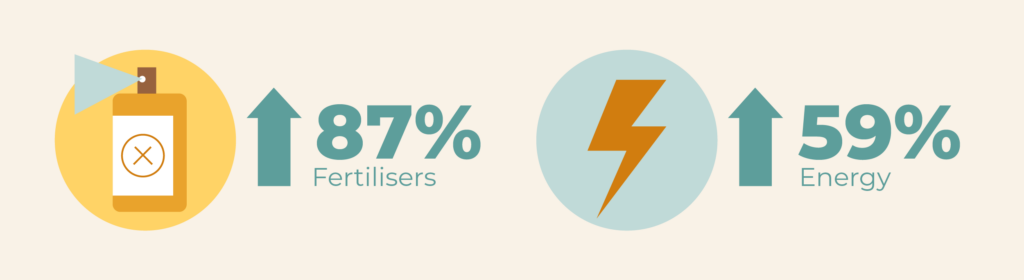
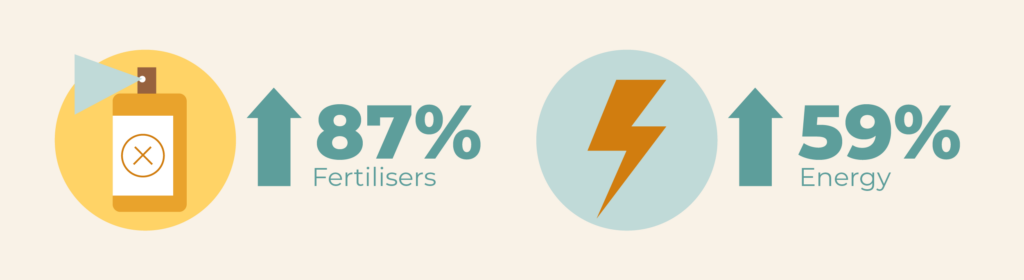
As we all know by now, the past year has not been an easy one for European produce. The economic situation has affected the costs of many farms, with fertiliser and soil improver prices increasing by 87% and energy by 59%.
This situation is also reflected among our growers. Just over half of those surveyed say that their costs have increased by up to 25%, and 44% say they have increased by more than 25%, and in some cases by more than 100%.
Some of the most prominent causes of the cost increases are inflation and the difficult macroeconomic context we are facing, exacerbated by changing and unfavourable weather conditions for farmers or difficulty finding staff.
As we can see, the current economic situation is not at all comfortable for farmers, which is why we are proud to say that around 60% of our farmers have seen their annual income increase by up to 25% thanks to CrowdFarming. 12% of them have seen an increase of up to 50%, and in some cases, even up to 100%. This income has been reflected in investments in improvements to their business, contributing to the development of the rural economy:
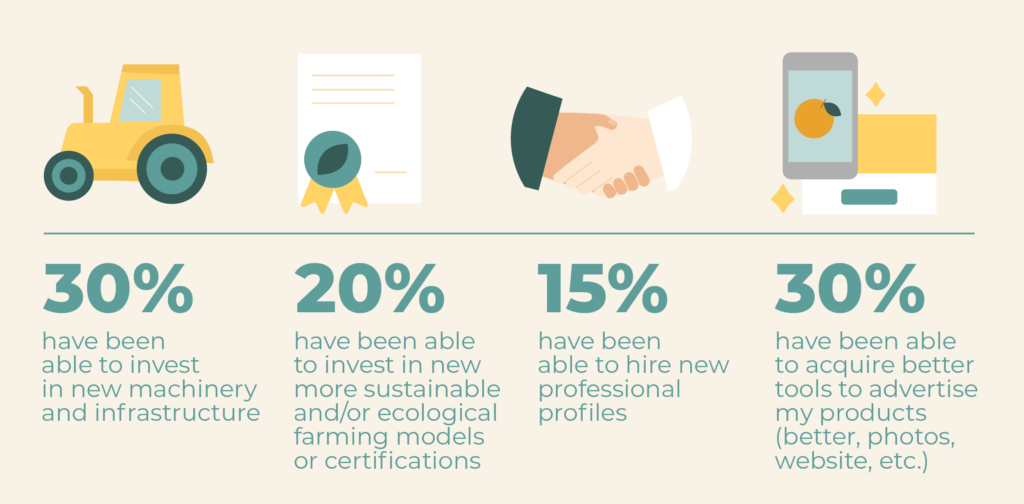
For some of our producers, direct sales through CrowdFarming have improved their financial stability. Approximately 30% of the producers say that their income is more stable with CrowdFarming, and for 60% this stability is similar.
According to the farmers, CrowdFarming plays an important role in contributing not only to the farmer’s economy but also to their community. This is crucial considering that rural areas occupy a significant portion of Europe’s landscape, yet only 21% of the population resides there. More worryingly, there are fewer and fewer young people working in rural areas every year.
A third of our producers state that thanks to CrowdFarming they have been able to increase the number of permanent workers on their farm and offer better working conditions. This includes promoting professional development, access to training and the implementation of health and safety measures.
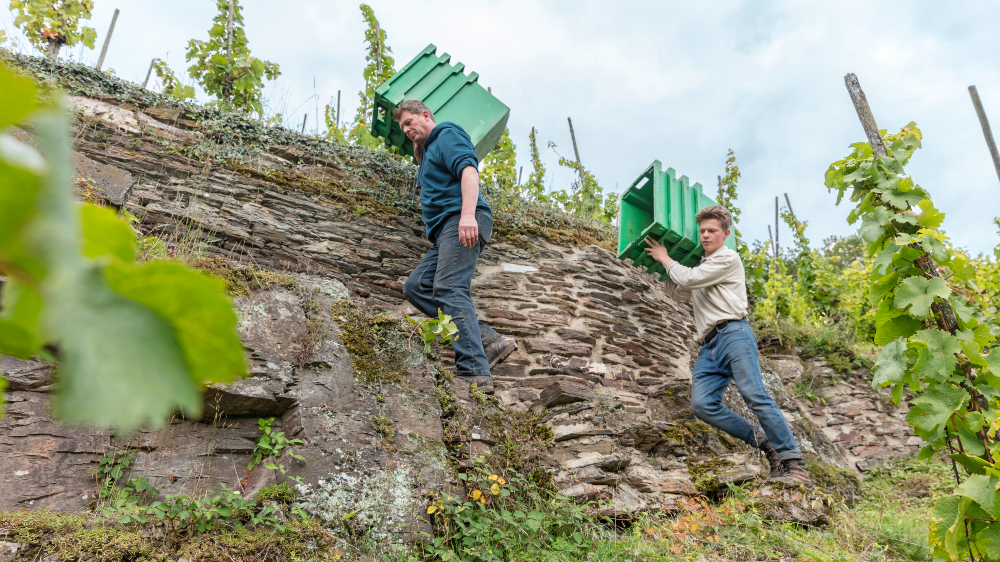
Additionally, more than 70% support their communities by collaborating with local suppliers, participating in local events, and promoting job placements in their regions. Additionally, 36% lead various educational initiatives in their communities.
“For me, being a farmer means not abandoning the land, even if it is in a marginal area with a high risk of depopulation; It means giving value to family heritage; It means giving a future to small-scale agriculture in the difficult balance between economic, environmental and social sustainability.”
Extra virgin olive oil producer, Italy.
Much more than a sales channel, Crowdfarming is a way for producers to connect with the consumer and give value to their work in the field
“Being part of CrowdFarming means being part of a large community of farms spread across Europe, a movement that we hope will do more and more work to educate consumers. It means working with knowledgeable people who know and respect the work behind a bottle of olive oil or a bag of almonds.”
Cheese producer, Italy
Our role as a direct sales channel is more than just providing an extra platform. If we want to create a fairer and more sustainable chain, we have to foster a strong connection between the consumer and the producer, and commit to respecting and protecting the environment that surrounds us.
Many of the farmers say that, thanks to CrowdFarming, they have been able to expand their knowledge about:
- The consumer and market trends (67%),
- Responsible waste management and choosing sustainable packaging (33%)
- The implementation of new sustainable practices on the farm (25%)
- Flexibility in the appearance or size requirements of their products (25%), contributing to reducing food waste.
98% of farmers see great value in adoptions, as it aids in their planning and enhances economic stability. Another compelling aspect for farmers is the direct relationship they have established with consumers. This connection, strengthened by scheduled visits to the farms to learn about their adoptions up close, is a unique experience for both producers and CrowdFarmers.
“Welcoming consumers on our farm makes all the work more worthwhile. It is very nice to see the feedback from the people who buy from you and who create a bond with you and your project.”
Extra virgin olive oil producer, Spain.
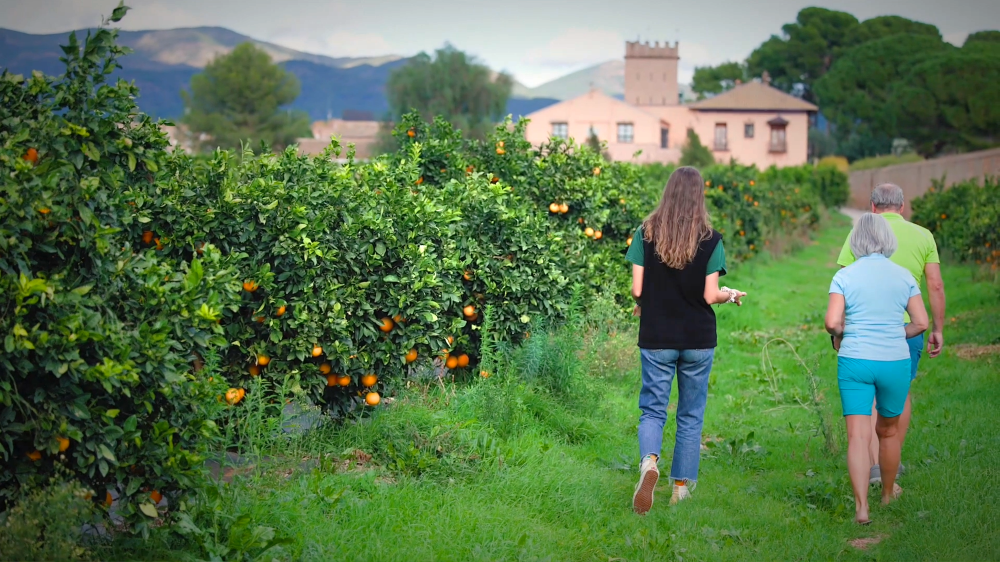
Another advantage that producers see in adoptions is the reduction of food waste, and around 60% of our citrus and tropical producers have reduced food waste on their farms since working with us. These product categories, in addition to being two of the most relevant in CrowdFarming, are products susceptible to generating food waste in other channels, given that they can be easily damaged during transportation and storage and are often discarded for aesthetic reasons given the low economic impact they have. At CrowdFarming, we work to raise awareness among both producers and consumers in this regard.
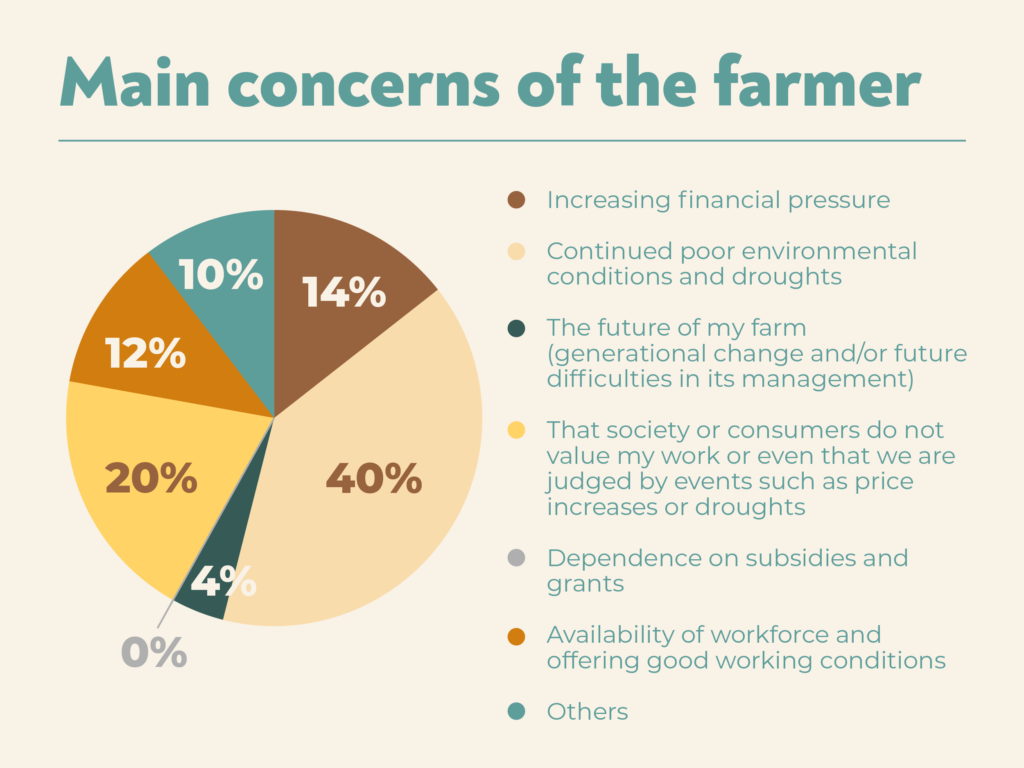
60% of our producers are worried about how the climate will affect their work. Furthermore, some of them fear that they will be held responsible for extreme climate events, such as the droughts we have experienced in some regions of Europe this year.
“If we suffer another period without rain in the coming months, we will not be able to continue with our farm.”
Stone fruit producer, Spain.
We wanted to delve into how these droughts, torrential rains, heat waves, etc. have affected their crops. There seems to be a general consensus: 80% claim to have experienced a reduction in their production due to these adverse climatic factors. We can see it more clearly in some products such as tropical, citrus, and extra virgin olive oil. In these last two, more than 50% of farmers have reduced or expect to reduce their harvest, maintaining only between 50 and 70% compared to the previous year. In tropical products, at least 25% consider 2023 a dramatic year, having reduced their harvest by up to 70%.
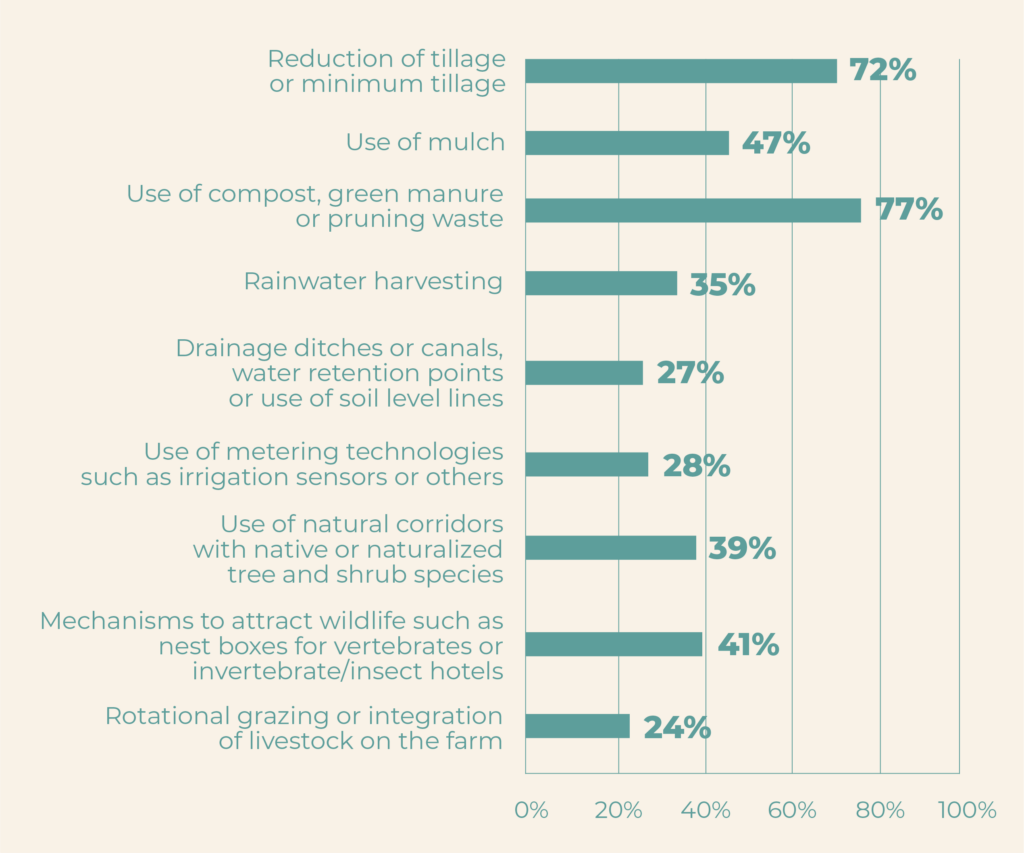
In a positive turn of events, around 40% of our farmers have already taken steps to incorporate certain regenerative practices, and around 30% of them have integrated these practices fully into their farm management model making their farms a more resilient environment.
Based on the survey results, tropical farmers are at the forefront in implementing regenerative practices, followed by citrus and dairy farmers. Around 80% of tropical producers surveyed have confirmed their adoption of regenerative practices, with approximately 15% having fully integrated them into their agricultural models.
Among the most commonly embraced regenerative practices, we found that nearly 80% of farmers have adopted at least one, such as reduced tillage, and the use of compost or mulch on their land.
CrowdFarming is an ally for producers, and together we go further
“One of the things I value most about CrowdFarming is that they are always available to listen to me.”
Vegetable producer, France.
Being a reliable support system for our farmers, an ally that enables them to pursue a job they’re passionate about, is a fundamental aspect of CrowdFarming. Ensuring that farmers truly sense our support is paramount to us, and it’s gratifying to see that nine out of ten farmers unequivocally affirm this support.
“For me, CrowdFarming is like a big family. We work together, we appreciate each other and we can trust each other. It’s great.”
Honey producer, Germany.
References:
- European Commission. (2023). Agricultural annual prices in 2022 – first estimates. Eurostat. https://ec.europa.eu/eurostat/en/web/products-eurostat-news/w/DDN-20230112-1
- European Commission. (2023). Predominantly rural regions experience depopulation – Products Eurostat News. Eurostat. https://ec.europa.eu/eurostat/web/products-eurostat-news/w/ddn-20230117-2
Written by Fran Aparicio

Fran Aparicio coordinates Regenerative Agriculture at CrowdFarming, which mostly means he spends his days trying to make farmers, scientists and data people agree on what “healthy soil” actually means. He lives somewhere between muddy boots and research papers, translating field reality into something you can measure (and hopefully improve).
Keep digging ...