



Published March 2026
How to ripen and preserve fruits and vegetables at home?
In our mission to reconnect our community with the fields and the seasons, and reduce food waste, it is essential to understand how to handle fresh produce. What does the green colour of different fruits and vegetables mean? When do I know that a product is at its best moment to eat? How do I speed up the process or, on the contrary, how do I make the product last longer in good condition?
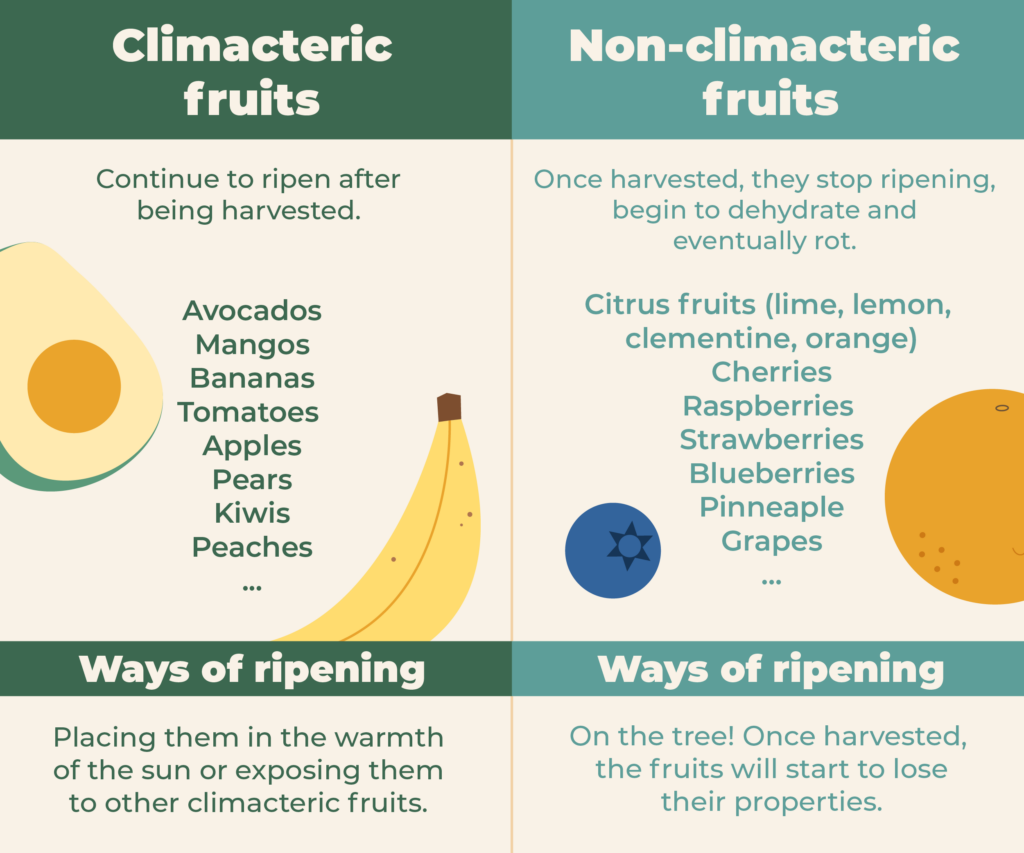
In this article we explain everything you need to know to get a better understanding of your fruit and vegetables. The first thing you need to know is the difference between climacteric and non-climacteric fruit.
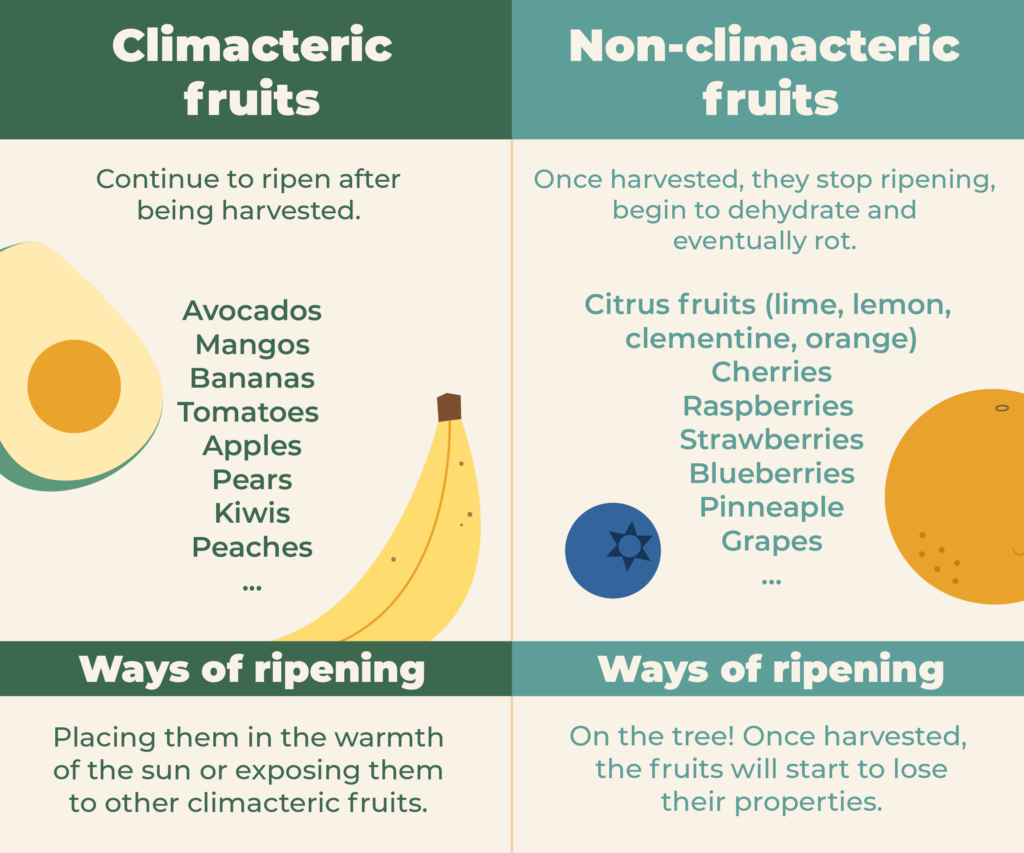
Here are some general tips on influencing the ripening of climacteric fruit at home. If you are looking for more detailed information on how to preserve, ripen and consume a specific product, you can take a look at the following guides:
- Guide for the preservation, ripening and consumption of organic avocados
- Guide to the preservation, ripening and consumption of organic bananas
- Guide to the conservation, ripening and consumption of organic tomatoes
- Guide to the preservation, ripening and consumption of organic mangoes
Receiving, ripening and storing a CrowdFarming order
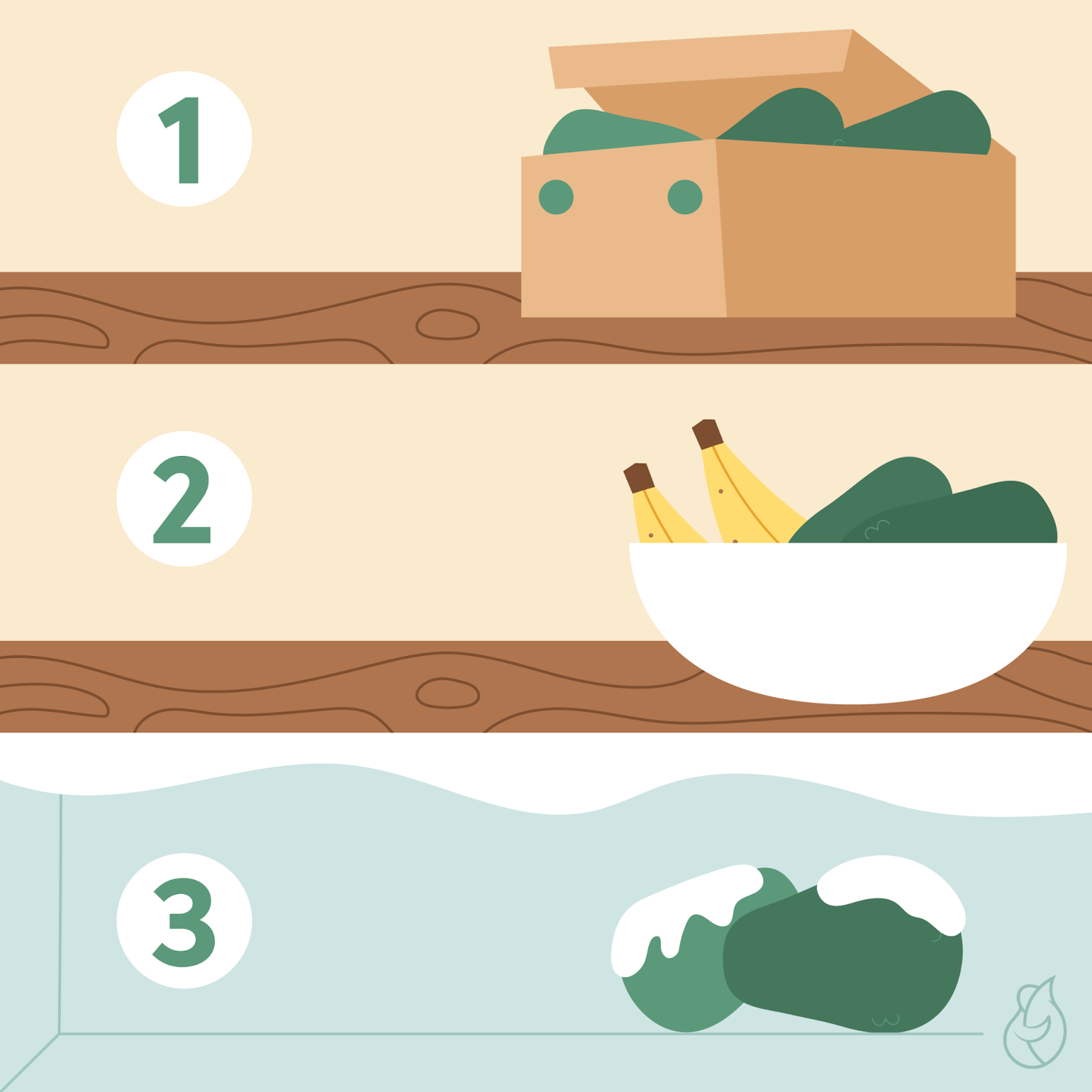
We understand that the quantities received from farmers are large and it is unusual for a household to be able to consume them all at once. This is why, we at CrowdFarming suggest you separate the climacteric fruit into three portions.
- The first portion will be the fruit that you want to consume soon. Put it in a warm place, without humidity, together with other climacteric fruits (apples, bananas, kiwis) or even wrapped in paper or cardboard. This way, the concentration of ethylene – the hormone that allows climacteric fruits to continue ripening once they are off the tree – is increased so that they ripen faster.
- Place the second portion in an airy place. For example, in a fruit bowl placed outdoors without direct sunlight. This way they will ripen more slowly.
- The third portion can be stored in the fridge. The main way to delay ripening is to use cold storage. In fact, low temperatures have been used to keep apples crisp since the 19th century, when apples were exported from America to Europe in wooden barrels in the cold holds of old transport ships.
If your fruit has arrived overripe or in poor condition, please contact our customer service team or report the issue to us via your customer account of CrowdFarming. By clicking on “report a problem” and submitting a complaint we will be able to notify the grower and work with them to find a solution.
How can I accelerate the ripening of climacteric fruits at home?
These techniques are ideal for climacteric fruits such as avocados, papayas, bananas, persimmons, melons, mangoes, nectarines, peaches, pears, plums or tomatoes.
Store together with already ripe fruit:
Storing unripe fruit together with other climacteric fruits will help speed up the process, enhancing the effect if some are already ripe since they will release even more ethylene.
Leave them in the box:
Here, ethylene is a key player again. By putting them in a cardboard box, this gas is concentrated, accelerating their ripening. This is especially useful for avocados, bananas, pears, peaches and tomatoes. Bananas and apples, which give off even more ethylene, can help other fruits to ripen even more. Just don’t forget to check that all pieces are in good condition before leaving them in the box to ripen.
Newspaper method:
Very similar to the previous method, if you wrap fruits individually in sheets of newspaper (or paper bags) and store them in a dark place, the newspaper can help retain ethylene, while allowing the fruit to breathe. This is especially useful for fruits such as tomatoes and pears.
Leave them in a warmer place:
Placing unripe fruit in warmer places, but without allowing it to spoil, can speed up the ripening of the fruit. A cupboard or a drawer are examples of such places.
Bury them in rice:
Raw rice absorbs ethylene efficiently. Soaking fruits such as mangoes or avocados in rice will make them ripen faster. It works best with firm-skinned fruits, such as apples or pears, while soft-skinned fruits, such as tomatoes, avocados or bananas, benefit more from the paper bag technique.
Regardless of which method you choose, it is crucial to check fruits regularly to make sure they are not over-ripening or spoiling.
However, non-climacteric fruits such as grapes, cherries, raspberries and oranges cannot ripen at home; it is best to harvest them at their optimum ripeness, as our farmers do – if you pick them under-ripe, you’re done for! Remember that green does not always mean under-ripe, it may be a specific variety or how the weather conditions have affected the skin of the fruit.
Tree ripening, the only option for non-climacteric fruit
The tree ripening process of fruits has a great impact on the quality of your harvest. Ripening is influenced by several factors, the climate being one of the most important. Climate affects not only the size and ripeness of the fruit but also its sweetness, acidity and juiciness.
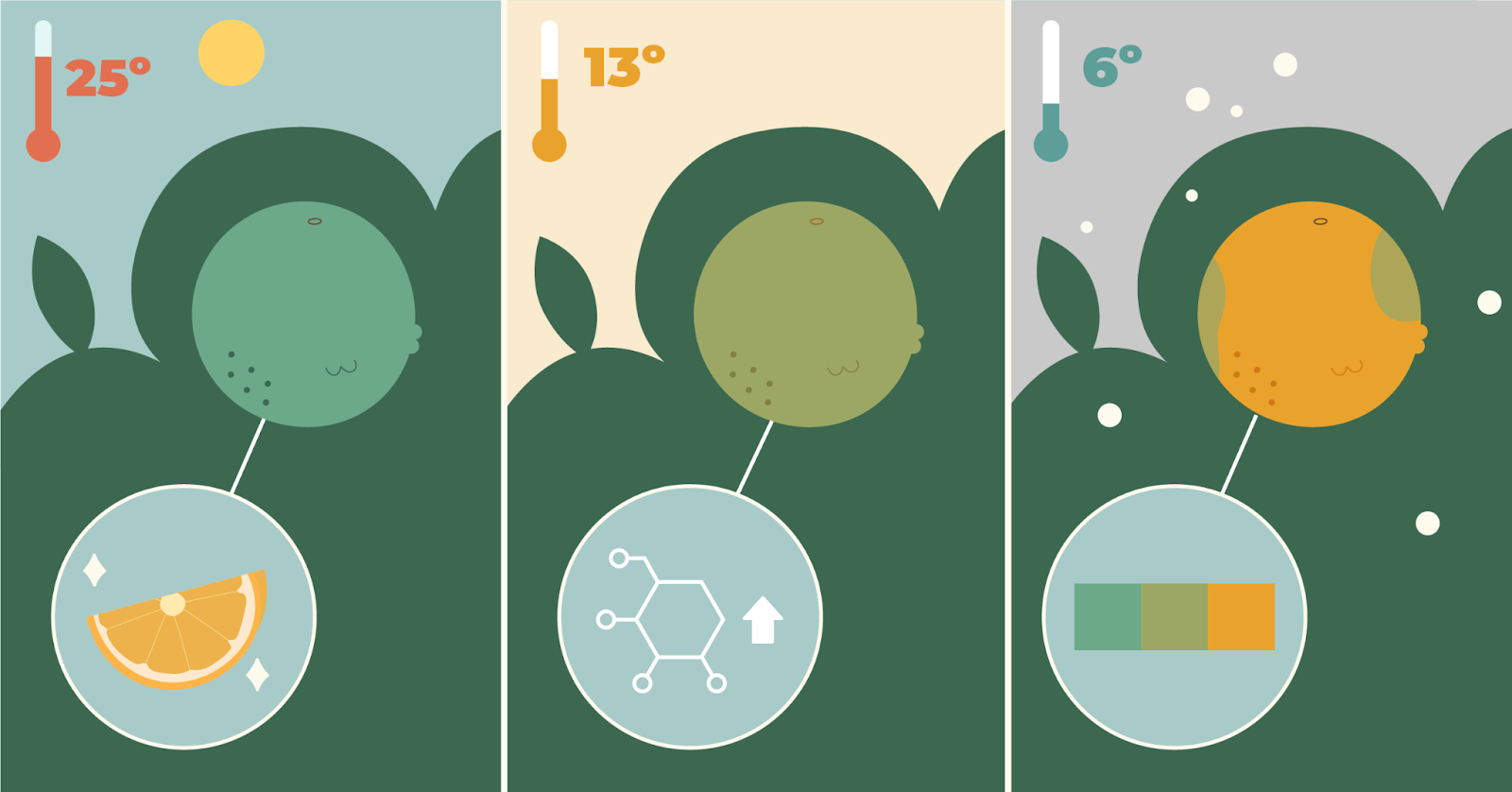
Let’s take oranges as an example of a non-climacteric fruit. How does the climate affect the final result?
- In summer, high daytime temperatures make the juice sweeter.
- The more stable temperature of autumn, above 13 degrees, favours the generation of sugar and carbohydrates in the fruit.
- Winter’s low temperatures, below 13 degrees during the day, cause the oranges to change colour and finish ripening.
The secret ingredients of climacteric fruits to keep ripening off the tree
The answer lies in a substance that is produced by these fruits, even after they have been removed from the tree: ethylene. Ethylene is actually a hormone that is responsible for a multitude of physiological processes in plants, including the ripening of the fruit. During this process, the starch in the fruit is transformed into sugar, the tannins (characteristic compounds of the “green” fruit that give it a bitter taste) are reduced, and the pH increases, reducing the acidity. In other words, the fruit becomes sweeter and less bitter and acidic.
More ethylene = more ripening
Climacteric fruit, when stored together, ripens faster.
In fact, it is because of this compound, ethylene, that the fruit ripens faster when they are together. As long as one is ripening and producing ethylene, it will affect all the climacteric fruits in its vicinity! Climacteric fruits react to ethylene concentrations by producing more ethylene, so the process is accelerated. Non-climacteric fruits do not interact in the same way with ethylene, so they are not as noticeably affected by this hormone.
Besides ethylene, other factors help ripening. Temperature plays a crucial role in ripening. As temperature increases, ripening speeds up.
Higher temperature = faster ripening
For those wishing to accelerate the ripening process of climacteric fruits, it is advisable to leave the fruit at room temperature.
However, if the aim is to preserve the fruit for a longer period of time, it is advisable to store it in a cool place. It is important to consider that fruits of tropical origin, such as mangoes, are more sensitive to cold. Exposing them to very low temperatures may compromise their texture and taste. Therefore, it is advisable to keep these fruits out of the fridge in winter and in the less cold areas of the fridge in summer, in order to preserve their freshness without damaging them.
The first thing to do when you receive a box of fruit sent by a farmer is to open it to check how the fruit has arrived. Afterwards, you can decide how to store them depending on when you want to consume them.
Written by Fran Aparicio

Fran Aparicio coordinates Regenerative Agriculture at CrowdFarming, which mostly means he spends his days trying to make farmers, scientists and data people agree on what “healthy soil” actually means. He lives somewhere between muddy boots and research papers, translating field reality into something you can measure (and hopefully improve).
Keep digging ...