Published April 2026
The life of a farmer during an unpredictable summer
These past few weeks, we have been getting a lot of messages from our agronomists on the fields of Germany and Italy on the situation farmers are going through. This team is our eyes on the field, and they work as speakers of farmers. As so, they get worried when the farmer gets worried, and they celebrate every-one of the farm’s victories – big or small.
We believe our direct contact to farmers is one of the most special things we can give back to our community of CrowdFarmers. They are the main witnesses of what our food production needs to face to keep food coming to our homes. Let us share some of the topics CrowdFarming’s agronomists and the farmers they support have been dealing with.
Heat and hail across Italy
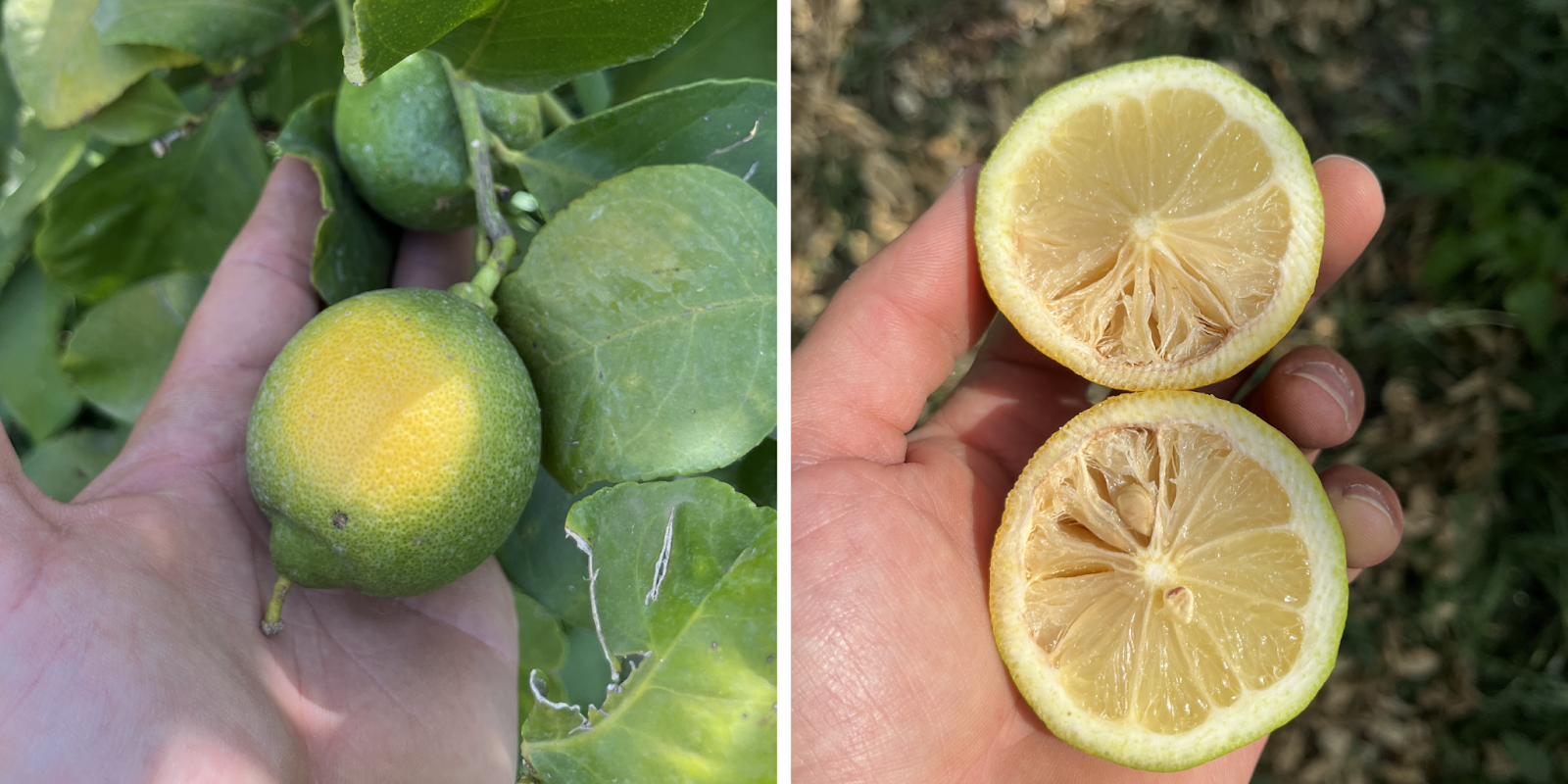
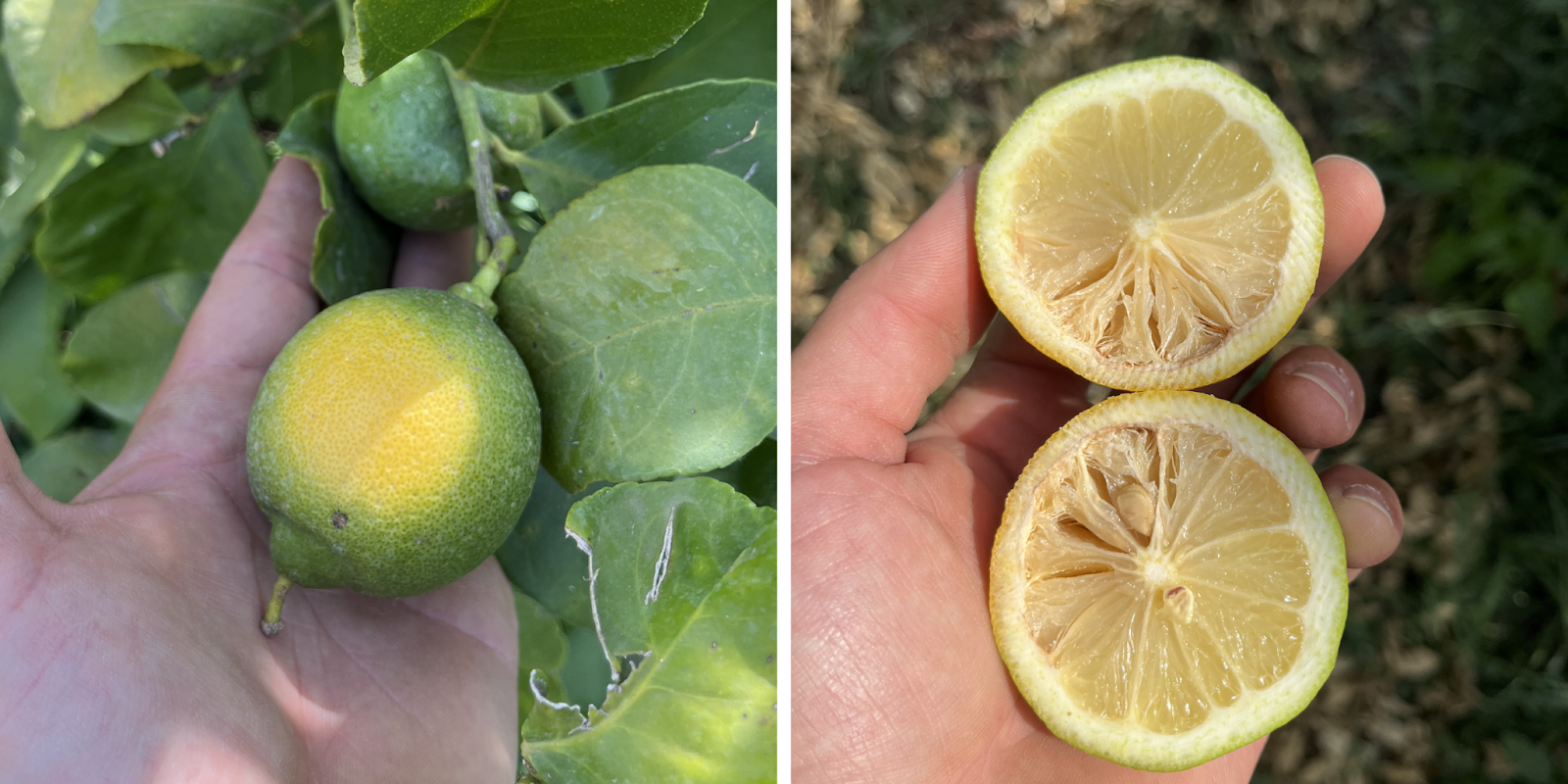
Sicily (Italy) has experienced a long-lasting heat wave. For a couple of weeks we had high temperatures, as far as 40ºC and even up to 48ºC. Heat waves are normal in Sicilian summers, however, the intensity and length of this wave was absolutely abnormal. One of the highest values recorded by the Sicilian Meteorological Information Service (SIAS) during these days belongs to the Monasteri station in Siracusa, with 47.8 °C, where our citrus farmer Angelo from Bio Agrumi Monasteri is located. Angelo found his lemons burnt on the plant – they literally got cooked hanging on the tree! The temperatures finally went down, but, sadly, the summer lemon harvest is all gone. “There is no time to look back, now we need to focus on the next lemon season this winter, and hope the heat waves give their lemon trees a rest.” — said Angelo.
We travel up north of Italy to find quite the opposite situation. Farmers there have been hit by an impressive downburst, with hail as big as a mango.
Heavy rains affecting Germany
In the Northern half of Germany, it literally hadn’t stopped raining for the past three weeks at the time we wrote this article – and there were still ten more days to come. After extremely dry May and June, this means many farmers can’t continue their harvest and neither enter the fields with any machinery as they would sink in and could harm the soil structure. A rainy summer might actually be closer to a “normal” German summer than the dry heat of recent years, but as always: too much of the same thing is usually not good.
Some examples of the consequences of the long-lasting rains are that slurry can’t be brought out as the tanks are too heavy, cereal has been laid down by the rains and only barley is being harvested while rye, triticale, and wheat are still on the field.
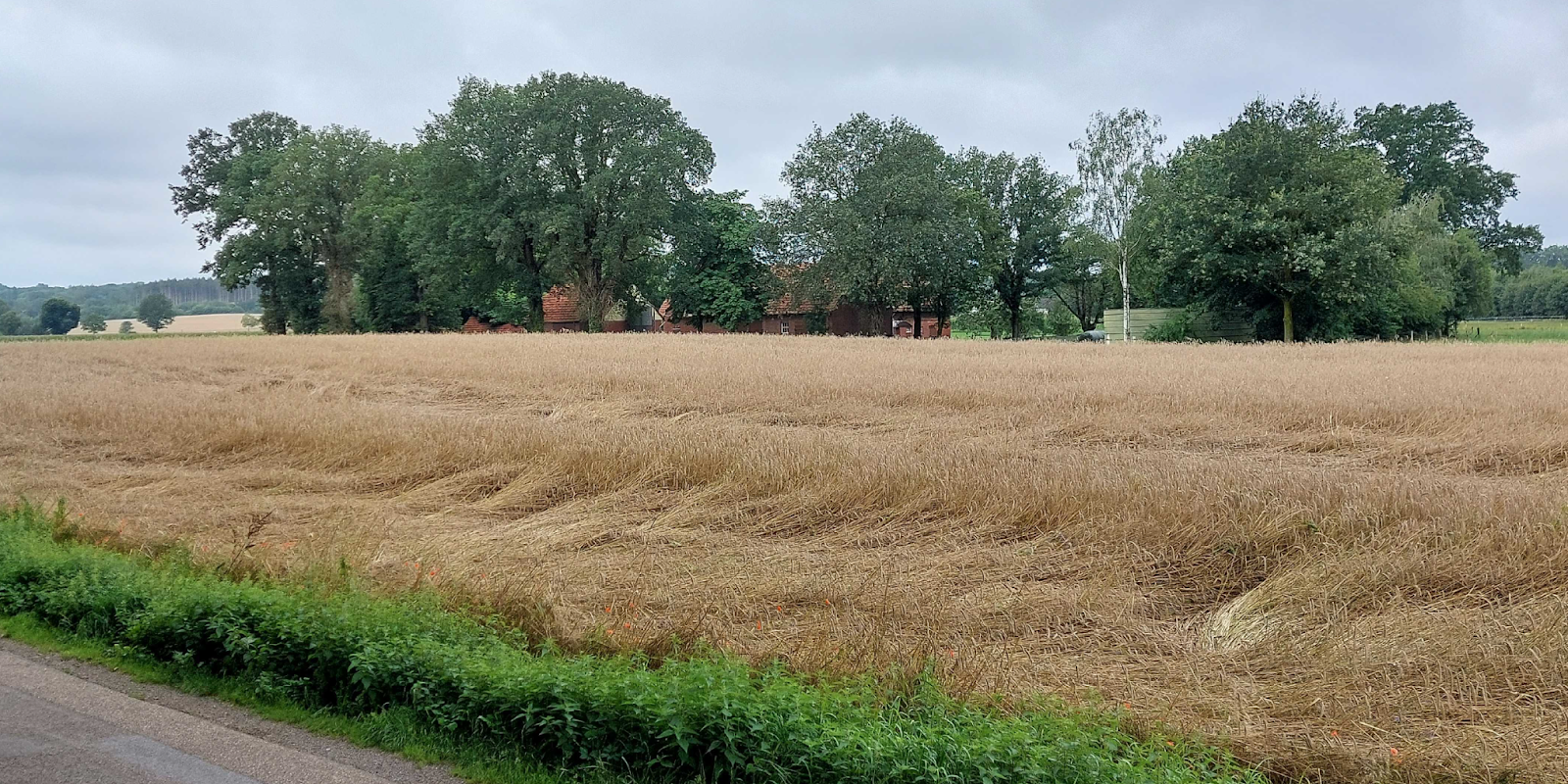
Those who dared to thresh in the weekend – like our agronomist Antonia’s family, who are also Farmers themselves – had to leave the straw out on the field getting soaked, and “hopefully we can press it in 10 days when rain stops, if it dries off” says Antonia.
Meanwhile, the conditions are ideal for grass to grow like crazy – 20 °C and abundant rain – good news, in theory, for all dairy farmers. Indeed, it’s time for the third cut, but there are hardly any dry time windows for harvesting. As you see, this unpredictable and unexpected summer is affecting farmers in Germany in different ways, and some, thankfully, have the solutions to face these inconveniences.
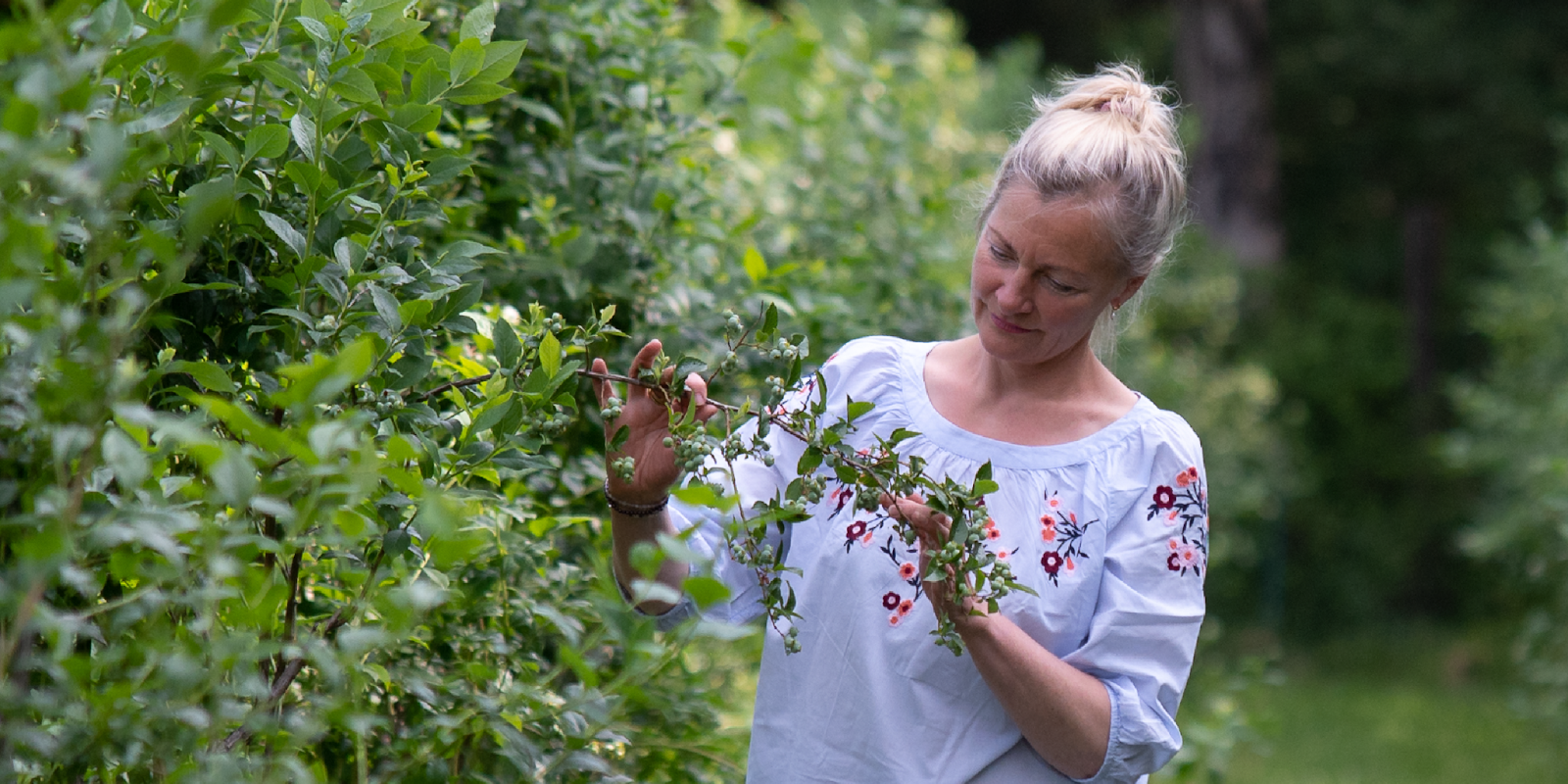
Our blueberry farmer Uwe, from Biohof Wencker, tells us that, what saves them from worrying too much is a ventilator on their farm. Thanks to it, they can blow-dry the blueberries before shipping them to the CrowdFarmers, ensuring they don’t get ruined due to the humidity in the course of their journey. However, they need to take advantage of every minute without rain to pick the blueberries, using more baskets and filling them less so the berries don’t get mashed.
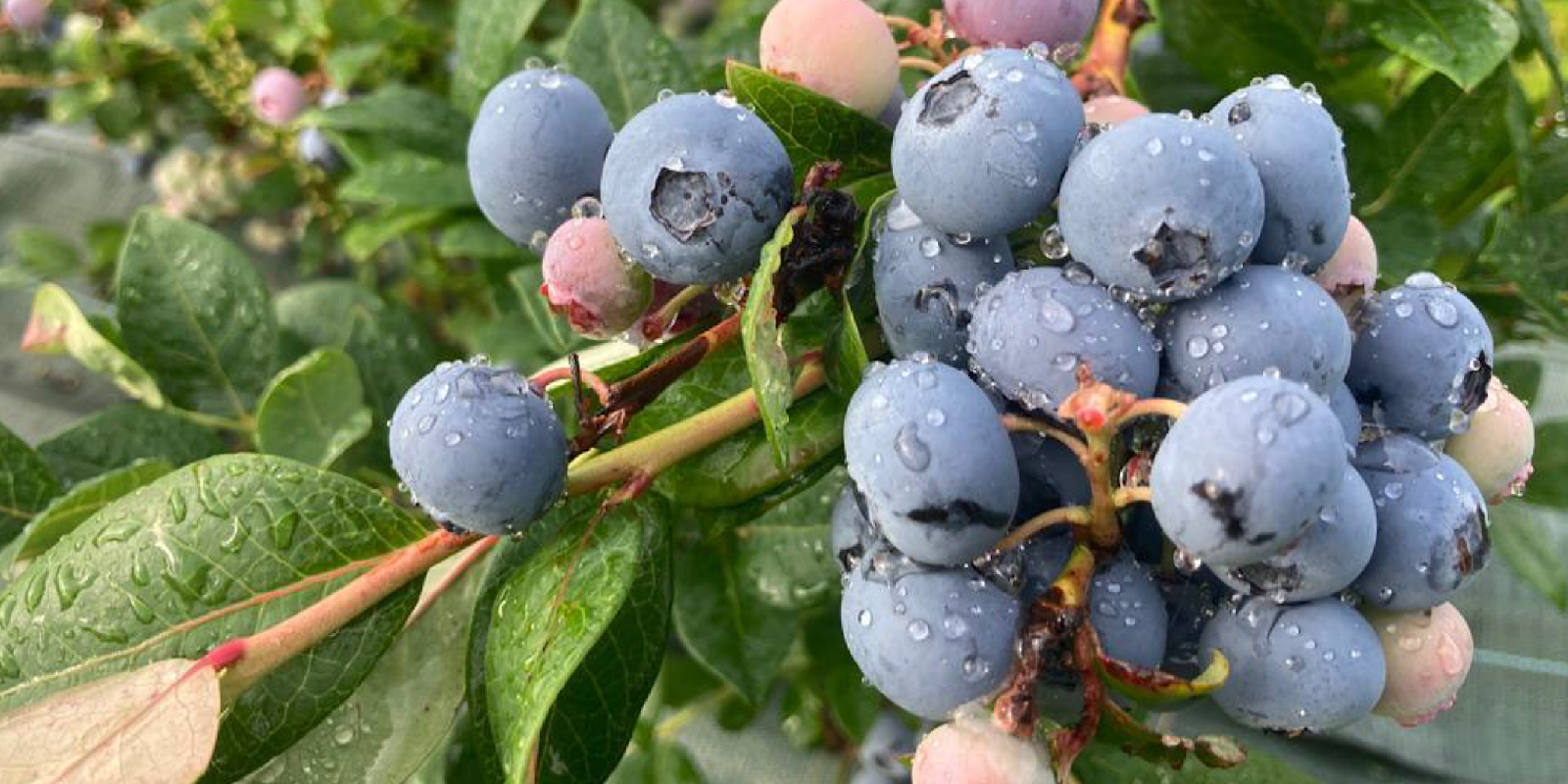
Sylke, also a blueberry farmer from Bickbeernhof, is a bit less hopeful – “We are tired of the rain. We might see the season finish early, by the end of August instead of early September, as the fruit is getting too soft. But at least we had a great season so far and CrowdFarmers are delighted with our berries’ taste!”
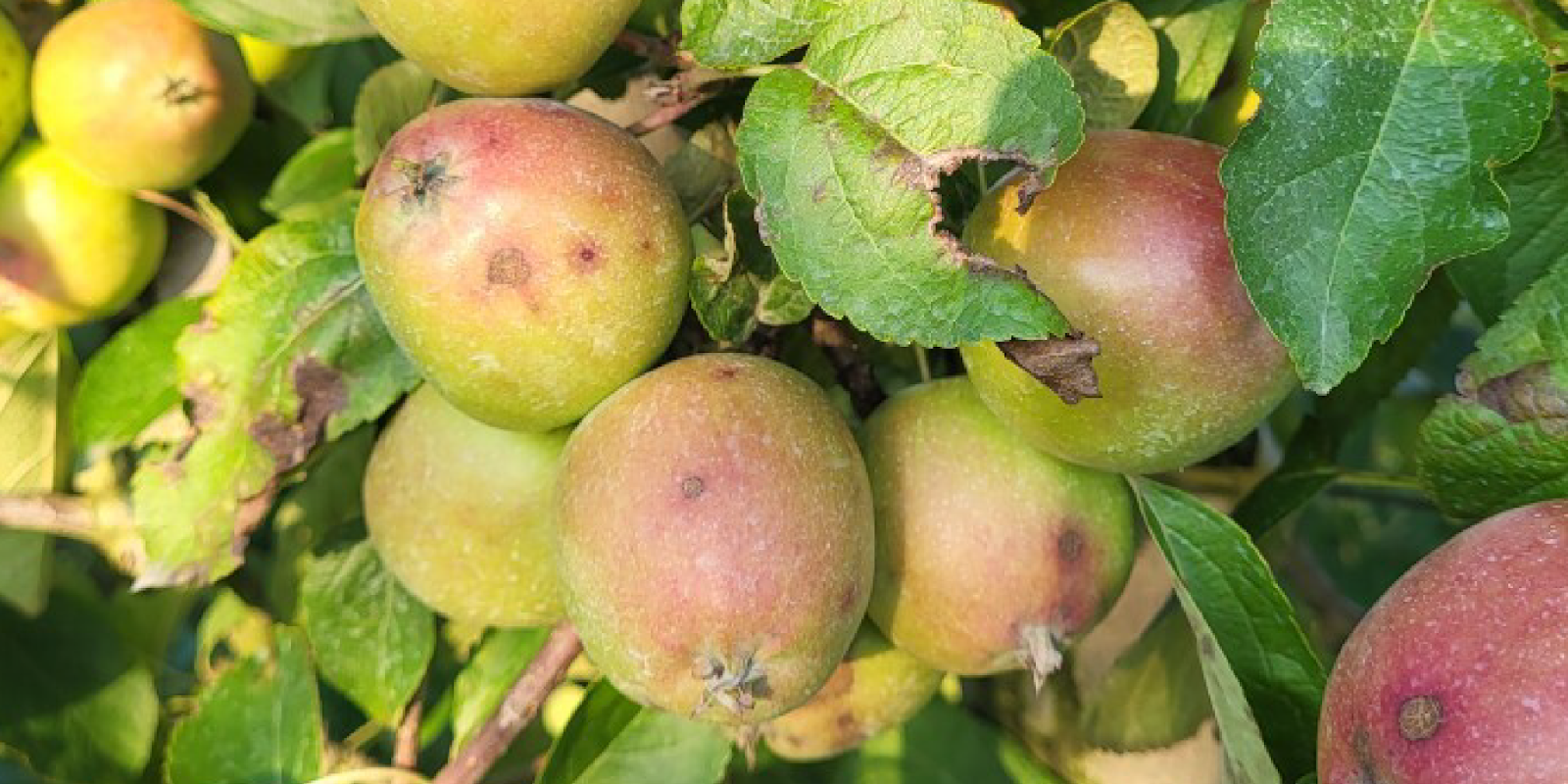
Apple orchards are also being affected by the enduring rains in Hamburg region, but the farmer expects to save the seasons just with some light reminders in the fruits’ skin. Cord Lefers, from Bio-Obsthof Lefers, explained how the changeable weather this year resulted in strong growth of the fruit trees, however, the constant alternation of rain and sun favours the apple scab fungus. As a result, there will be a few black spots on the apples this year. The spots are a purely visual defect, but still a visible sign of the increased humidity. “Thankfully, CrowdFarming’s consumers understand that fruit is not perfect, and we won’t lose the whole harvest just because of some minor outside marks on imperfectly perfect apples.” — says Cord.
Same as Italy, we find opposite conditions across the country. The farmers of the Southern half of Germany were desperate for rain, as most regions didn’t see any precipitation from early May until mid-July. Even though the wet spring led to a strong growth for crops like grains, they lacked water during the critical phase of development of other crops, such as corn, leading to it ripening and drying before being fully developed. This resulted in very low yields. Ulrike from ackerfrucht&bodenwerk is an example of this. She had to deal with the sudden heavy rains and even hailstorms after a long drought.Some of her ready to harvest grain fields were completely destroyed.
Other crops such as grapevines coped well with the drought but now struggle with the ongoing rain. Our German winemakers Fabian & Laura from KORE were optimistic at first, grapevines cope very well with heat and drought. The high temperatures and abundance of rain experienced in May and June were the perfect conditions for a good harvest and high quality grapes. However, this dry period suddenly stopped mid-July and it hasn’t stopped raining ever since. Wet climate increases the risk for fungal diseases, which are difficult to combat respecting the organic EU normative and especially tricky in grape varieties with a thin skin such as Riesling, since they could burst under heavy rainfall and hail.
Animal farms such as Vulkanhof are more affected by the drought than the rainy period they are experiencing now. The wet spring has led to an above-average hay harvest, but as rain stopped after the grass was cut, it never regrew. In standard years, farmers are able to cut their grass up to three times a year to feed the animals, but, this year, Vulkanhofs farmer, Manuela, is afraid she won’t be able to harvest enough hay to feed her goats throughout the coming winter.
It’s resilience season
As consumers, we might have taken our seasons for granted – and these last summers have brought either too little rain, or too much rain, or extremely high temperatures, or even mango-sized hail. In this context, farmers strive to adapt because their life’s income depends on it. So, this summer, we celebrate our farmers’ perseverance. This summer, more than ever, we will look at the peculiarities of their harvest as a reminder of the battles they fight to deliver their products at our doorstep.
Written by Farmers of CrowdFarming

Keep digging ...