Published March 2026
CrowdForest is back! What are the benefits of trees on a farm?
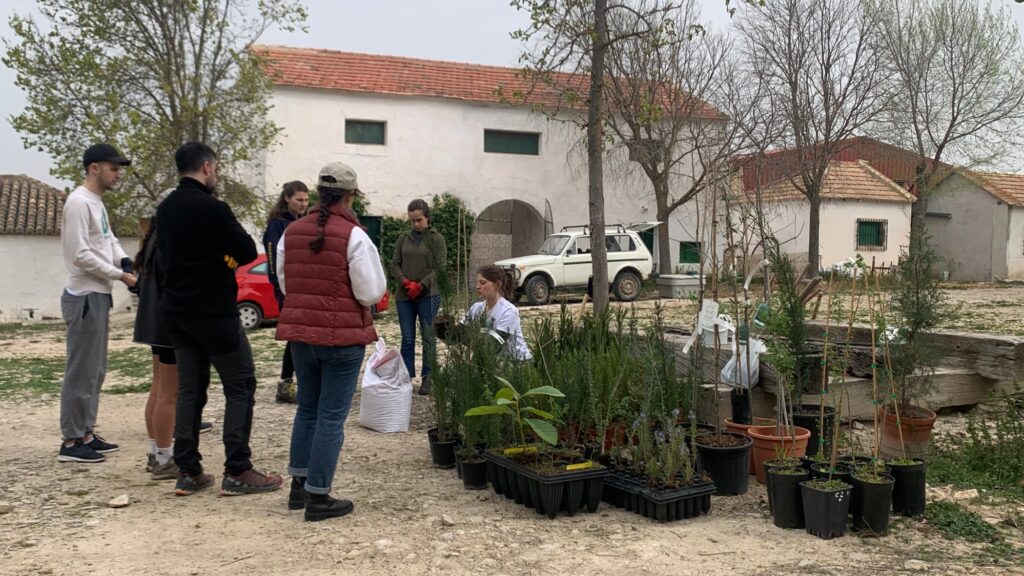
Last year, two of our favourite people from the CrowdFarming community launched an event that has opened our eyes to the benefits of working together as a community and of planting trees. Our farmer Pedro, from Doña Marina Farm, and his wife Antonia, a Farmer Hunter from CrowdFarming (talk of a match made in heaven!) created CrowdForest in 2023 and have now turned it into a yearly tradition. The second edition has just come to a close.
Pedro grew up spending many months each year on his family’s almond farm and is very familiar with the landscape. He was raised with his father and grandfathers’ passionate obsession for tree planting, often joining his dad in planting from a young age. Yet, during an economic downturn, trees were cut down all across the region so that the wood could be sold, and more land left for farming. Today, the landscape bears the scars: sparse trees beyond almond or olive fields, scarce hedgerows, and a notable absence of street or field tree lines. Even in villages or around the farm buildings and houses, trees are a rarity. Despite being a key region for olive oil production, Andalusia lacks the widespread distribution of trees throughout its terrain.
So to change this, together with Antonia he created CrowdForest, inviting CrowdFarmers (our customers) and other team members to join them as they set off on their goal to reforest their landscape.
The first edition of this event happened in March last year and 100 trees were planted, this year 150 more trees were planted!
If you haven’t read it already, definitely check out the blog post from last year here.
Why does it matter to have trees on a farm?
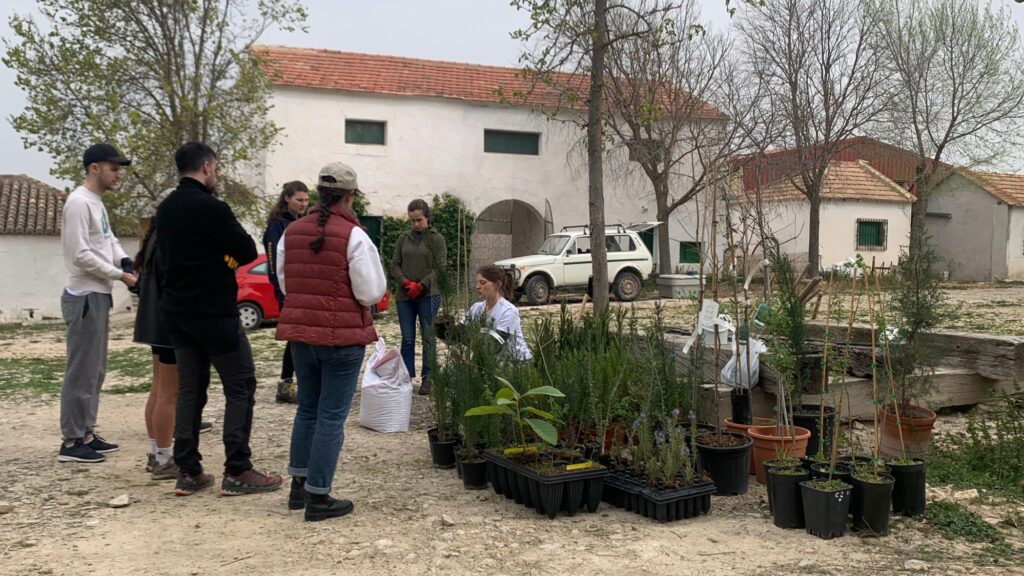
Including trees on farm land for the benefit of the ecosystem and crops is called agroforestry. Simply put, agroforestry means combining agriculture with trees and shrubs. It is a land management approach with multiple benefits. These benefits exist above and below ground, as the roots reach deep into the soil to cycle nutrients and store carbon, while above ground, the trees protect the soil, the crops, and the animals against the elements. Let’s have a look at some of these benefits.
Improved soil health = Increased crop productivity
Agroforestry can improve soil health by reducing erosion, increasing organic matter, and improving nutrient cycling. Trees and shrubs can help reduce the effect of rain on the surface of the soil, keeping the soil from getting too hard, and stopping nutrients from leaching away.
Agroforestry can also help crops and animals by providing shade, shelter, and nutrients to crops. Trees and shrubs can also act as windbreaks, reducing soil erosion and preventing crop damage.
Biodiversity conservation
It goes without saying that adding trees and shrubs to a landscape promotes biodiversity, simply due to the fact that you are including different species to the ones being farmed. Additionally, by creating a diverse ecosystem, trees provide food, shelter, nesting sites, and other habitats for all kinds of wildlife including birds, insects, and mammals. But furthermore, a very important factor of plant biodiversity around plots is creating space for insect biodiversity to increase pest control.
Climate change mitigation
Agroforestry also has an impact beyond the farm limits and its ecosystem. It can help mitigate climate change by sequestering carbon in trees and soil. Trees store carbon in their biomass (trunk, branches, leaves, roots) and in the soil, reducing the amount of carbon in the atmosphere.
So can we just plant any old tree?
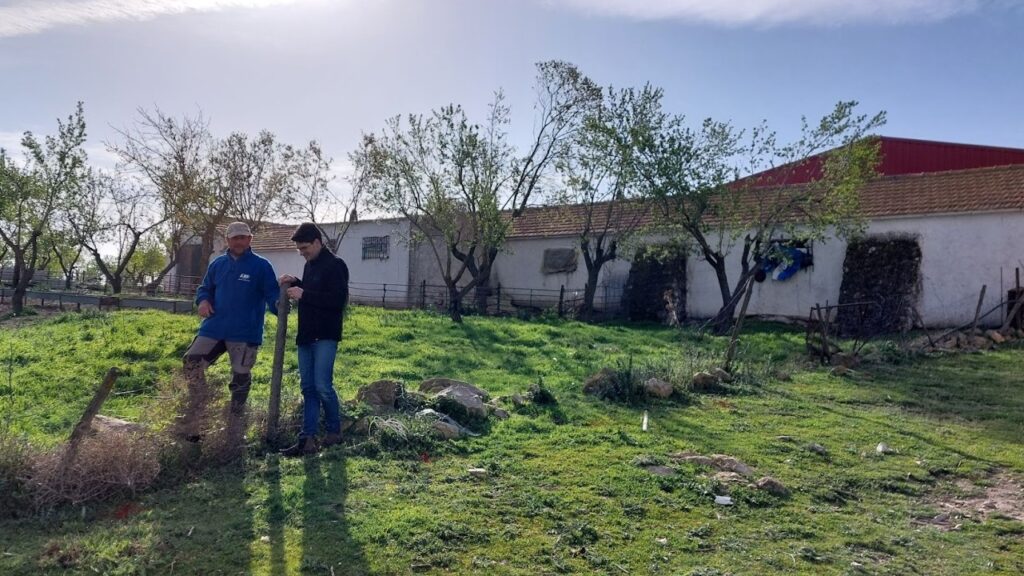
No, tree planting is very contextual, it needs to be properly thought out and planned. You can’t just plant any old tree in any old field. Choosing the right mix of species and the right place is crucial. If not, they can create several problems and compete with farming activities.
For example, in the area of Doña Marina’s farm, native tree and bush species include: pine, cypress, lavender, rosemary, flax-leaved daphne, wild olive, three-pronged acacia (the shepherds love this one because the seed pods are great fodder for the sheep!), and oleander. And all of these species were planted during the event! Every one of these plants has a specific role and function, for example, the cypress is a fantastic bird shelter, like a great nest. Rosemary and the flax-leaved daphne are shrubs with complementary flowering periods, to maximise the periods with flowers and promote beneficial insects.
Another key part of the process is taking care of the tree at the beginning of its life to make sure it survives and stays healthy, especially during its initial growth stage while it settles into the ecosystem. You can’t just plant a tree and then abandon it to its own devices. Luckily, at Doña Marina, they are committed to giving all the planted trees the best chances for survival.
This all may seem like a small gesture, but it is not at all. This project year after year will have a big impact on the landscape. By bringing people together, raising awareness and physically planting the trees, this project has an impact on many levels. Pedro, Antonia, and the farm have already started to see the benefits of this wonderful project and are looking forward to next year’s edition.
Written by Emilia Aguirre
Emilia Aguirre is our Awareness & Advocacy specialist — which means she spends her days asking the uncomfortable questions about how our food is grown, priced, labeled, and sold. She hosts What The Field?!, a podcast packed with stories from the ground, hard-hitting research, and conversations with the people shaping the future of food (whether they like it or not).
Keep digging ...