
Looking for more? 

We’re just an email away.

CrowdFarming

min

Published June 2026

Joining forces to go further

How did the idea of joining forces come about?

A year ago, I met Juliette Simonin and Gonzalo Úrculo, the founders of CrowdFarming. It started with a couple of video calls to share the challenges we were facing and how we were addressing them. When we realised there was genuine chemistry, Gonzalo invited me to spend a few days at his orange farm. It was there that we began to recognise the potential we could have together.

direct sales allow farmers to capture better margins, which they can reinvest in producing more nutritious organic products that consumers enjoy and benefit from.

Who are the founders of CrowdFarming?

Two farmers, an economist, and a programmer. Gabriel, Gonzalo, Juliette, and Moises founded CrowdFarming in 2017 after working together to grow and sell organic oranges.

Since then, they have built Europe’s leading platform for direct sales of organic produce, fulfilling over 3 million orders each year and supporting the community of farmers across France, Italy, Spain, and Germany.

Through CrowdFarming, consumers can adopt a tree on one of the farms and have the harvest delivered to their door, or purchase individual boxes of fruit and vegetables that are harvested on demand.


Our new mission

To make regenerative organic farming viable for farmers and accessible to consumers.

The merger brings opportunities for everyone: introducing more farmers to La Ruche qui dit Oui! and allowing our community to buy fruit and vegetables directly from the source, with home delivery via crowdfarming.com.

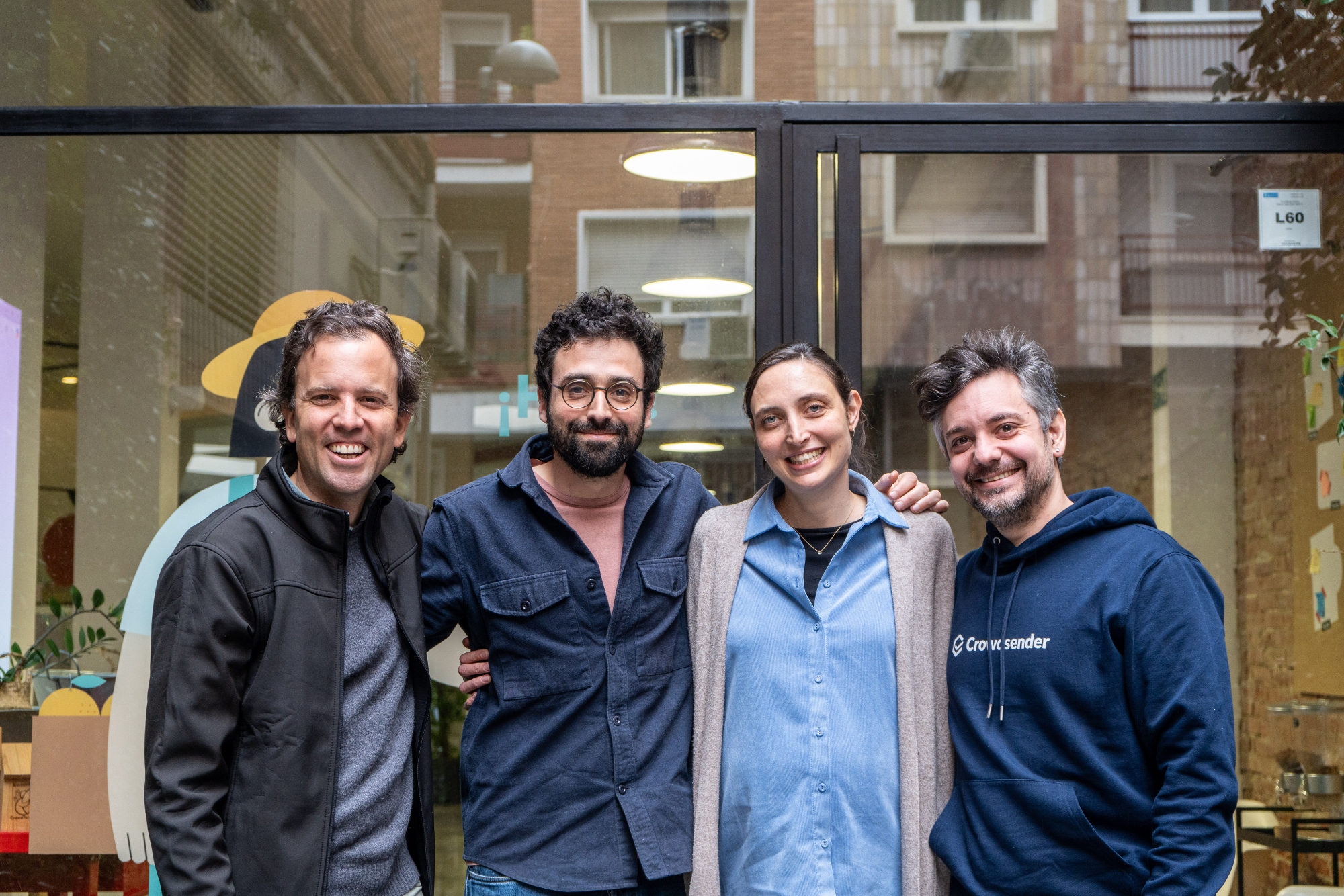
Here’s a photo of us with their boxes. From left to right: Moises, Juliette, Philippe, and Gonzalo.

Thank you for being part of our story.

Philippe Crozet, Juliette Simonin and Gonzalo Úrculo

Written by philippecrozet
philippecrozet

When he’s not working on reconnecting farmers and consumers through La Ruche qui dit Oui! and CrowdFarming, Philippe is usually in the kitchen, cooking, experimenting, and transforming the great products offered by the farmers he works with. CEO of La Ruche qui dit Oui! and Head of Catalogue for Pantry, Meat, and Dairy at CrowdFarming, he has been building short food supply chains as an entrepreneur since 2015—driven by a deep belief that changing the way we eat is key to changing our food system.

Share this content:

Keep digging ...

CrowdFarming

3 min

Thoughts on the first half of 2026

Written by Gonzalo Úrculo, farmer, CEO and co-founder of CrowdFarming. Note: I wrote this text as an internal document to align the people who work at CrowdFarming every day. For a couple of years now, I have also shared it with our community of farmers, customers, and suppliers.At the end of the article, you will find a glossary explaining the meaning of technical terms or internal jargon marked with an asterisk (*) throughout the text. Has sustainability gone out of fashion?I haven’t read company statements on sustainability on LinkedIn or in the press for a while. It’s as if sustainability managers have now transformed into AI gurus. It very much looks like the sustainability that was done for outward appearances has lost momentum in the corporate world. And this, in my opinion, is positive because it reduces noise and allows actions to speak for themselves. Corporate sustainability is a competitive advantage when it is part of a company’s culture. Well-applied sustainability achieves positive and sustained effects over time on business metrics. During this first half of the year, we have managed to reach these business metrics, not through a one-off effort but through constant drive in the same direction: 2,969 farmers selling their harvests at a fair price. Soil analysis conducted on 47 new farms to measure the impact of regenerative practices, and designing an agronomic programme together with the farmers to increase their soil’s natural fertility in the long term. With these 47, there are now 100 farms within our regenerative organic farming programme. €1,794,784.43 in sales of fruits and vegetables in conversion to organic. Receiving a fair, predictable, and stable price is especially key when a farmer is in the delicate phase of conversion to organic because their trees usually experience a drop in productivity. 25% increase in sales of All Is Good* (our brand of processed products) compared to last year. And furthermore, we are starting to see the results of our efforts at an economic level. For the first time in 5 years, we have finished the first half of the year with positive EBITDA*, and growing at double digits. Betting on the direct production and sale of organic products is profitable. To achieve this positive EBITDA*, we have all had to make sacrifices and prioritise spending items well.An example of this is that we have not renewed our B Corp* seal. It was a difficult decision because this seal has positive aspects. Renewing the seal cost €16,000 this year and, thinking clearly, although it’s cool to have a company audit the sustainability of your operations, we saw that we weren’t getting the most out of it and that this money (a scarce resource in our startup) could be dedicated to more farmer training and to raising the salaries of some profiles in our team. We do not rule out getting recertified in a couple of years. Successes to celebrate from the first half of the yearSuccesses must be celebrated. Especially those you pursue, but also those you achieve almost by accident. I have found that when you surround yourself with good people, the mission that unites you is pure, motivating, and ambitious; along the way, good things happen that you didn’t even count on. We do not have a goal to reach a certain percentage of young farmers selling through{Brand} CrowdFarming but we were very excited to see that, naturally, we have achieved a metric that is well above average.

Read