



Farming without animals: more food, no manure
# | November 2026
Published November 2026
Farming without animals: more food, no manure
The economist who grows more by using less
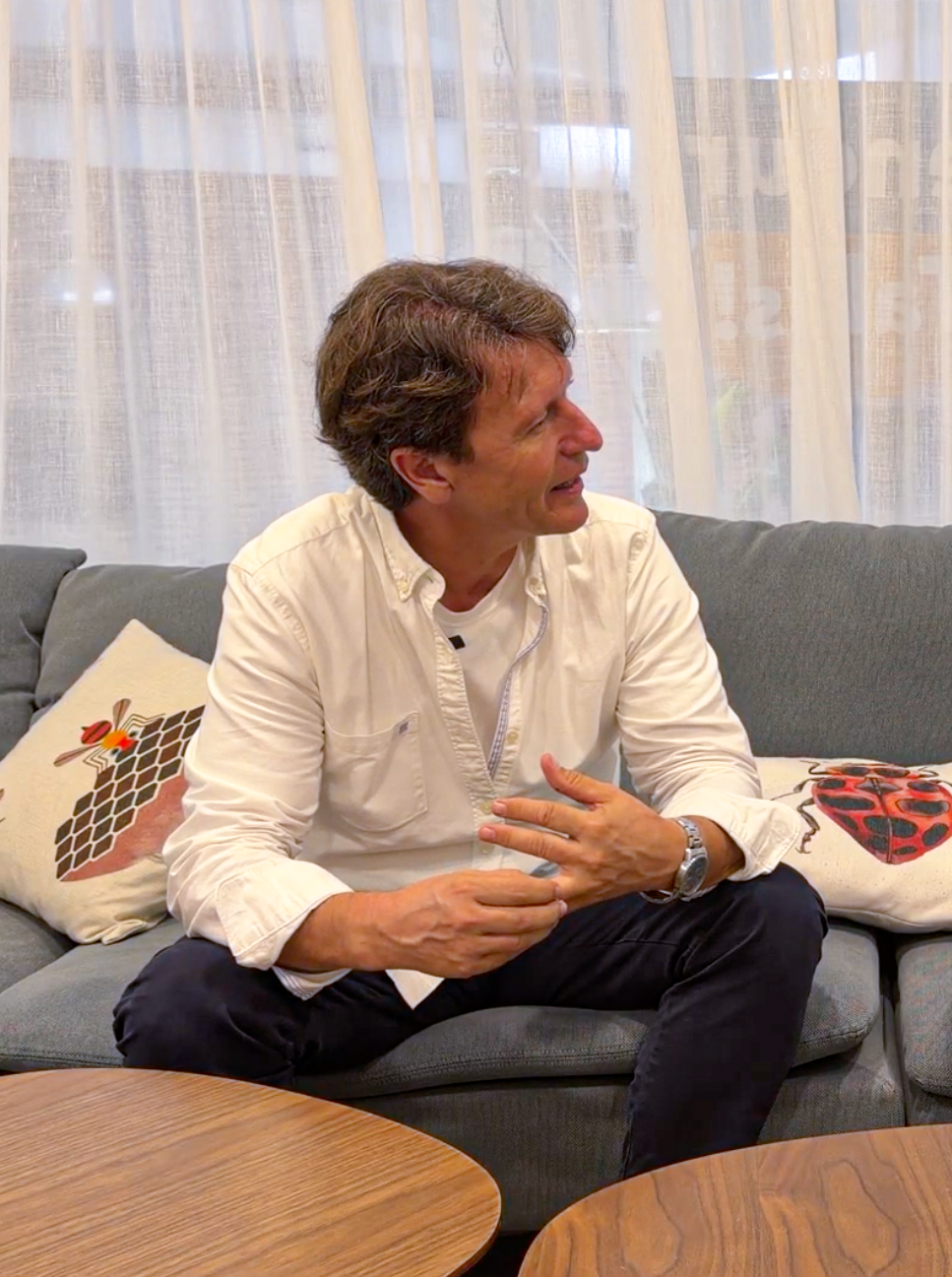
Ask almost any organic farmer what keeps their soil alive, and the answer comes back fast: manure. Animals eat the plants, the plants come back as fertiliser, the circle closes. It is the oldest logic in farming, and most of us never think to question it. Johannes Eisenbach questioned it for decades, and then he stopped using animals at all.
He is a German agronomist and agricultural economist who moved to Greece in 1995 to set up an organic olive project, back when, as he puts it, almost no one in the country knew what organic farming was. Today he helps run a network of about forty small farms across Greece and Cyprus growing olives, citrus, avocados and vegetables with no animal manure, no animal inputs of any kind, and no chemicals. The name for it is biocyclic vegan farming, a standard recognised by the international organic federation IFOAM since 2017 (context verified outside the podcast, not stated in the interview; confirm before publishing). The short version is simpler: farming without animals.
And here is the part that should stop you. In a peer-reviewed trial at the Agricultural University of Athens, crops grown this way produced two to three times the yield of the same crops grown with chemical fertiliser.
Why would anyone farm without animals on purpose?
Not for the reason you would guess. Eisenbach doesn’t explain the concept through veganism or diet. His arguments are economics and biology, which is a far more uncomfortable route, because it means the argument stands even if you love a steak.
The logic came from Adolf Hoops, a German pioneer who started farming organically in the 1950s and worked alongside Eisenbach in Greece every year from October to April. Hoops saw a problem hiding inside the organic dream. If the whole planet farmed organically, and organic farming needs animal manure for fertility, then the whole planet needs vastly more farmed animals than exist today. And if populations shift towards plant-based eating, as some already have, what happens to all that meat and milk nobody wants? The maths does not close.
So Hoops set out to prove you could keep soil fertile and yields high without animals and without chemicals. When he tested the method in the Mediterranean, he told Eisenbach it was not only working; it was working better.
The real question is not the animal, it is the soil
The mistake most people make, including plenty of organic farmers, is thinking organic means swapping the chemical product for an approved one and carrying on exactly as before. Same mindset, same war against the same pest, just a greener bottle.
Eisenbach’s network starts somewhere else entirely. A plant, he says, is the mirror of the health of the soil. Hoops had a motto for it: from healthy soil through healthy plants to human health. So when a pest shows up, the question is not how to kill it. The question is why there was no natural predator to keep it in check in the first place. You stop fighting nature and start reading it.
That shift is also what keeps farmers in the game. Chase the price and the subsidies and the yield, Eisenbach says, and after a few hard years you quit, like so many organic farmers do. Start by understanding how nature actually works, and you get hooked. Even when the money is tight, you do not walk away.
The secret ingredient is not a secret. It is the air.
If you take animals out of the circle, something has to replace the fertility they brought. So what goes in instead? Nitrogen and carbon. Both pulled straight from the atmosphere.
Plants, together with algae, are the only organisms that breathe in carbon dioxide and breathe out oxygen. The carbon a plant takes in does not just build the plant. Much of it travels down through the roots and into the soil. A fertile soil is really just a soil rich in carbon, and every bit of that carbon came from plants, not from the rock beneath.
Nitrogen is the trick most of us were taught to fix with a bag of fertiliser. But nitrogen makes up most of the air, and the soil is full of specialists, nitrogen-fixing bacteria, that pull it out and hand it to the plant. The catch is that the plant has to feed them first, with sugars made during photosynthesis. Feed the soil life and the plant can draw essentially unlimited nitrogen from the sky. That, Eisenbach says, is why these plants grow so big. They are plugged into a source that never runs out.
The job of the farmer, then, is not to fertilise the plant. It is to build the conditions in which the plant feeds itself, the way it does in any wild place, where nobody spreads fertiliser and the forest grows anyway.
Compost, but a different kind of compost
The fertility comes from closing the loop. Everything an olive tree produces, the pomace, the leaves, the prunings, plus residues from vines and other crops, goes back as compost instead of being treated as waste. That is the whole philosophy in one move: a commercial composting plant sees a residue to get rid of, this network sees the raw material for a new product.
Pushed further, that compost becomes something they call humus soil, grown by cultivating vegetables on a plant-based substrate rather than on animal compost. And humus soil does something remarkable with water. It can hold up to 86 per cent of its own weight. In a Mediterranean summer, and increasingly in summers across Europe that were never meant to be dry, that is the difference between a field that suffers and a field that does not. The same sponge that stores water through a drought also soaks up a sudden downpour instead of letting it wash the topsoil away.
Making good compost takes know-how, technology and time that a small farmer juggling a harvest rarely has. So the network shares the work. Some farmers own the machinery and the space, produce the compost, and pass it to the others. They call the wider idea a Terra Plena hub: food producers with residues, a composting unit, the farmers who turn that compost into humus soil, and the people who eat the result, all working as one loop. The payoff is independence. Build your own fertility from your own materials, and you stop depending on imported fertiliser and on the price shocks that come with it.
Does the science back it up?
This is where it gets interesting, and where it gets honest. Eisenbach’s own daughter, an agronomist, ran a master’s trial at the Agricultural University of Athens using humus soil to grow potatoes, sweet potatoes and industrial tomatoes. The plan was to measure the nutrients in the fruit. But when the professor saw the field, he changed the plan and measured the harvest first. The result was 200 to 300 per cent more yield than chemical fertilisation. Peer-reviewed, published, real.
And yet it has not snowballed the way you might expect. Serious research funding has been thin, and the interest, Eisenbach admits, depends on finding the right professor with the right vision. Students come, universities in Germany, Switzerland and Greece are now in contact, but a result this striking is still waiting for the research weight it deserves. That gap is its own story about how farming knowledge gets funded, and what gets left on the shelf.
What this means 2,000 kilometres from the field
You can file this under “nice idea for a Greek hillside” and move on. That would be a mistake.
Every one of these farms is small, one or two hectares, family-run, the opposite of the half-kilometre monoculture. That smallness looks inefficient on a spreadsheet and turns out to be an advantage: more biodiversity, more resilience, fields that look wild and grow fruit that tastes like something. And the thing holding the whole model up is not the soil science. It is whether the person at the other end of the chain pays a fair price for it.
Because the uncomfortable truth Eisenbach says out loud is that the market does not reward this yet. An organic farmer has to prove they are organic, pay for the certification, carry the bureaucracy and the analyses that their conventional neighbour never has to. If that extra work is not paid for, it does not survive. Sell the surplus into the conventional market, and it fetches no premium at all. The knowledge exists. The yields exist. What is missing is a buyer who understands what they are buying.
So the question farming without animals really leaves you with is not about Greece, or olives, or even manure. It is this: a method that grows more food with less water, no chemicals and no imported fertiliser is sitting right in front of us, proven, and largely ignored. We had it all along, and we did not see it. The fertiliser was in the air the whole time.
Written by Cristina Domecq
Cristina Domecq is the Head of Impact at CrowdFarming. She operates where the boardroom, the field, and social conversations converge, convinced that the clues to fixing the food system are revealed in that intersection. Her goal is to achieve a behaviour change that sticks—a mission that only works if both farmers and consumers are truly on board.