
Published May 2026
What to know about damaged fruit
What to do when our products – for one reason or another – arrive damaged? Due to the heat, transport taking longer than planned, mishandling of the shipment or bad judgment when making the boxes, our products can sometimes – rarely, but it happens – arrive in suboptimal conditions. Sometimes, being the fans of ugly fruit that we are, we also simply send out fruit that doesn’t look like you might expect or are used to from the conventional sales channels, but that is still perfectly edible.
Although we try to continuously improve our logistics and other contributing factors to make sure you receive your product in pristine condition, the nature of the business – selling fresh produce without wax, fungicides, or any other post-harvested treatment – simply makes it impossible to guarantee this 100% of the time.
While we of course offer refund options depending on how bad the situation is, we also want to make sure that food waste is avoided whenever possible. And herein lies our dilemma. When is it so bad you need to throw away precious food?
The choice is naturally ultimately yours, but we thought we might share with you some advice on the different scenarios that might occur.
An anti-waste lovers worst enemy: mold
Mold can be found pretty much everywhere and forms spores that facilitate it spreading around. Yes, mold even occurs when handling recently harvested produce, especially in the summertime or at the end of the seasons. Food with a high water content such as fruit is actually especially susceptible to mold, as mold loves moisture. Humidity combined with high temperatures makes mold grow and spread like wildfire, contaminating food in as quickly as 12 hours. So although we try to make sure our produce reaches you as soon as possible after harvest, the window of time for mold to grow is unfortunately quite small once certain conditions – humidity, air temperature, handling – come into play. If for example just one fruit is squished it can start to seep liquid which can create the perfect environment for mold spores (that already tend to be in the air) to settle in when combined with hot weather.
In the specific case of fruit, the spoilage is usually caused by specific types of fungi that are greatly attracted to fruit because of its low pH (lemons for example have a pH as low as 2.2!).
Throw away or cut away?
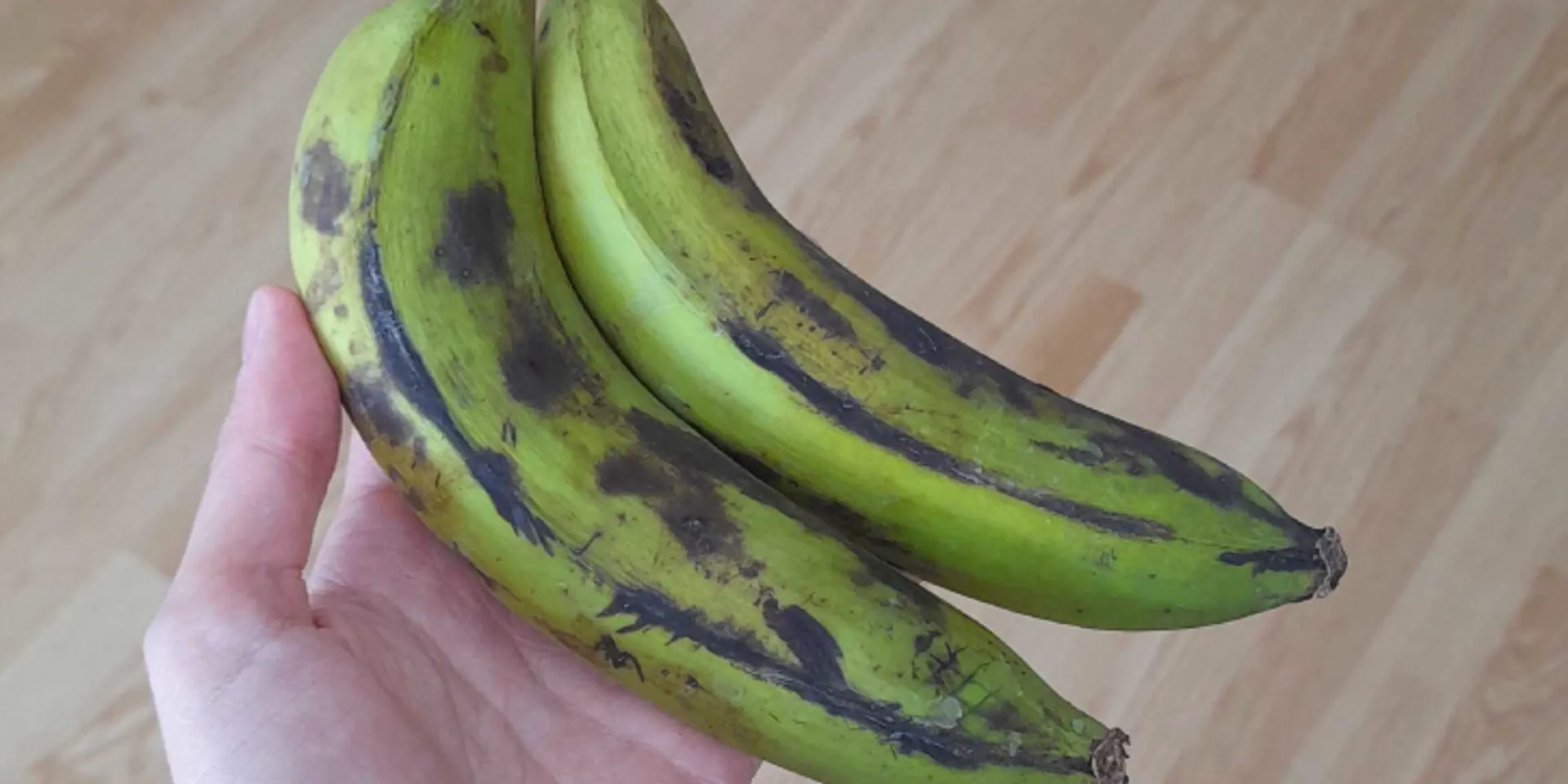
Often, our produce is not damaged but simply looks a little different than you are used to, for example our Canary Island banana. It usually comes with dark specs for example, which is simply an indicator of untreated skin. But there are also rare cases when our produce does reach you in a damaged state.
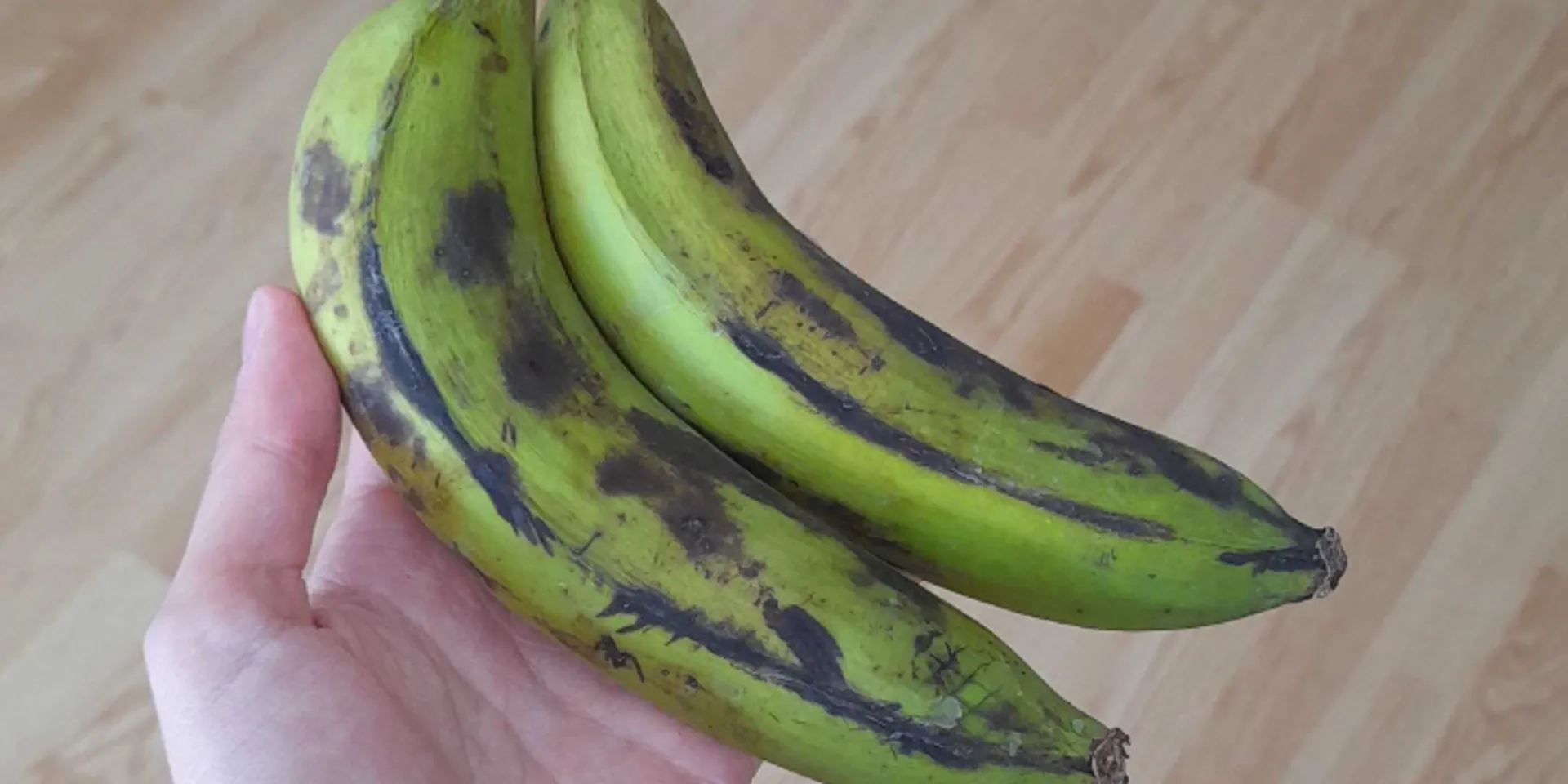
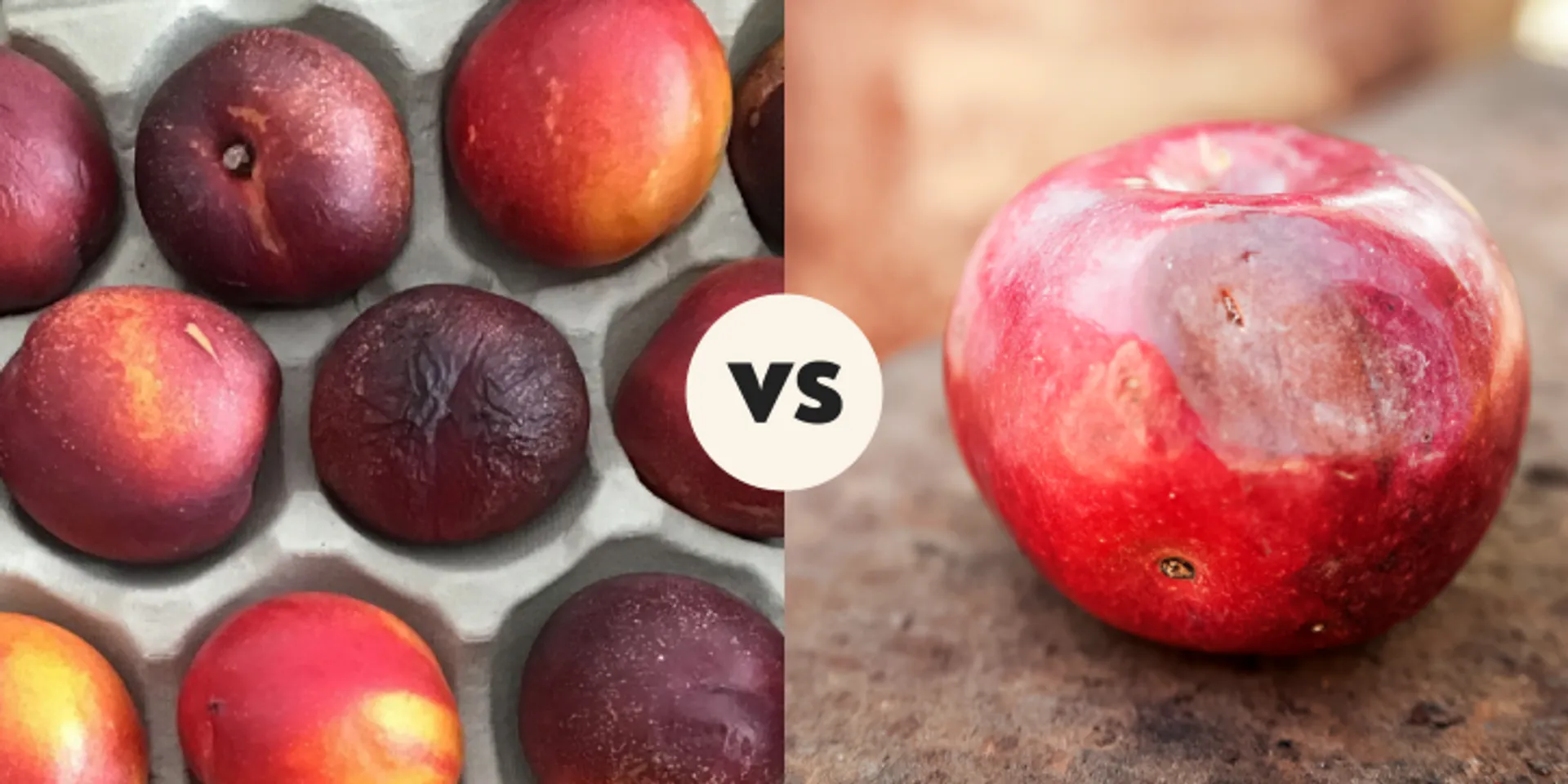
Damaged produce mainly comes in two forms: stained/squished or moldy.
- Produce with dark spots or a “squished” appearance
Dark spots are normally not cause for alarm. In many cases, they are even edible. If you want to err on the side of caution, you can always cut off any part that looks offensive and simply eat the rest of the fruit. Unless it is a case of rot, you can normally eat the fruit without any concerns, as it is perfectly fine, even if it doesn’t look its usual pretty self.
→ When to eat: The spot is merely “cosmetic” and contained to the surface/skin of the fruit.
→ When to cut away: The spot has eaten into the inside of the fruit and the fruit´s flesh is slimy.
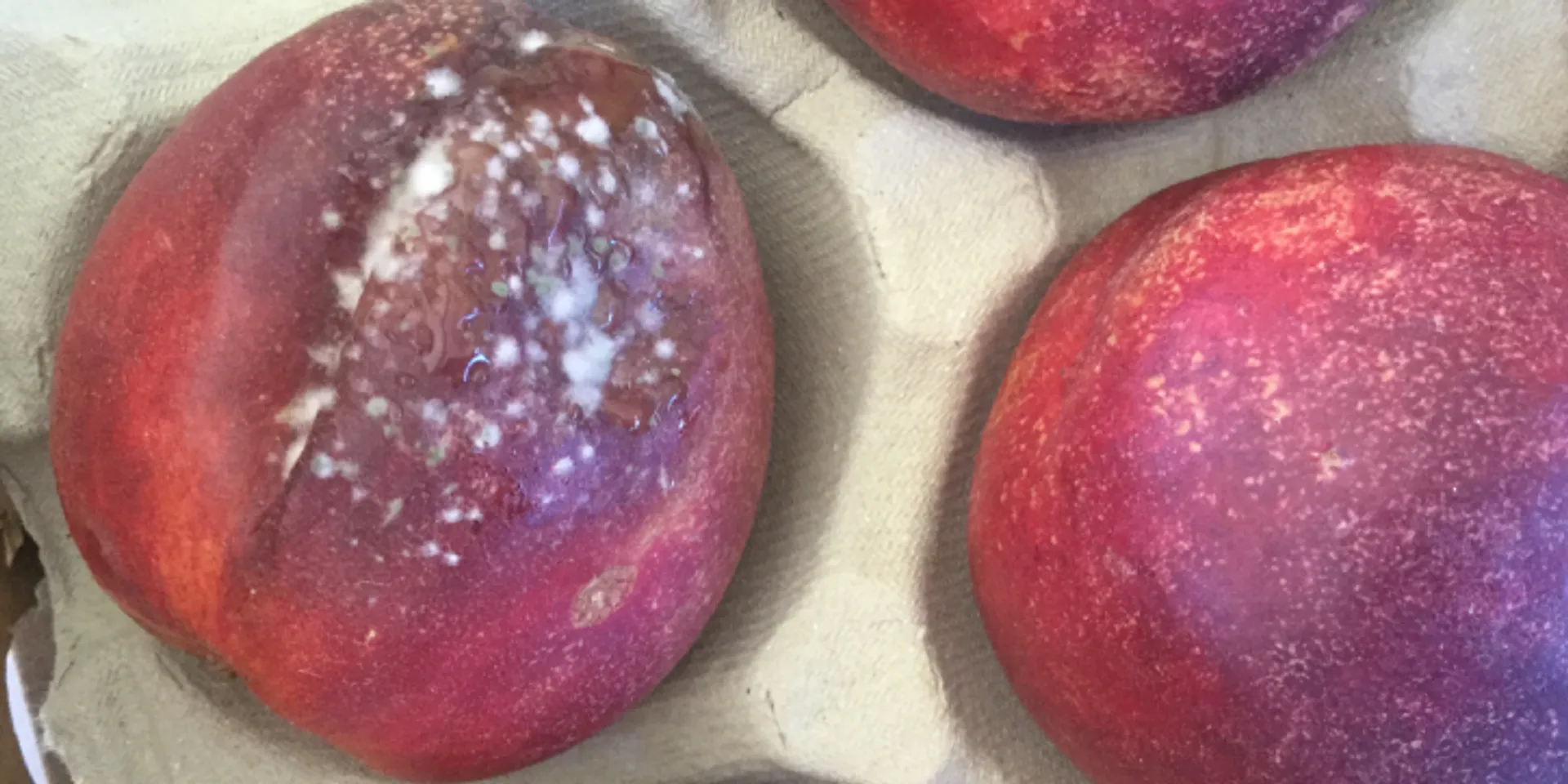
- Moldy produce
When it comes to mold, the first thing to consider is whether the product is a “humid” and soft or a “dry” and hard product. If the first case applies, meaning the product consists of over 40% water and/or is of a soft consistency, we cannot in good conscience recommend that you simply cut off the moldy part or even clean the product. In this case we must sadly recommend that you throw it away.
In the case of “hard products” with little to no moisture, such as hard cheese, you can simply cut off the moldy part and eat the rest, as the mold is unlikely to have contaminated the rest of the product. (Apart from the fact that certain types of fungi are actually wanted in some types of cheese.)
Why can you not do the same with soft products such as fruit? The simple answer: Because the spread of toxins is invisible to the naked eye. So cutting off the moldy part and eating the rest of the fruit comes at a risk to your health (though admittedly a lot of people still do it). Although produce is not necessarily prone to these dangerous types of fungi, the possibility of the presence of mycotoxins – which are attracted to products that have a lot of moisture – or other dangerous particles cannot be discarded.
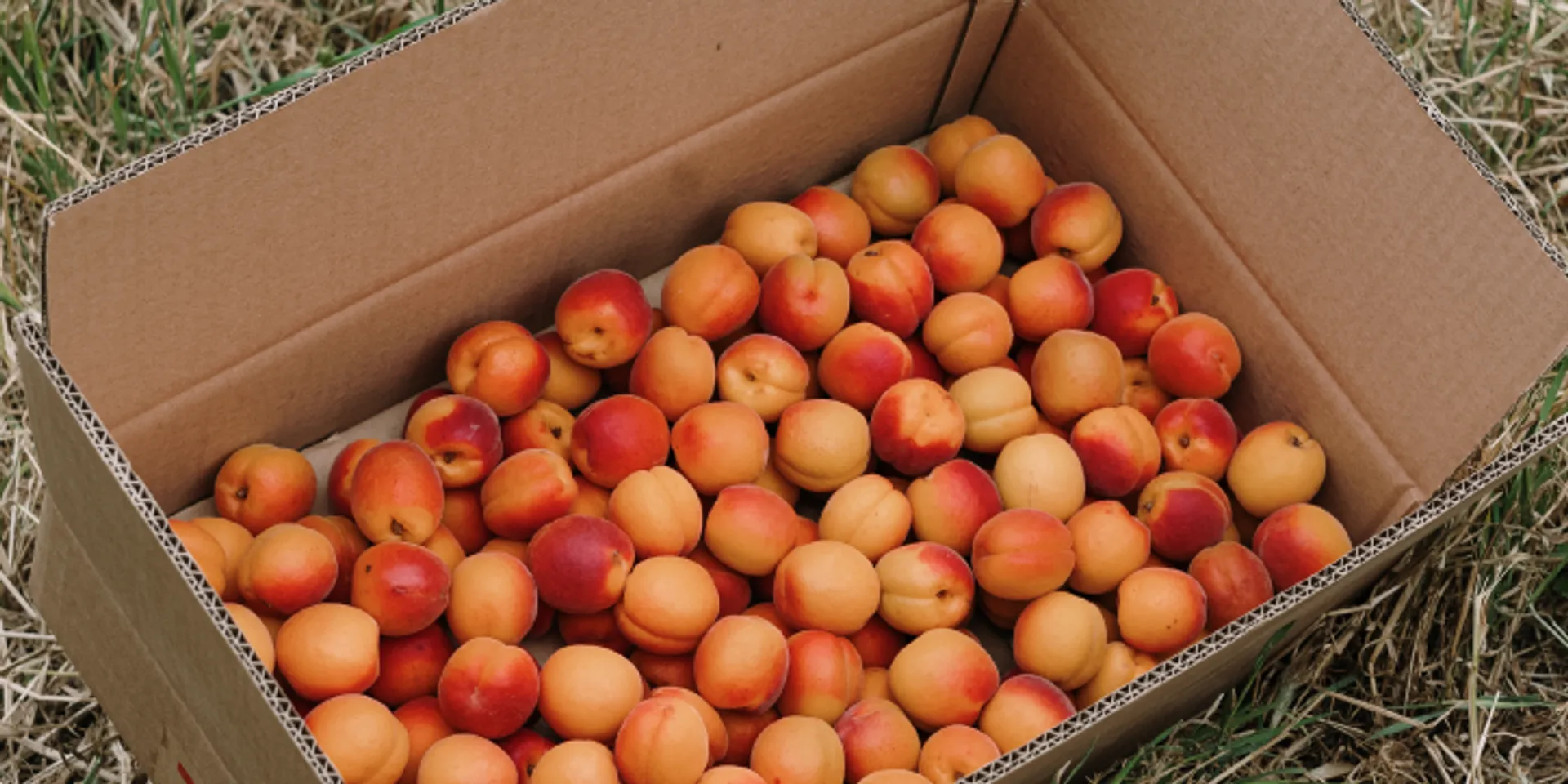
What to do when you receive fruit in suboptimal conditions
Here’s a little guideline on recommended steps to take when you receive produce that is not in an ideal state:
- Throw away the moldy fruit* (if any) as well as any other fruit that was directly touching the mold and check the remaining products. We recommend that you also sort out any fruit that are overly soft, have squished parts or brown spots into a “consume first” pile. In any case you should take all the products out of the box if there was any product with mold on it.
- Store all fruit in a dry and cool spot and read the farmer letter in the box for storage recommendations specific to your chosen product. In the case of produce like stone fruit or melon, we recommend storage in the fridge.
- For produce that is overly soft or damaged (but not moldy!) We recommend that you use it up as quickly as possible. If you cannot eat it all so quickly, you can process it into a sauce or marmalade or even juice.
*In case you have a compost, you could simply throw it on there, and if you do not have a compost yet, this would be a good occasion to consider installing one, if your living situation allows for it! This way, throwing the produce away is a little less painful, because it will be used for something.
We are happy to report that the overwhelming majority of our products arrive in good conditions and if damaged, are usually in a salvageable state. For us the only valid reason to throw away food is mold (unless we are talking about cheese), which is one of the main reasons why our farmers do not harvest when it rains. Unfortunately, making sure the packed products are dry is the only thing we can do to avoid fungi, besides trying to keep transport time to a minimum. Mold is a part of the cycle of life and simply present, so we will never be able to escape it completely, but proper storage (dry and cool) is an important step to avoid it.
Written by Emmeline Hess

Emmeline es experta en comunicación, vocación que ha estado ejerciendo durante más de 9 años en empresas con enfoque en la sostenibilidad.
Esta nueva podcaster es una gran aficionada a la comida, una preocupada por el cambio climático (aspirante a guerrera) y le gusta una buena discusión casi tanto como los perros.
Keep digging ...